
Last updated October 15, 2026
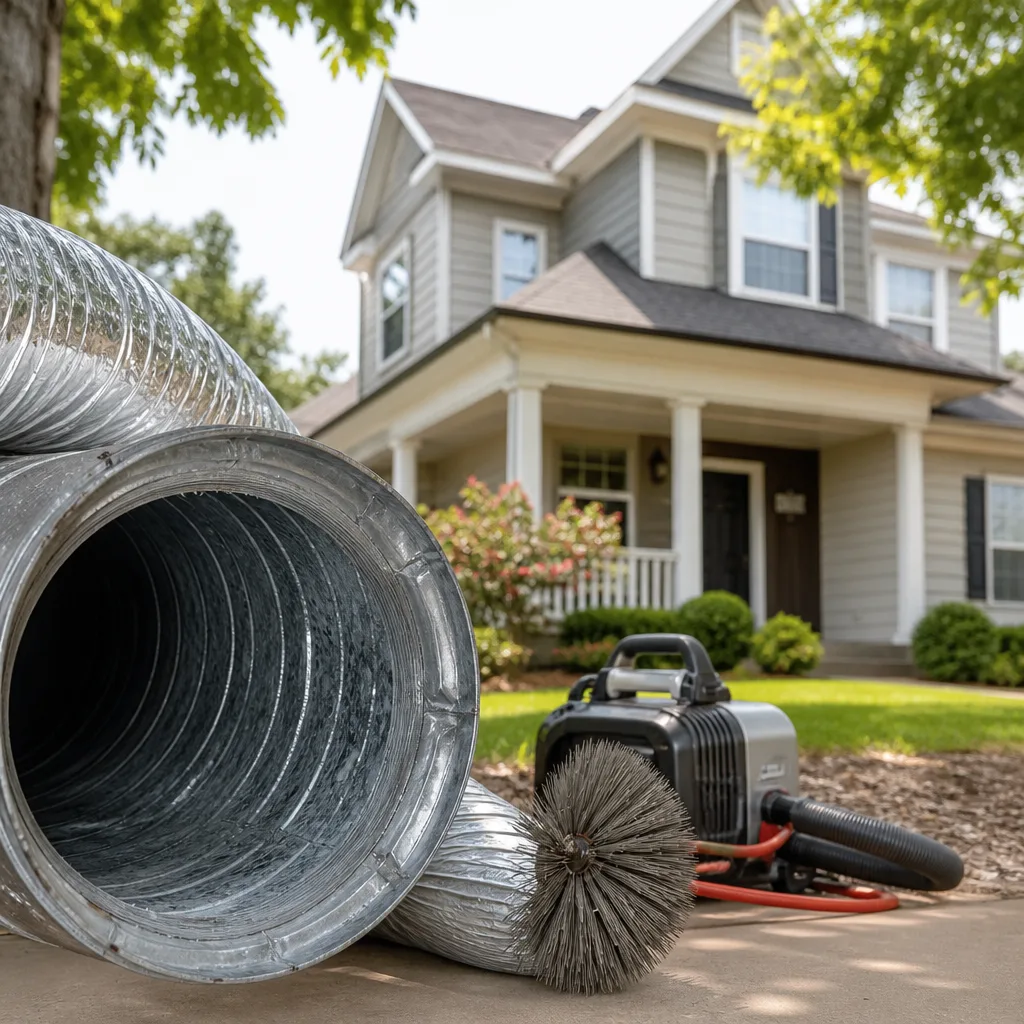 Whole-home duct cleaning
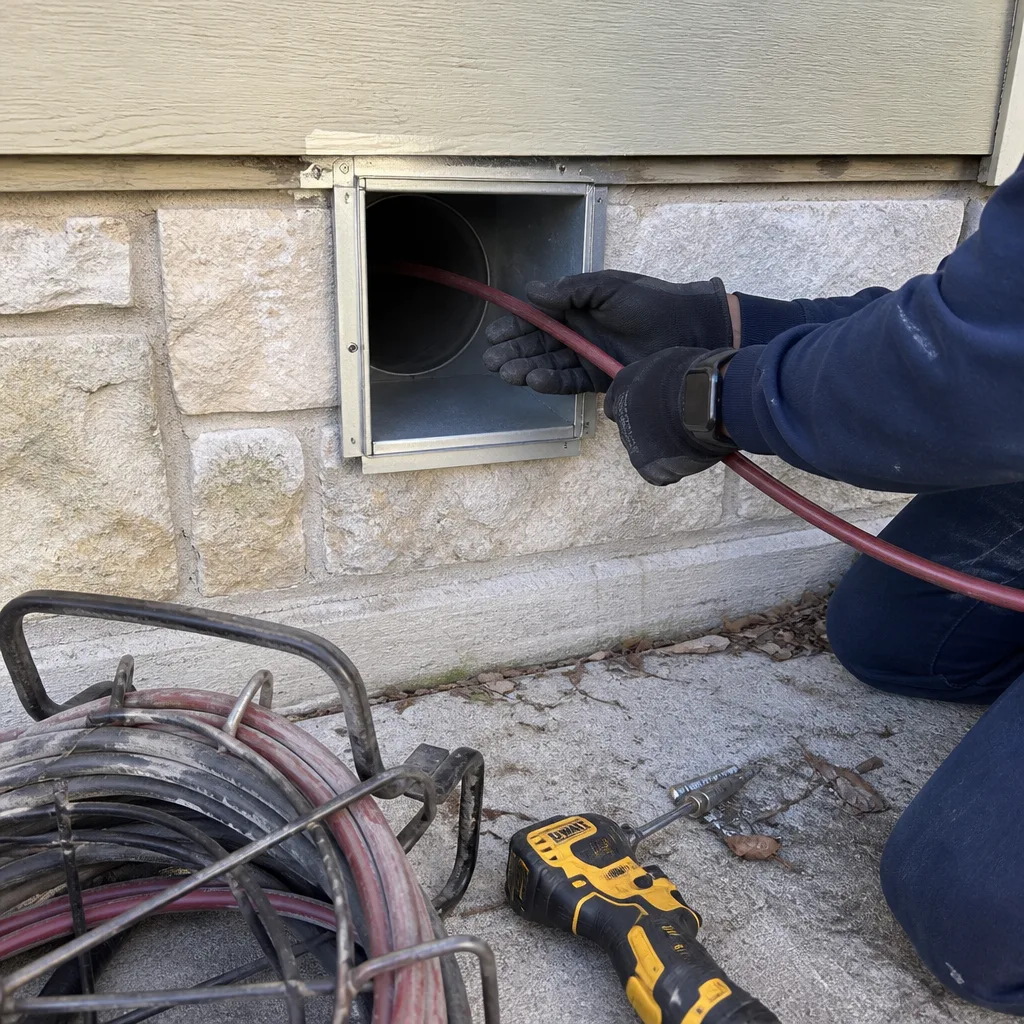
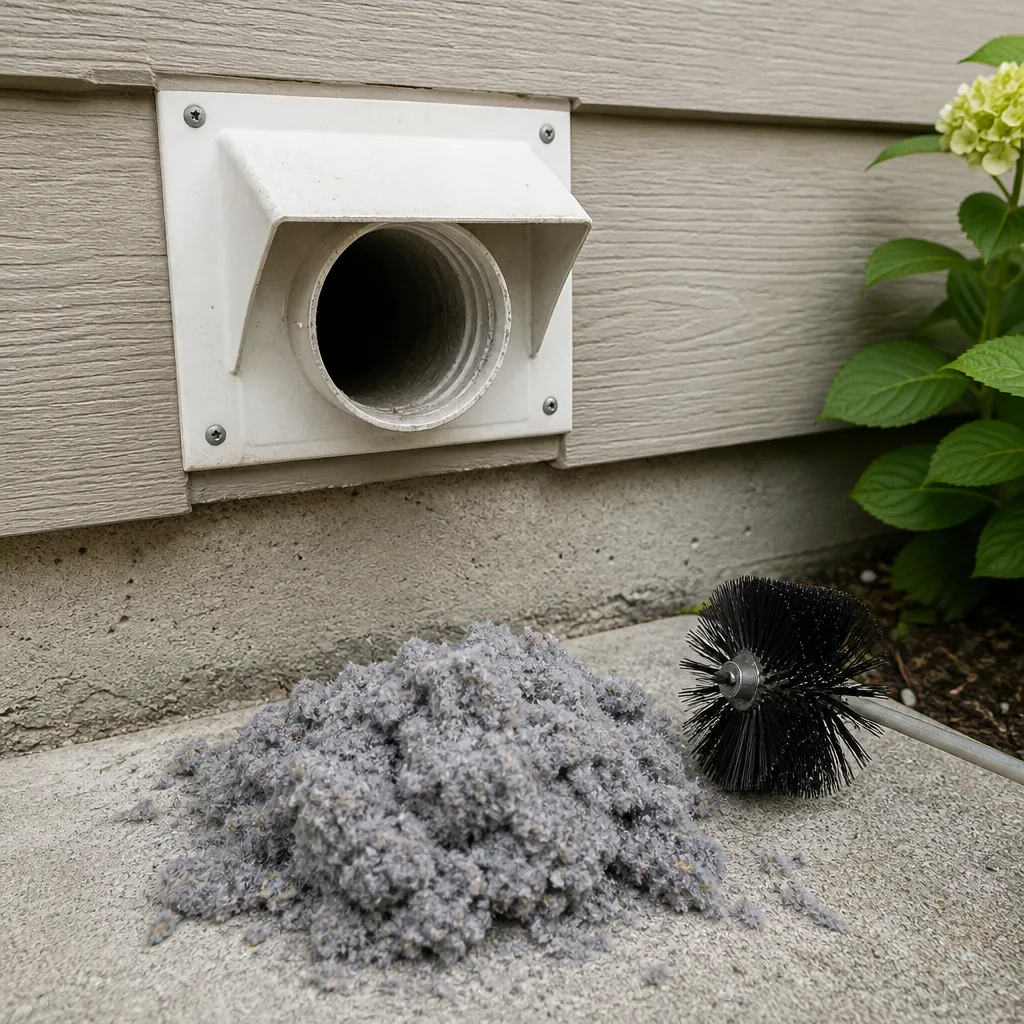 Dryer vent cleaning
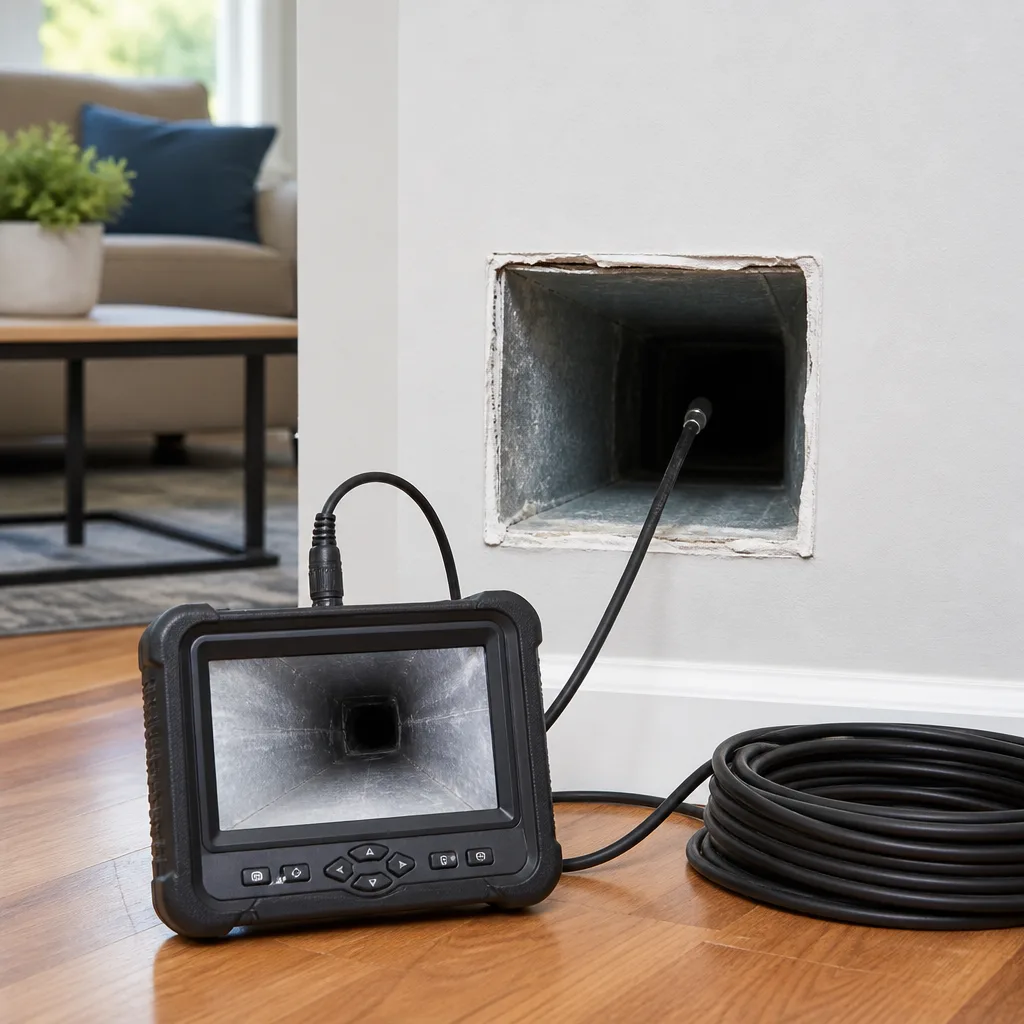 Camera inspection
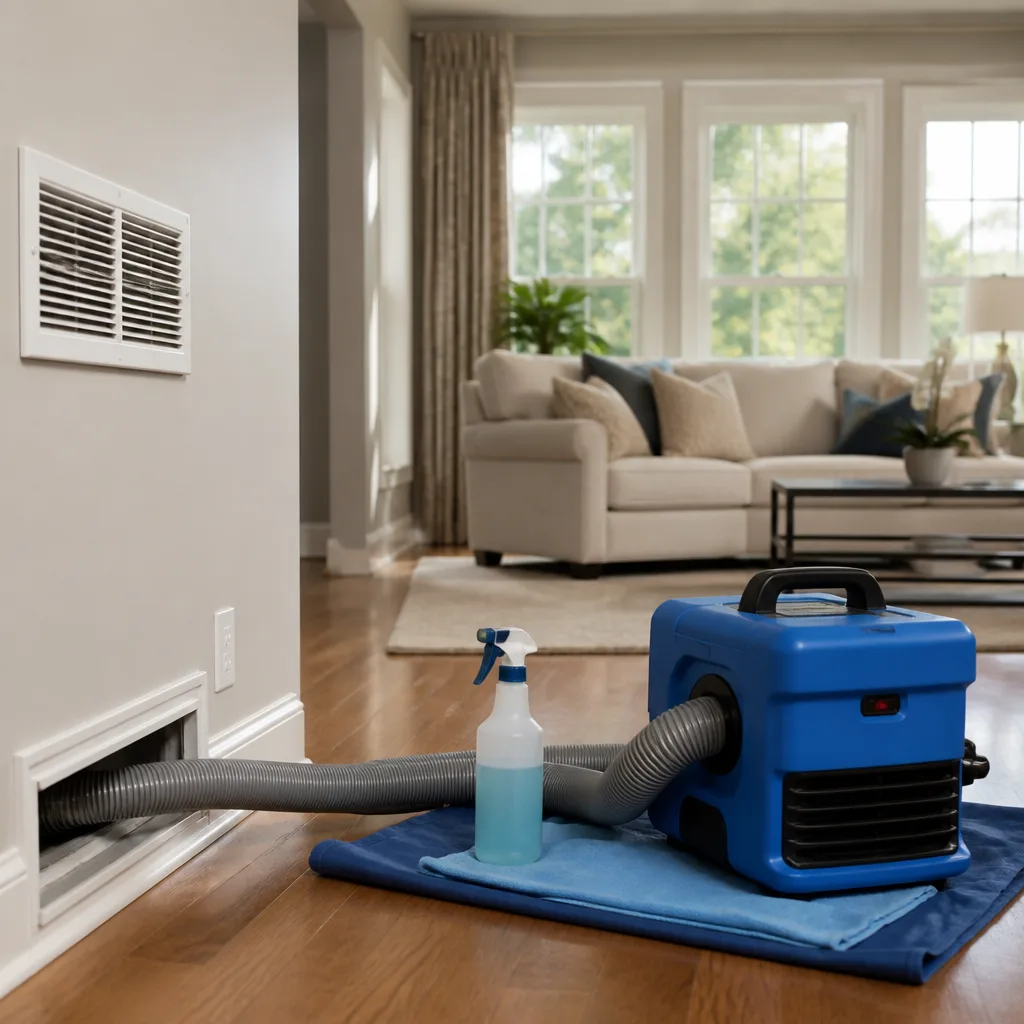 Sanitizing & deodorizing
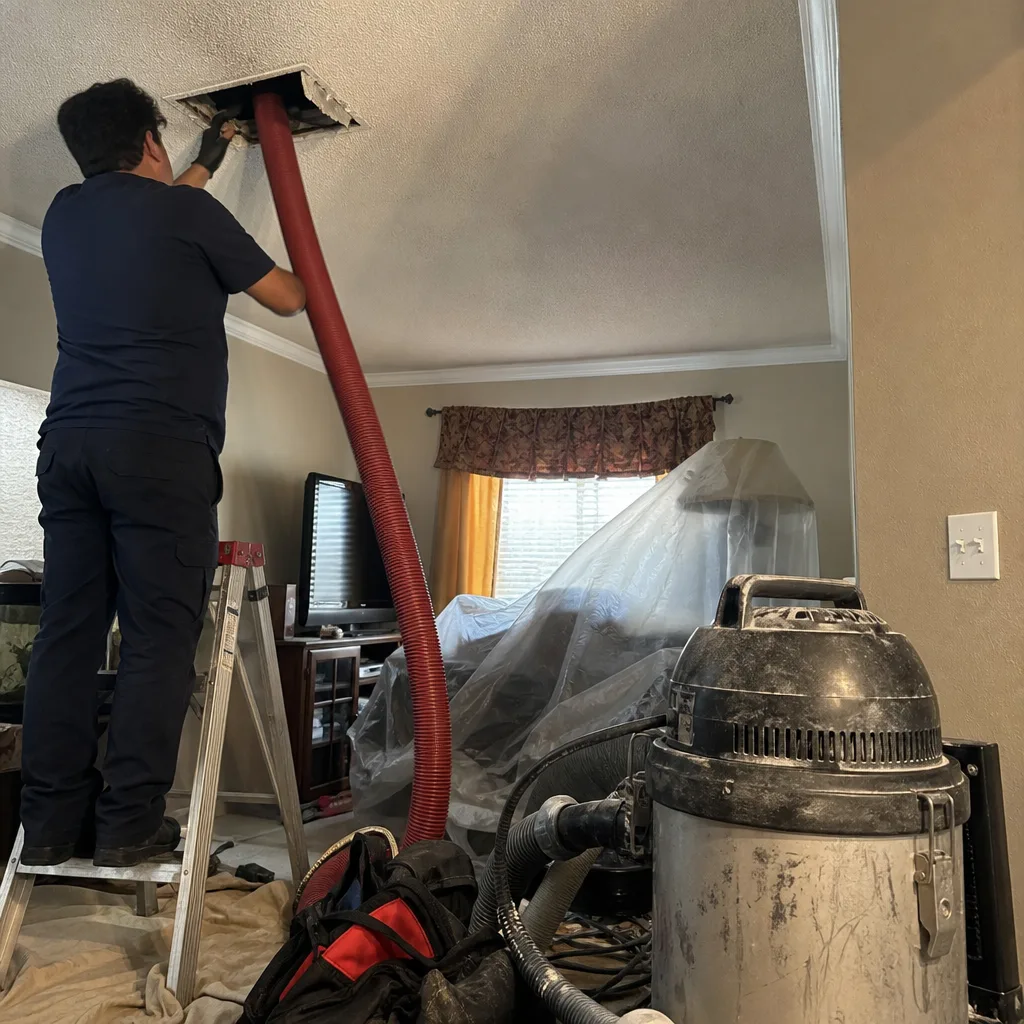
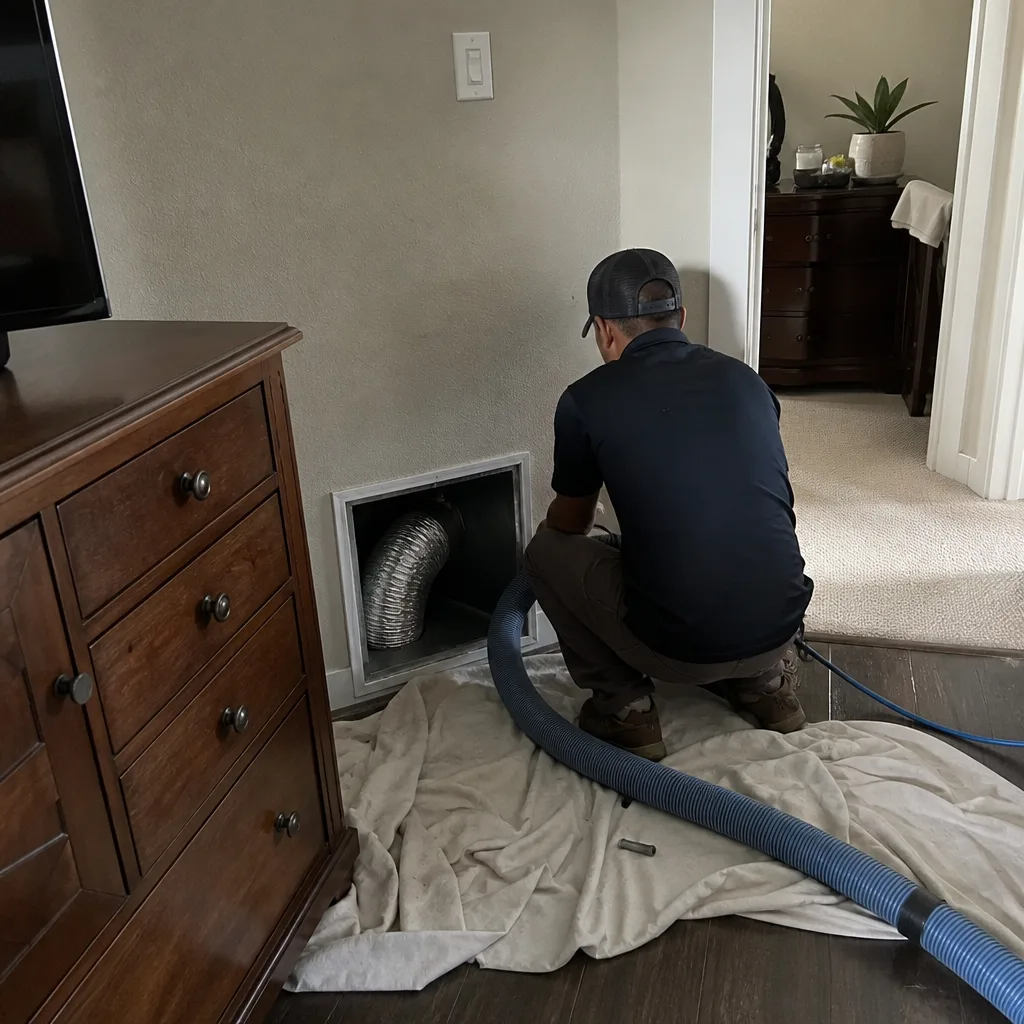
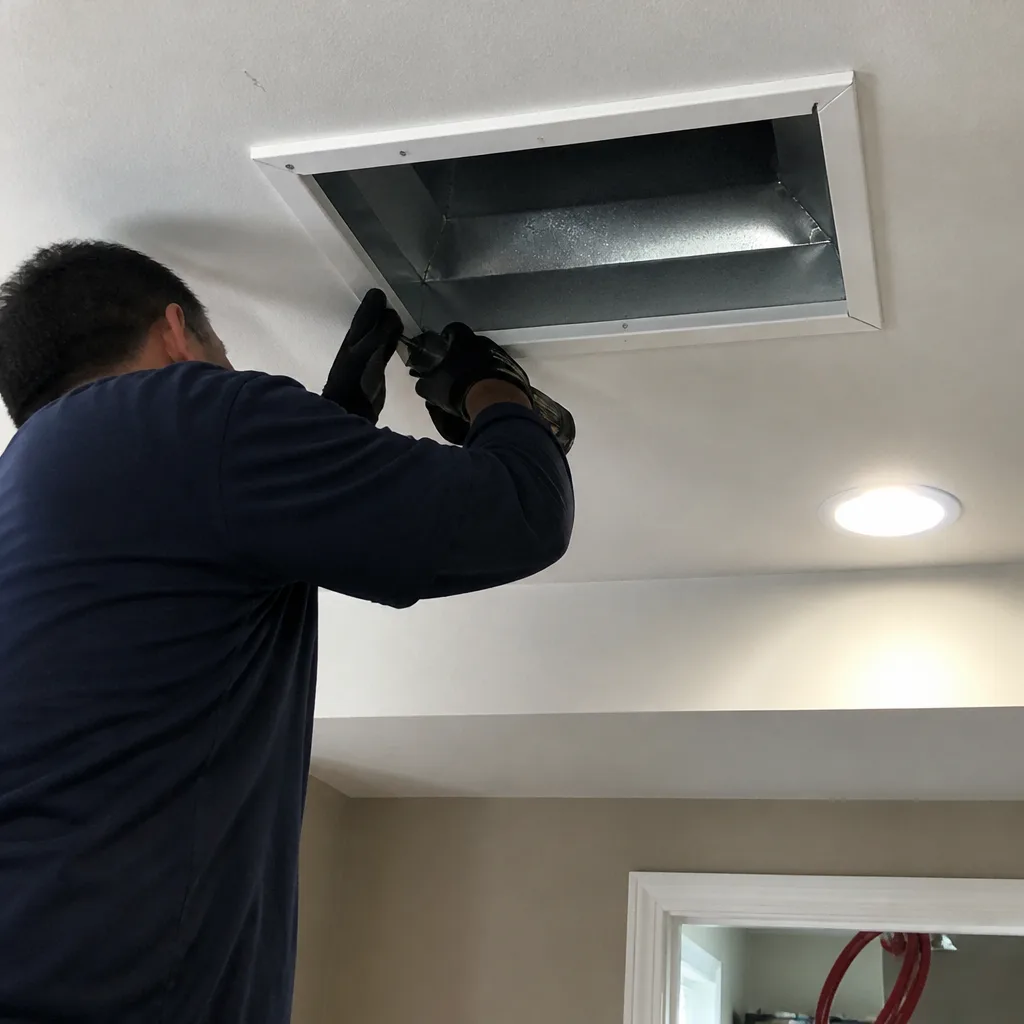
Whole-system duct and dryer vent check with before-and-after photos - you see exactly what came out of your vents
That "$99 whole-house special" is a bait ad - the real number appears once they are in your hallway, or the "clean" is a shop-vac at the register. We photograph the inside of your ducts before and after instead.
Air Duct Cleaning Cost Breakdown: The Dallas Homeowner’s Reference for 2026
A $99 whole-house duct cleaning and a $650 whole-house duct cleaning in Dallas can both be honest quotes. The difference isn’t that one company is gouging you and the other is a bargain. The difference is that one quote covers three things and the other covers eleven, and neither quote uses language that makes that clear. What looks like a 300% price gap across Dallas providers is mostly a scope gap. This guide and our Air Duct Cleaning Maintenance Checklist for Dallas Homeowners break down exactly what a full-scope duct cleaning in Dallas should include in 2026, what each line item costs, and how to compare quotes without getting burned. You’ll learn the real market rates for Dallas, why square footage pricing misleads, and what a written guarantee is actually worth in dollars.
Quick Answer
Air duct cleaning in Dallas typically costs between $300 and $650 for a full-scope whole-house job in 2026, with most single-family homes landing in the $350 to $500 range. A $99 quote almost always covers only supply lines and a quick vacuum pass, while a complete job includes supply and return lines, the main trunk, register covers, the blower compartment, and coil access. Always ask for a written line-item scope before comparing prices, because two quotes at different prices are rarely describing the same work.
Styles & brands we work with
Table of Contents
- What a Full-Scope Dallas Duct Cleaning Actually Includes
- Why Square Footage Pricing Misleads Dallas Homeowners
- 2026 Line-Item Cost Breakdown for Dallas
- Add-On Services: When They’re Worth It and When They’re Margin Padding
- How to Compare Two Quotes Using a Written Scope Document
- What a 365-Day Guarantee Is Worth in Dollar Terms
- Dallas-Specific Factors That Affect Your Price
- Common Mistakes to Avoid
- When to Call a Professional
- Frequently Asked Questions
What a Full-Scope Dallas Duct Cleaning Actually Includes
Here’s the uncomfortable truth about the air duct cleaning industry in Dallas: there is no legal definition of what a “duct cleaning” must include. One company can vacuum your supply registers and call it done. Another pulls apart the entire system, cleans every component, and hands you photos. Both are technically selling “air duct cleaning.” That’s why the scope document matters more than the price on the quote. A legitimate full-scope job in Dallas covers eleven distinct areas: supply lines, return lines, the main trunk, register covers, the blower compartment, coil access, the air handler cabinet, plenum boxes, turning vanes, the filter housing, and a post-clean inspection. A budget $99 job covers maybe three: supply registers, a quick vacuum pass, and nothing else.
In our work across Dallas homes from Lake Highlands to Oak Cliff, we’ve found that most homeowners have never had anyone explain this difference. They see “duct cleaning” on two invoices and assume it’s the same service. It isn’t. When you call for air duct cleaning in Dallas, ask specifically: “What components are included in your base price?” If the answer is vague, or if the person can’t name the components, that’s your signal to keep looking.
Why Square Footage Pricing Misleads Dallas Homeowners
Most national chains price duct cleaning by square footage. It sounds logical. It’s also wrong for Dallas specifically, and here’s why. Duct systems are sized by linear feet of ductwork, not by the finished square footage of the house. A 2,200-square-foot Dallas ranch in Casa View with a single-story open floor plan often has less duct footage than a 2,200-square-foot two-story in Preston Hollow, because the two-story needs vertical risers and longer return paths to serve the upstairs rooms. Same square footage. Different amount of ductwork. Different labor. Different price.
Here’s what square footage pricing actually tells you: nothing about the job. It’s a simplification that lets companies quote over the phone without looking at the system. The moment a company asks for your square footage and immediately gives you a price, they’re guessing. A real quote, the kind you should accept in Dallas, comes after someone looks at your system. That doesn’t mean a technician has to visit ahead of time, though many will. It means the quote accounts for the number of returns, the presence of a second system, the accessibility of the air handler, and whether the ducts are in an attic that gets to 140 degrees in August. Dallas attics are brutal workspaces, and that heat is real labor cost. Any price that ignores it is not an honest price.
2026 Line-Item Cost Breakdown for Dallas
Here are the actual 2026 Dallas market ranges for each component of a full-scope duct cleaning, based on what we see charged across the metroplex. Use this as your baseline when evaluating any quote.
| Component | Typical Dallas Range (2026) | What It Covers |
|---|---|---|
| Supply lines (per system) | $70 – $120 | Negative-pressure extraction through every supply register |
| Return lines (per system) | $60 – $100 | Full return path cleaning, where most dust actually collects |
| Main trunk line | $50 – $90 | The large central duct feeding all branches |
| Register covers (all) | $20 – $40 | Removal, cleaning, and reinstallation of every vent cover |
| Blower compartment | $40 – $70 | Access and clean the fan that moves air through your home |
| Coil access cleaning | $50 – $100 | Evaporator coil surface cleaning where accessible |
| Air handler cabinet | $30 – $60 | Interior cleaning of the main unit housing |
| Plenum boxes | $30 – $50 each | Supply and return plenums at the air handler |
| Turning vanes (if present) | $20 – $40 | Cleaning airflow-directing vanes inside the trunk |
| Filter housing | $10 – $20 | Cleaning the slot and surrounding area |
| Post-clean visual inspection | Included in full-scope | Before-and-after photos of every component |
A complete full-scope job on one system in a typical Dallas home lands between $300 and $500. Two-system homes (common in larger Dallas properties) run $450 to $700. Anything under $200 is almost certainly partial scope. Anything over $800 without a specific reason (extensive contamination, accessibility issues, multiple systems) warrants a second opinion.
Add-On Services: When They’re Worth It and When They’re Margin Padding
Once a technician is in your Dallas home, the upsell begins. Here’s the honest version of what each add-on actually delivers.
Sanitizing spray / antimicrobial fogging
The research on antimicrobial duct treatments is mixed. The Environmental Protection Agency does not recommend routine chemical biocides for duct interiors unless there is confirmed microbial contamination. What does that mean for you? If your ducts have visible mold growth, or if a moisture problem caused bacterial buildup, a sanitizing treatment using a product from brands like Guardsman or Abatement Technologies may be justified. If your ducts are just dusty, which is the case for most Dallas homes, skip it. It’s margin padding dressed up as health protection. A reputable company will tell you when it’s not needed. That’s how you know the recommendation is honest when it is.
Dryer vent cleaning
This one is genuinely worth it, and it’s often bundled with duct cleaning at a discount. Lint buildup in dryer vents is a real fire hazard. The U.S. Fire Administration reports that clothes dryers cause approximately 2,900 house fires annually, and the leading cause is failure to clean the vent. Our dryer vent cleaning in Dallas uses a lint trap bypass method that accesses the vent path properly, not just the visible duct behind the machine. Bundle it with a duct cleaning and you’ll typically save $40 to $60 off the standalone price.
Air filtration upgrades
If your system still runs a basic fiberglass filter, a media filter cabinet upgrade using products from Honeywell or Aprilaire can meaningfully improve indoor air quality. This is a product purchase, not a cleaning service, and the price should be transparent: cabinet, installation, and filter cost listed separately. If a tech recommends this, ask for the model number and compare the retail price before agreeing. Honest companies don’t hide product margins inside vague “filtration package” line items.
How to Compare Two Quotes Using a Written Scope Document
Here’s a step-by-step method that works every time in Dallas, regardless of which companies you’re evaluating.
- Ask for the scope in writing before anyone enters your home. A company that says “we’ll figure it out when we get there” is telling you the price will change once they’re on site. Walk away.
- Check for these six line items specifically: supply lines, return lines, main trunk, register covers, blower compartment, and coil access. If any of these are missing, the quote is not comparable to a full-scope quote.
- Ask about the equipment brand. Professional companies use truck-mounted or portable negative-pressure systems from trade-trusted manufacturers like Rotobrush and Nikro. A shop vac from a hardware store does not clean ducts. If they won’t name their equipment, that’s an answer.
- Ask what proof you’ll receive. The only way to verify the work was actually done inside your ducts is before-and-after photography. Ask if photos are included. If not, how will you know?
- Ask about the guarantee in writing. Not “satisfaction guaranteed” as a slogan. A real guarantee states the term in days and what happens if something fails. More on this in the next section.
- Compare line by line, not total to total. A $299 quote missing four components is not cheaper than a $450 quote that includes everything. It’s a different service wearing the same name.
What a 365-Day Guarantee Is Worth in Dollar Terms
A guarantee is a bet the company makes on its own work. A 365-day guarantee means the company is betting that, for a full year after the job, you won’t find a problem serious enough to call them back. The value to you is calculable. Take the job price. Multiply it by the probability that a problem will arise and need fixing. If the job cost $450 and there’s a 25% chance of a problem within a year, the guarantee’s expected value is about $112. That’s real money. And that’s before you factor in the cost of your time, the disruption of a second visit, and the stress of fighting with a company that won’t answer the phone.
Here’s the Dallas-specific reality: a company that won’t put a guarantee in writing is pricing in the assumption that you won’t call back, or that if you do, they can outlast you. A company that puts “365 days” on paper, like the air duct repair in Dallas work we do with a written guarantee on every job, has priced in the cost of fixing mistakes. That’s a fundamentally different business model. When you compare a $299 no-guarantee quote to a $450 one-year-guarantee quote, the real spread isn’t $151. It’s $151 minus the risk-adjusted value of accountability. In the example above, that makes the real gap about $39. Most Dallas homeowners would pay $39 for a year of accountability. That’s the math the discount guys are hoping you never do.
Dallas-Specific Factors That Affect Your Price
Dallas is not a generic market, and your duct cleaning price reflects that. Here’s what moves the number here that wouldn’t move it in, say, Cleveland.
- Attic heat. Most Dallas homes run ducts through attics that hit 130 to 140 degrees in July and August. That’s a difficult work environment, and it costs labor time. Companies that price Dallas jobs the same as cooler-climate jobs are cutting corners on technician welfare or on the thoroughness of the job.
- Foundation soil movement. Dallas sits on expansive clay soil. Houses shift. Duct connections loosen. That means Dallas duct systems develop more gaps and separation than systems in more stable soil regions. A proper cleaning in Dallas includes checking for disconnected duct runs, not just vacuuming them.
- Allergen load. Dallas has two pollen seasons, and fall ragweed in North Texas is notoriously bad. Combined with construction dust from constant metroplex development, your ducts accumulate more debris faster than the national average. This isn’t a sales pitch. It’s a climatological fact that affects how often you should clean and what a cleaning needs to address.
- Older housing stock in established neighborhoods. Homes in East Dallas, Oak Lawn, and parts of Richardson and Garland often have original ductwork from the 1960s through 1980s. Older duct systems may have internal fiberglass liner that requires gentler cleaning methods or tells you that a repair is more appropriate than a cleaning. A competent Dallas technician knows the difference.
Common Mistakes to Avoid
- Accepting a phone quote based on square footage alone. As covered above, square footage doesn’t tell anyone how much ductwork you have. If they won’t ask about your system, they’re not quoting your job.
- Comparing total prices without comparing scopes. A $99 quote and a $450 quote are not the same service. Compare line items, not totals, and the cheaper quote usually stops looking like a deal.
- Buying antimicrobial fogging for dusty ducts. The EPA does not recommend routine chemical treatments in ducts. Save the sanitizing spray for actual microbial problems, which are rare in dry Dallas ducts.
- Not asking who is coming to the door. In Dallas, you’re trusting a stranger with access to your home. Ask if the technician is background-checked, whether you’ll get their name and photo before the visit, and whether they show ID at the door. If the company hesitates on any of these, that’s your answer.
- Paying before you see the work. Before-and-after photos are the only way to verify the inside of your ducts. If the company doesn’t offer them, you’re paying on faith.
- Falling for “one-time special” urgency. A legitimate Dallas duct cleaner has the same price this week as next month. If a price expires tomorrow, the urgency is manufactured, and so is the discount.
- Assuming the lowest quote is the best value. When you factor in the guarantee, the proof of work, and the technician verification, the cheapest quote is usually the most expensive risk.
When to Call a Professional
Call a professional when you can see dust blowing from your registers when the system kicks on, when your allergies spike indoors but not outdoors, when you’ve had recent renovation work (very common in Dallas’s growing neighborhoods), when you can’t remember the last time the ducts were cleaned, or when you’re buying a home with an unknown maintenance history. Also call if you notice mold around vent openings or a musty smell when the HVAC runs. These are not conditions that resolve themselves. Linden Air Duct Dallas offers free estimates in Dallas. Call (361) 309-3153 and a live person answers, any time, day or night. You’ll get a written scope and price before any work begins, every time.
Frequently Asked Questions
A full-scope Air Duct Cleaning in Dallas costs $300 to $650 for a single system, with most homes landing between $350 and $500. The variance depends on system size, the number of components included, and the condition of the ductwork. Call (361) 309-3153 for a written quote specific to your home, free of charge.
Cheaper quotes almost always cover fewer components. A $99 quote typically cleans supply registers only. A full-scope quote covers supply lines, return lines, the main trunk, register covers, the blower compartment, and coil access. The services share a name but not a scope. Always compare line-item scopes before comparing prices.
Ask for before-and-after photos of every component cleaned, including the inside of supply and return lines. Companies using professional equipment from brands like Rotobrush and Nikro can provide visual proof as a standard part of the job. If a company won’t show you photos, ask yourself what they’re hiding.
In Dallas, where pollen seasons are long and construction dust is constant, most homes benefit from duct cleaning every 3 to 5 years. Homes with pets, smokers, recent renovation, or allergy sufferers may need it every 2 to 3 years. If you’re seeing visible dust at the registers, that timeline just shortened.
For most Dallas homes, no. The EPA does not recommend routine chemical biocides in ducts. Sanitizing treatments matter when there is confirmed microbial growth from a moisture problem, which is uncommon in Dallas’s dry climate. A trustworthy company will tell you when you don’t need it.
A legitimate written quote includes a line-item scope covering supply lines, return lines, the main trunk, register covers, the blower compartment, and coil access. It also includes the equipment brand, the guarantee term in writing, and confirmation that the technician is background-checked and identified by name and photo before the visit. Call (361) 309-3153 for exactly that.
The Bottom Line
Air duct cleaning in Dallas costs $300 to $650 for a full-scope job in 2026. A $99 quote is not the same service. It’s a partial job with a full-service name. The only way to compare quotes honestly is with a written scope document that names every component, guarantees the work in writing, and tells you who is coming to your door. Dallas homeowners have specific reasons to be careful: brutal attic conditions, shifting foundation soil, and an industry where the incentive to under-quote and over-promise is high.
If you want a written price before any work starts, a 365-day guarantee on the work, and a technician whose name and photo arrive before they do, call us at (361) 309-3153. We’re Linden Air Duct Dallas. We serve the Dallas metroplex, we answer our own phones, and we put everything in writing. Because that’s how this should work.
Written by Marcus Veale, Owner at Linden Air Duct Dallas, serving Dallas since 2004.
See the difference
 Before
 After
After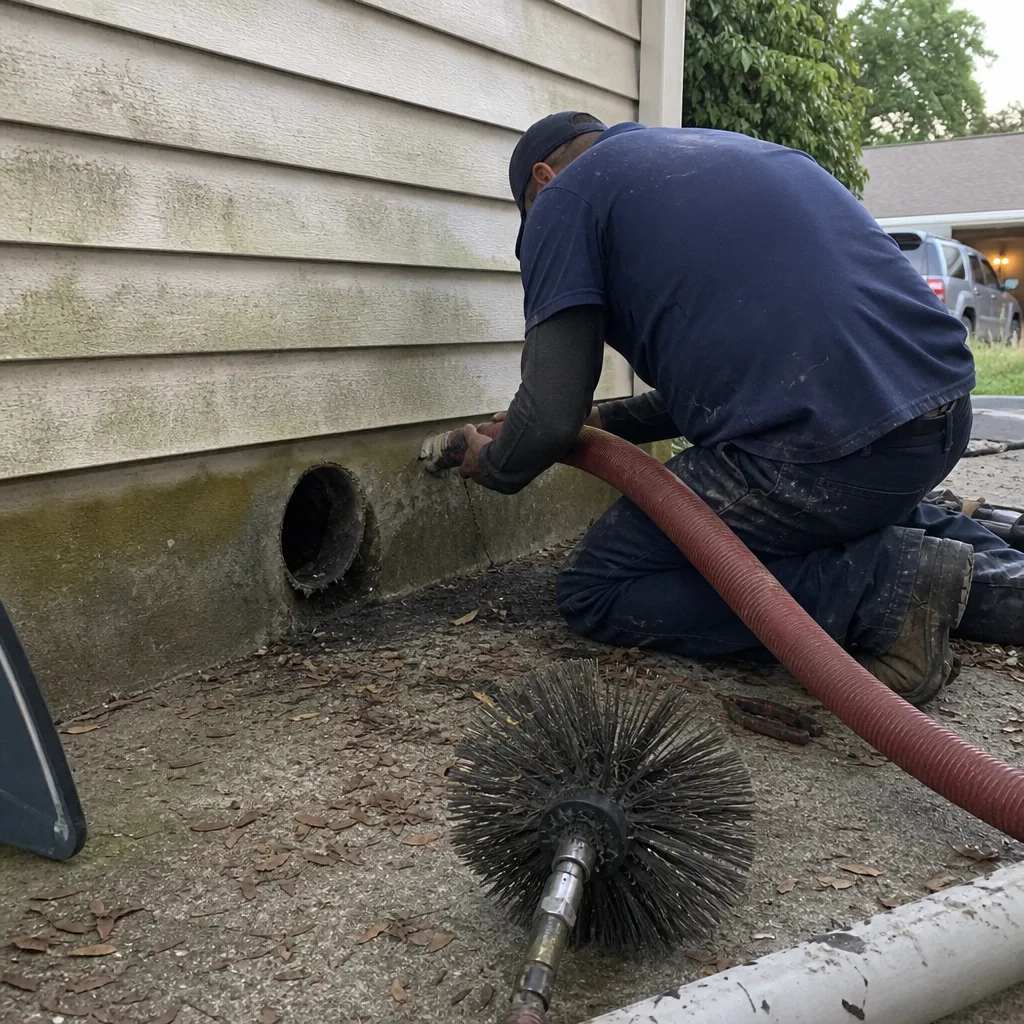 Before
 After
After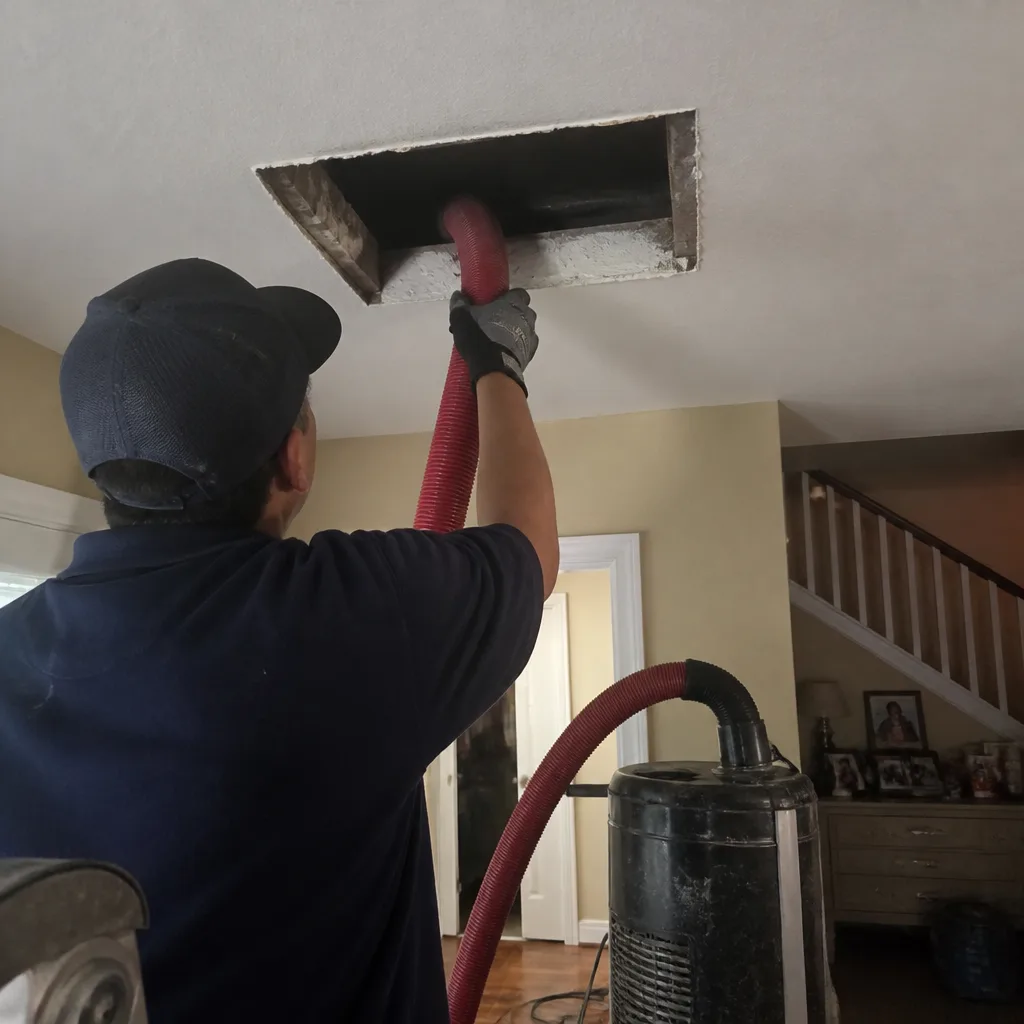 Before
 After
After