
Last updated October 15, 2026
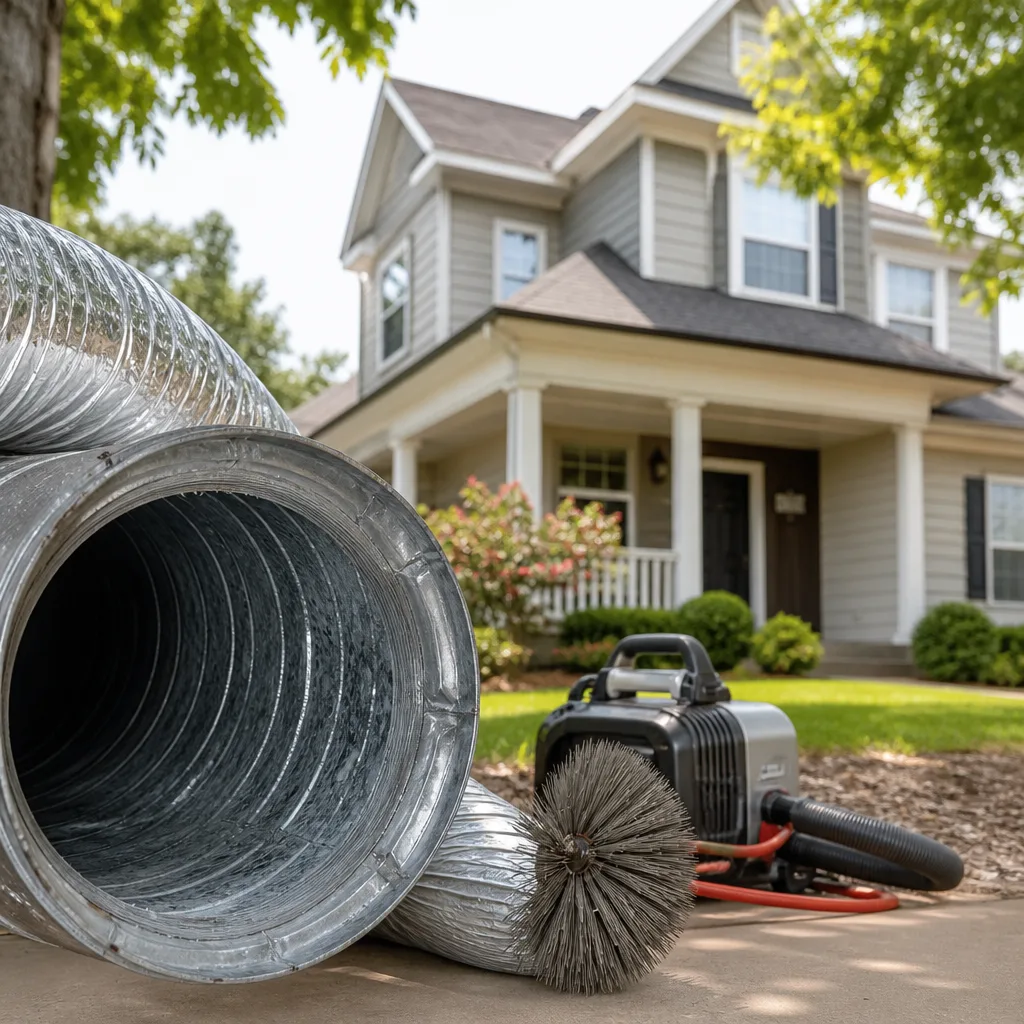 Whole-home duct cleaning
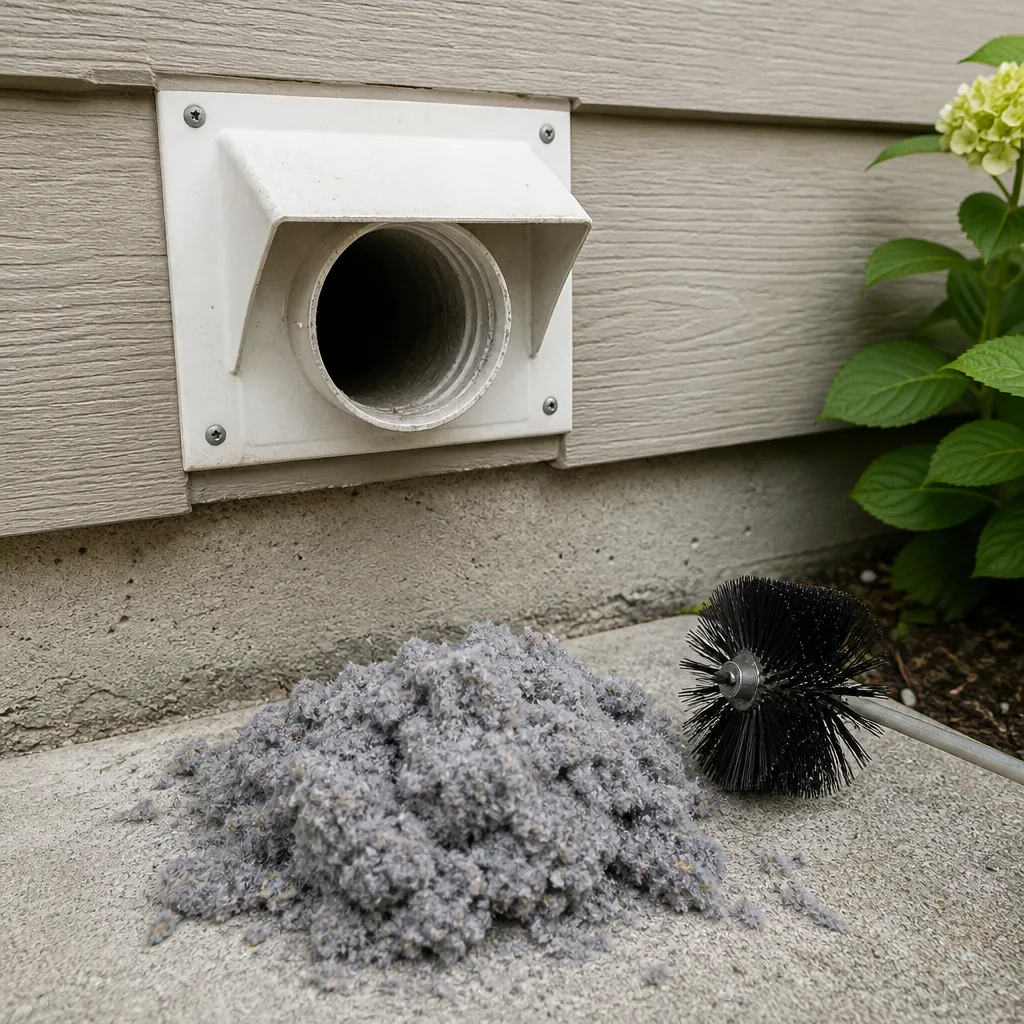 Dryer vent cleaning
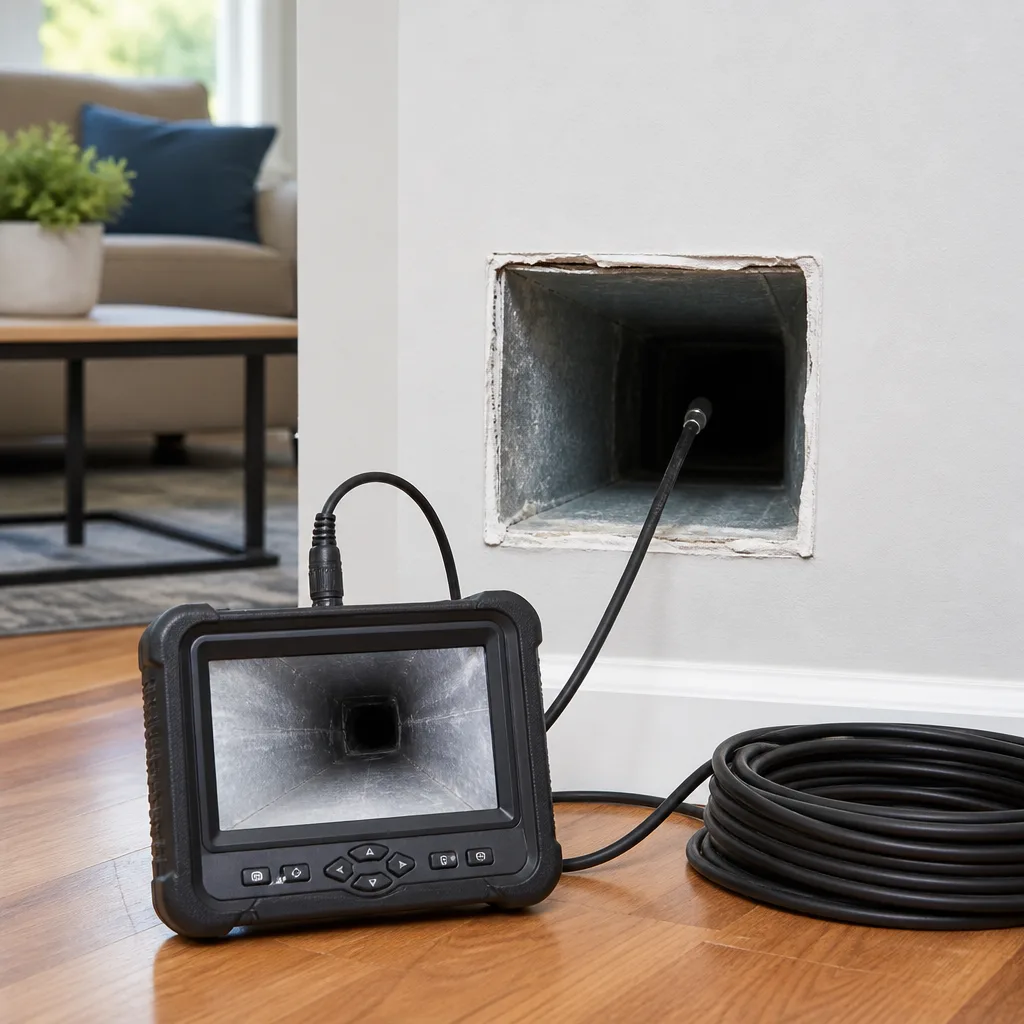 Camera inspection
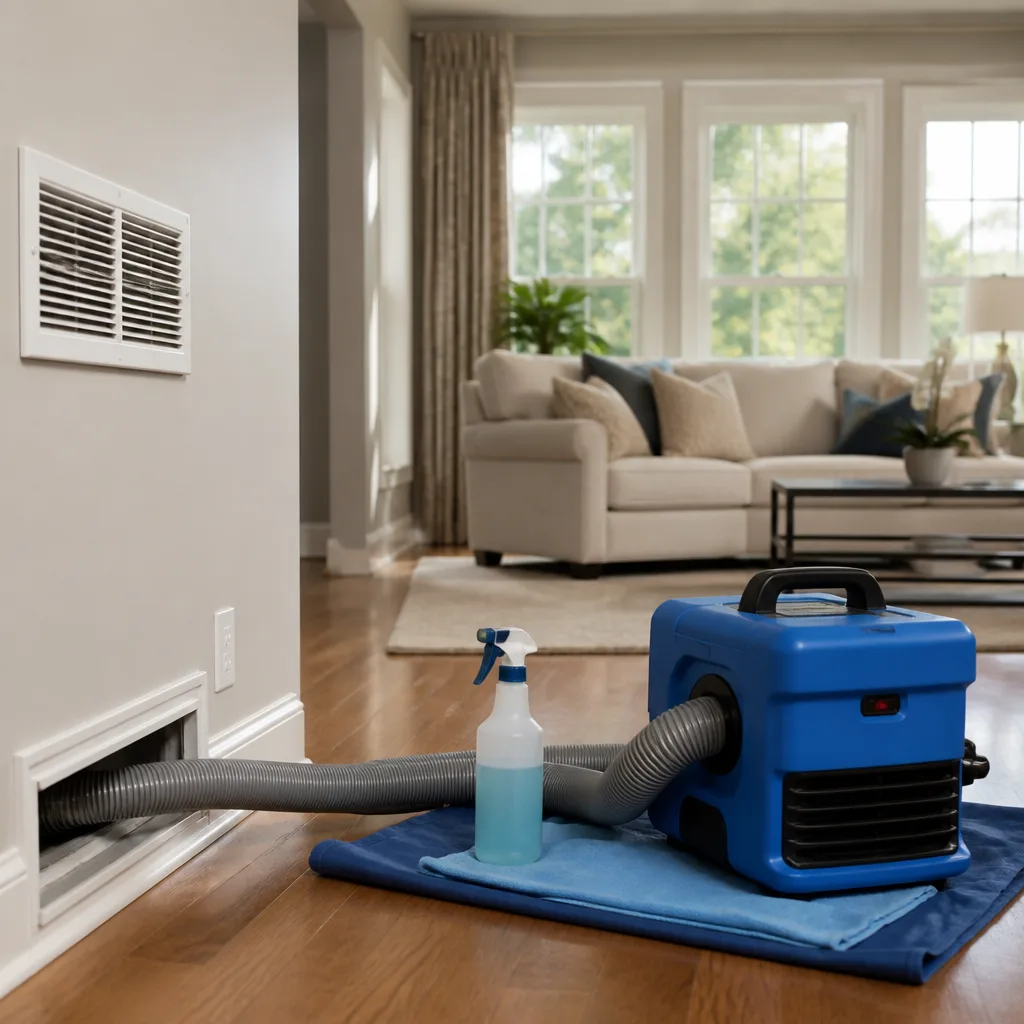 Sanitizing & deodorizing
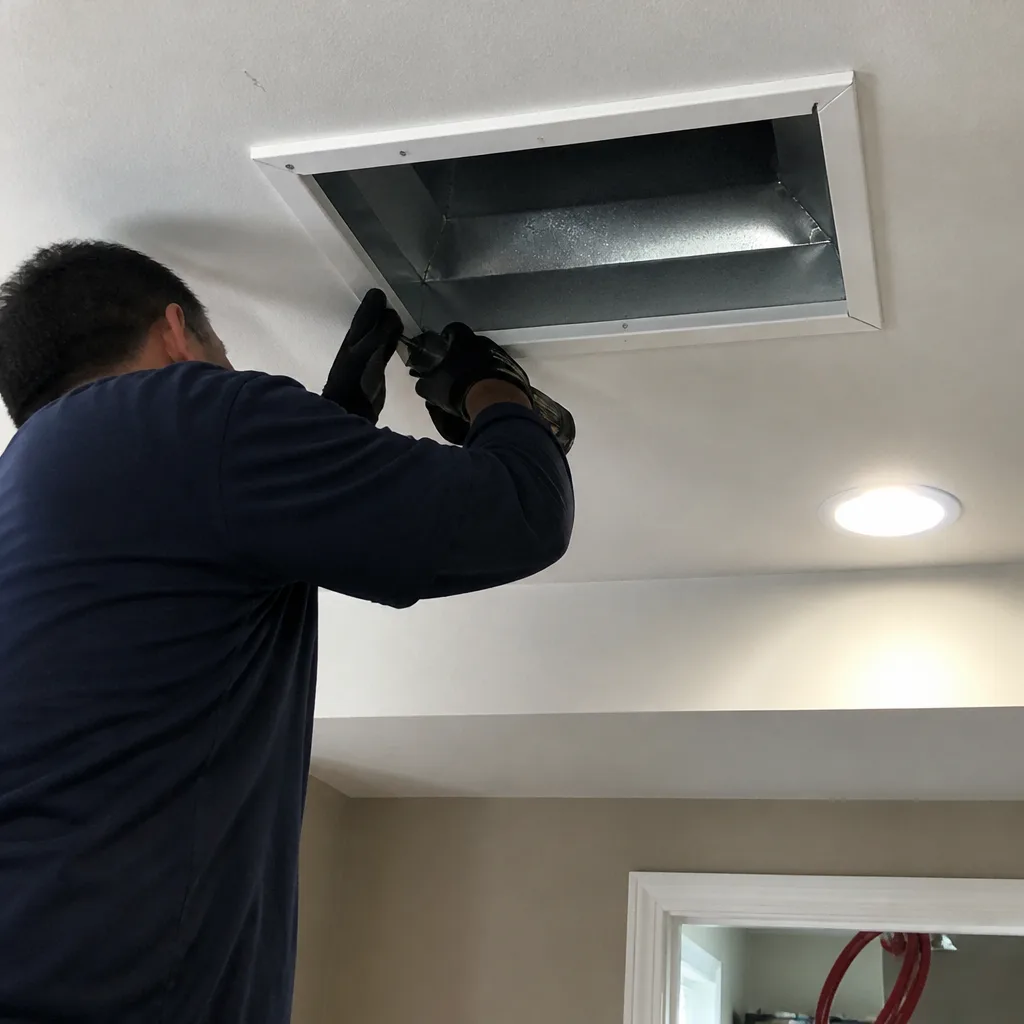
Whole-system duct and dryer vent check with before-and-after photos - you see exactly what came out of your vents
That "$99 whole-house special" is a bait ad - the real number appears once they are in your hallway, or the "clean" is a shop-vac at the register. We photograph the inside of your ducts before and after instead.
Air Duct Cleaning Permits, Codes & Inspections in TX: What You Need to Know
Texas does not require a standalone license to clean air ducts. The person who cleaned your neighbor’s system last week could have zero state-verified training, no inspection history, and no regulatory body watching their work – and it was entirely legal. That single fact shapes everything about how this industry operates in Dallas and across the state. This guide walks through what actually requires a permit, what doesn’t, which codes apply, when inspections enter the picture, and how to protect yourself when a routine cleaning uncovers something that does fall under Texas law.
Styles & brands we work with
Quick Answer
Air duct cleaning itself requires no state license or permit in Texas, but duct repair, modification, or replacement does – it falls under Texas Occupations Code and requires a licensed HVAC contractor. Local Dallas permits are triggered by substantive duct work, not cleaning, and voluntary NADCA standards are the closest thing to a quality benchmark. Mold remediation inside ducts may cross into Texas Department of State Health Services licensed territory.
Table of Contents
- The License vs. Permit Distinction in Texas
- When Dallas Permits Actually Apply to Duct Work
- NADCA Standards: Voluntary, Not Toothless
- Mold in Ducts: Where Texas Law Draws the Line
- What a Contractor Must Disclose When Cleaning Reveals a Problem
- How Duct Inspections Work in Dallas
- How to Verify Any Duct Contractor Before They Step Inside
- Common Mistakes to Avoid
- When to Call a Professional
- Frequently Asked Questions
- The Bottom Line
The License vs. Permit Distinction in Texas
Here’s the core confusion that trips up most Dallas homeowners: a license is a credential a person holds. A permit is approval for a specific job. Texas regulates these separately, and air duct cleaning sits in a narrow gap between the two.
Air duct cleaning requires neither. There is no Texas state license for duct cleaners. No exam. No continuing education requirement. No oversight board. The Texas Department of Licensing and Regulation (TDLR), which licenses electricians, air conditioning contractors, and dozens of other trades, does not have a category for duct cleaning. That means anyone with a truck, a vacuum, and a business card can legally offer duct cleaning in Dallas tomorrow.
Duct repair and modification are different. Once the work moves beyond cleaning – into cutting, sealing, replacing, rerouting, or fabricating duct sections – Texas Occupations Code Chapter 1302 kicks in. That statute requires a state-licensed air conditioning and refrigeration contractor to perform the work. The license is issued by TDLR. Working without it on substantive duct changes is a Class A misdemeanor for the contractor, and it can void your homeowner’s insurance if something goes wrong.
The practical line: cleaning removes debris from existing ducts. Repair changes the duct itself. Sealing a leak with mastic or tape is repair. Replacing a rusted section is repair. Adding a new supply run to a room is modification. All of these require the TDLR license. What does not require a license is the mechanical removal of dust, debris, and microbial growth from the interior surfaces of an existing, intact duct system – that’s cleaning, and that’s what we do with our Air Duct Cleaning services at Linden Air Duct Dallas every day.
Why This Distinction Matters in Dallas Specifically
Dallas homes run their HVAC systems hard. Summers push air conditioners for months without rest, and the ductwork in many North Dallas, Richardson, and Garland homes dates back decades – some systems we see in East Dallas and Oak Cliff are original to homes built in the 1960s and 70s. Older ducts fail more often, which means cleaning jobs in Dallas uncover repairable issues at a higher rate than in milder climates. For Air Duct Cleaning Warning Signs: A Dallas Homeowner’s Reference Guide, see our dedicated resource. Understanding the license line protects you before a contractor starts making promises about what they can fix on the spot.
When Dallas Permits Actually Apply to Duct Work
The City of Dallas requires building permits for certain HVAC work, but the trigger is specific: permits are required when ducts are installed, replaced, or substantively altered. Not when they’re cleaned. Here is the breakdown.
What Requires a Dallas Building Permit
- New duct installation – any new supply or return duct run added to a system.
- Duct replacement – removing and replacing a section of ductwork, even if it’s a like-for-like swap.
- System redesign – changing the size, layout, or configuration of the duct network.
- Whole-home HVAC replacement – when the equipment and duct modifications happen together.
What Does Not Require a Dallas Permit
- Air duct cleaning – removing debris from existing duct interiors with negative-pressure extraction or brush systems.
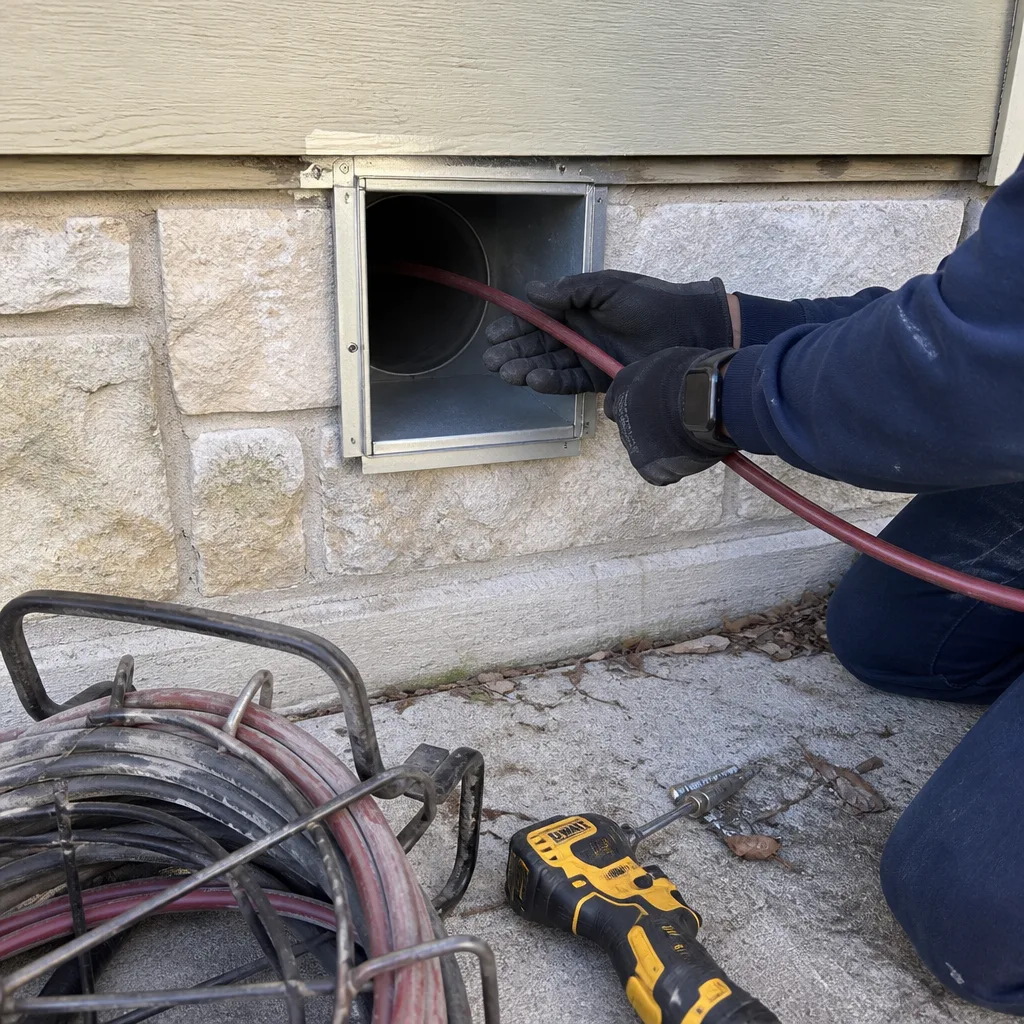
- Dryer vent cleaning – clearing lint from dryer exhaust runs. See our Dryer Vent Cleaning in Dallas page for details on that service.
- Filter replacement – swapping a filter at the return grille or the air handler.
- Minor sealing – patching a small gap with mastic where no structural change occurs. (This one is gray; larger sealing jobs are best treated as repair work.)
How to Confirm Before Work Begins
- Ask the contractor directly: “Will this job require a City of Dallas permit?” If the answer is yes, ask for the permit number after it’s pulled.
- Verify through DABS (Dallas Administrative Building System), the city’s permit portal. Any legitimate permit filed for your address will appear there.
- Check the contractor’s TDLR license number at the TDLR website. If the work involves repair or modification and they can’t produce a current license number, stop the job.
- Keep a record: a legitimate contractor will note permit status on the written estimate. If the estimate says “no permit required,” that’s a written statement you can hold them to.
We make this part straightforward. Every estimate from Linden Air Duct Dallas states in writing whether the proposed work triggers a permit. If it does, we tell you before the work starts, not after the walls are open.
NADCA Standards: Voluntary, Not Toothless
The National Air Duct Cleaners Association (NADCA) publishes the closest thing this industry has to a codebook. Its standard – currently the ACR, or Assessment, Cleaning, and Restoration standard – defines what a proper duct cleaning actually is. Here’s the catch: NADCA has no enforcement authority. No Texas agency requires compliance. A contractor can ignore NADCA entirely and still operate legally in Dallas.
That said, NADCA standards matter more than most homeowners realize. They matter because they create a contractual baseline. When a contractor says they clean “to NADCA standards,” that phrase now means something specific and measurable. It means source removal, not just surface wiping. It means cleaning the entire HVAC system – supply ducts, return ducts, registers, grilles, coils, blower motor, and drain pan – not just the parts you can see from the living room. It means using negative-pressure extraction equipment that pulls debris out of the system rather than pushing it into the house.
The Key NADCA Requirements, in Plain Language
- Source removal is mandatory. Brushing, agitation, and extraction must remove debris at its source, not simply blow it loose.
- The entire system gets cleaned. NADCA prohibits the old “just the boots and registers” shortcut. If a contractor quotes you for a partial clean, they are not following the standard.
- Access points must be proper. When access holes are cut into ducts, they must be sealed with compliant caps or patches afterward. A hole left covered with duct tape is a code violation waiting to happen.
- Visible results are the standard. NADCA uses a post-cleaning visual inspection as the pass/fail test. If debris remains visible with the naked eye, the job is not done.
How to use this: when you get a written estimate for air duct cleaning in Dallas, ask the contractor to confirm in writing that they clean to the current NADCA ACR standard. If they hesitate, that’s information. If they put it in writing, you now have a contractual yardstick. We include that language on every estimate at Linden’s Air Duct Cleaning in Dallas page – because “we clean to NADCA standards” is a real, measurable commitment, not brochure language.
Mold in Ducts: Where Texas Law Draws the Line
Mold is the single most complicated issue in this trade, and Texas law makes it more complicated, not less. Here’s what happens: a cleaning technician finds mold growth inside the ductwork or on the coil. Now what? The answer depends on what the contractor proposes to do about it.
Routine cleaning of mold from non-porous duct surfaces is generally within the scope of duct cleaning. HEPA vacuuming, mechanical agitation, and antimicrobial application to the cleaned surfaces are standard practice. This is not a licensed activity in Texas.
Remediation of mold from building materials is different. The Texas Department of State Health Services (DSHS) requires a license for mold assessment and mold remediation when the work involves affected building materials – drywall, insulation, wood framing – and the affected area exceeds 25 contiguous square feet. Duct interiors are typically below that threshold, but the threshold applies to the total affected area in the home, not just the ducts. If a Dallas home has mold in the ducts and mold on the attic decking and mold in a bathroom ceiling, the total area is what triggers the DSHS license.
What This Means for Your Contractor’s Scope
- A duct cleaner can clean mold from the interior of ductwork using HEPA equipment as part of a duct cleaning job.
- A duct cleaner cannot remediate mold from drywall, insulation, or framing – that’s a separately licensed activity in Texas.
- If the mold source is in the building materials (a roof leak, a bathroom exhaust problem), cleaning the ducts without fixing the source is a temporary fix at best.
- A legitimate contractor will tell you when the job crosses into DSHS territory. The ones who don’t are often the ones who shouldn’t be in the house.
We see this regularly in Dallas – especially in older homes in Lakewood, Preston Hollow, and the M Streets, where aging HVAC systems meet decades of humidity cycles. Mold in the ducts is rarely a duct-only problem. A responsible contractor says so plainly.
What a Contractor Must Disclose When Cleaning Reveals a Problem
No Texas statute spells out a duct cleaner’s duty to disclose everything they find. But common law, contract principles, and basic professional ethics all point the same direction: if a contractor sees something that materially affects the safety or performance of your system, they have a duty to tell you. Failing to disclose a disconnected duct, a rusted-out return, or visible mold growth is the kind of omission that leads to lawsuits, and it’s also just bad work.
In practice, here’s what responsible disclosure looks like in Dallas, and what you should expect from any contractor who enters your home:
- Written findings. The technician should document what they found, where they found it, and what they recommend. Verbal-only disclosure is not disclosure. If it’s not written down, it didn’t happen.
- Photo documentation. Before-and-after photos are standard practice today. Any technician with a smartphone can show you exactly what they saw inside the duct. If they won’t, ask why.
- Scope separation. The contractor should clearly separate cleaning findings from repair findings. “Your ducts are clean, but there’s a disconnected section at the plenum that needs a licensed HVAC contractor” is a specific, actionable statement.
- No scare-tactics upsells. The industry’s worst actors use imaginary mold and exaggerated code violations to push unnecessary “repairs.” A legitimate finding comes with visual proof, not just a technician’s word.
Your Options When Cleaning Reveals a Code Issue
- Ask for the specific code reference. If a contractor says something is a code violation, ask which code, which section. Vague “code problems” with no citation are usually sales tactics.
- Get a second opinion. A licensed HVAC contractor can verify whether the issue is real and what a repair should cost. In Dallas, there are hundreds to choose from.
- Request a written estimate for the repair separately. Keep the cleaning invoice and the repair estimate separate. This prevents exactly the kind of invoice-blending that has given the duct cleaning industry its reputation.
- Contact the City of Dallas if you believe work was performed without a required permit. The city takes unpermitted HVAC work seriously.
At Linden Air Duct Dallas, our Air Duct Repair in Dallas service follows this exact structure. We clean first. If we find something that needs repair, we document it, photograph it, and give you a separate written estimate. You never have to agree to a repair on the spot.
How Duct Inspections Work in Dallas
“Inspection” means two different things in this industry, and it’s worth separating them before money changes hands.
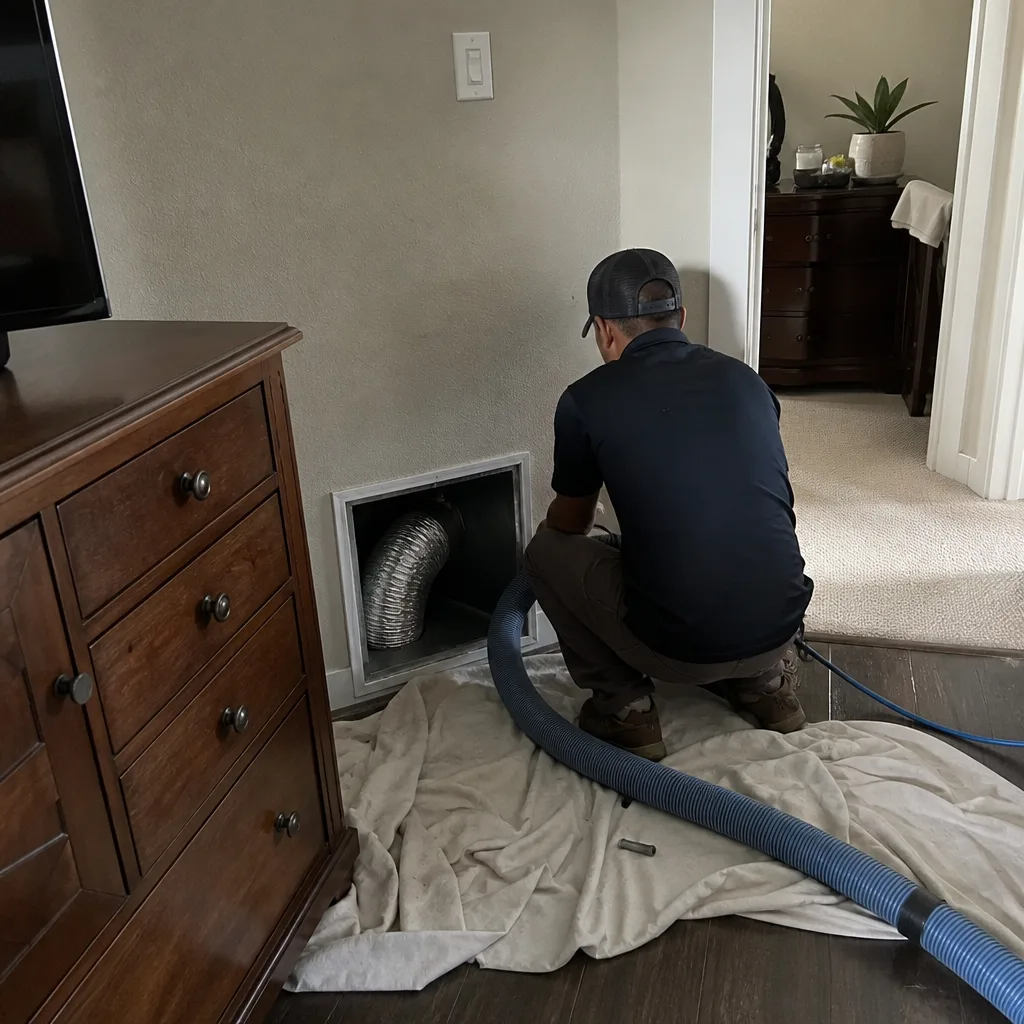
Routine cleaning inspection. This is what happens before and during a duct cleaning job. The technician inspects the system – registers, boots, duct interiors, plenum, coil, blower – using cameras and visual access. The purpose is to document condition, identify blockages or damage, and determine the cleaning approach. This inspection is typically included with the cleaning service. NADCA requires a pre-cleaning assessment as part of any legitimate job.
Municipal code inspection. This is what happens when duct work triggers a Dallas permit. A city inspector reviews the work after it’s done – and often before the walls are closed – to verify it meets the Dallas building code and mechanical code. The inspector works for the city, not the contractor. Their sign-off is what closes the permit.
The Typical Sequence for Permitted Duct Work in Dallas
- Contractor pulls the permit through DABS before starting.
- Work is completed, including any required rough-in inspection if walls are open.
- Contractor schedules the inspection with the city.
- Inspector verifies the work against current code – duct sizing, sealing, support spacing, insulation requirements, and fire damper placement where applicable.
- Inspector signs off, the permit is closed, and the work is on record with the city.
For cleaning jobs, none of this applies. No permit, no city inspection, just the pre-cleaning assessment and the NADCA post-cleaning visual verification. That’s why the contractor you choose matters so much – there’s no inspector checking their work after they leave.
How to Verify Any Duct Contractor Before They Step Inside
Since Texas doesn’t license duct cleaners, verification falls on you. That’s not ideal, but it’s manageable. Here’s a step-by-step checklist that works for any Dallas homeowner.
- Confirm the business exists. A real business has a physical address, a phone number that a person answers, and a paper trail. A Craigslist ad and a cell phone is not a business.
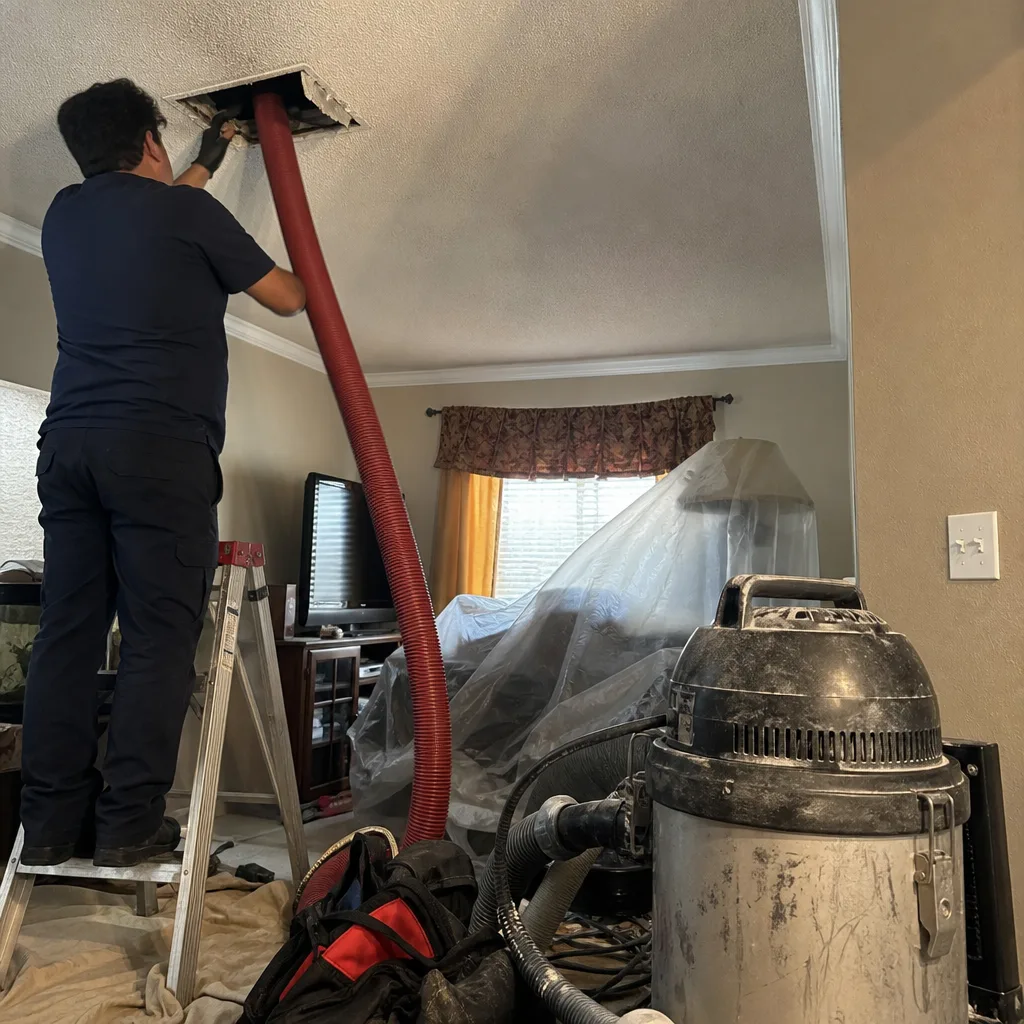
- Ask about equipment. Professional duct cleaning uses professional-grade equipment – brands like Rotobrush and Nikro are the trade standards. If the contractor’s rig is a shop vac and a drill, the job will not meet NADCA standards. We use Rotobrush and Nikro equipment on every job, because source removal requires real extraction power.
- Ask about technician verification. This is the part most Dallas homeowners skip, and it’s the part that matters most. Who is coming to your door? Can they prove it? At Linden Air Duct Dallas, every technician is background-checked and identity-verified under the Threshold Standard. You receive the tech’s name and photo before the visit, and they show a photo ID badge at the door – every time. No exceptions.
- Get the price in writing before work begins. Not a range. Not an estimate subject to change. A written price. If they won’t put it on paper, they’re planning to change it. Our prices are always written before any work starts – no surprise invoices, ever.
- Ask about the guarantee. What happens if the cleaning doesn’t hold? If debris returns in three months? A contractor who won’t stand behind their work in writing is telling you something. We back every cleaning with our 365-Day Done Right Promise, in writing, on every job.
- Check the air-quality products they use. If the job includes sanitizing or deodorizing, ask what products they’re using. Trade-trusted names include Honeywell and Guardsman. Generic “fog” with no label is a red flag.
Common Mistakes to Avoid
- Assuming a cheap coupon price means a complete clean. The classic bait-and-switch in Dallas duct cleaning is a low per-vent price that becomes a far larger invoice once the van is in the driveway. The honest counter is a whole-system price in writing before the job starts – which is exactly what Linden provides. No per-vent games, no surprise invoice at the end.
- Letting a cleaner perform repair work without a TDLR license. If the technician finds a disconnected duct and offers to fix it on the spot, ask to see their TDLR air conditioning contractor license. If they don’t have one, they’re working illegally. Cleaning and repair are different jobs with different legal requirements.
- Trusting before-and-after photos they didn’t ask for. A real contractor shows you the photos of your own ducts. Stock photos, generic marketing shots, or photos that don’t match your home’s registers are a red flag.
- Ignoring mold because it’s “just in the ducts.” Mold in a Dallas duct system is often a symptom of a moisture problem elsewhere – a roof leak, a bathroom exhaust venting into the attic, a condensate pan that’s been overflowing for months. Cleaning the ducts without addressing the source is money spent twice.
- Paying cash with no written agreement. A written estimate isn’t just about the price. It’s a record of what was promised, what was scoped, and what the contractor agreed to deliver. If they won’t put it in writing, walk away.
- Believing “no permit needed” without asking why. When a contractor says no permit is required, that’s usually correct for cleaning – but it should come with the specific reason. “Cleaning doesn’t trigger Dallas permit requirements” is an answer. “Don’t worry about it” is not.
- Skipping the NADCA question. If you don’t ask whether the contractor cleans to NADCA standards, you may not find out until the job is done that they don’t. Ask before. Get it in writing.
When to Call a Professional
If you’ve noticed dust accumulating unusually fast on surfaces, rooms that never reach the thermostat temperature, musty smells when the blower kicks on, or visible debris around the registers, the ducts are worth an inspection. If anyone in the home has allergies or respiratory sensitivities that worsen when the HVAC runs, the dust and debris cycling through the system may be a contributing factor. If you’ve recently renovated – drywall dust, sawdust, and construction debris migrate into ducts quickly – a professional cleaning is the standard recommendation. And if you’ve never had the ducts cleaned since buying the home, and the previous owner can’t tell you when they did, assume it’s due.
Linden Air Duct Dallas offers free estimates in Dallas – call (361) 309-3153 for a written quote before any work begins. We’ve served Dallas homeowners since 2004, and our home page has the full rundown of how we work.
Frequently Asked Questions
No. Texas does not require a standalone license for air duct cleaning. The Texas Department of Licensing and Regulation has no duct cleaning category, which means anyone can legally offer the service. Duct repair and modification, however, do require a licensed HVAC contractor under Texas Occupations Code Chapter 1302. Call (361) 309-3153 if you’re in Dallas and want a written quote from a contractor who documents their work and stands behind it.
No permit is required for air duct cleaning in Dallas. City permits are triggered by installation, replacement, or substantive alteration of ductwork – not by removing debris from existing ducts. Any contractor who tells you a permit is required for a standard cleaning is either confused or padding the invoice. For an honest assessment of your Dallas home’s ducts, call us at (361) 309-3153.
Duct cleaning is the removal of dust, debris, and microbial growth from the interior of existing, intact ductwork using negative-pressure extraction and agitation. It requires no state license. Duct repair is any work that changes the duct itself – sealing leaks, replacing sections, rerouting runs, or modifying the system – and it requires a TDLR-licensed air conditioning contractor. If a cleaning reveals a repair issue, the two scopes should be kept separate in writing. That’s how we handle it at Linden Air Duct Dallas: clean first, document findings, then provide a separate written repair estimate if needed.
No. NADCA standards are voluntary – no Texas agency or Dallas ordinance enforces them. However, they function as a contractual benchmark: if a contractor agrees in writing to clean to NADCA ACR standards, those standards become part of your agreement. Source removal, whole-system cleaning, and post-cleaning visual verification are all NADCA requirements we follow on every job in Dallas. Call (361) 309-3153 for a written estimate that specifies the standard.
Ask for photo documentation and a written explanation of what they found, where, and what they recommend. Mold inside ductwork can often be cleaned as part of a duct cleaning job using HEPA equipment, but mold in building materials – drywall, insulation, framing – may require a Texas Department of State Health Services licensed mold remediator. If the contractor can’t distinguish between those two scopes, get a second opinion. We document every finding with photos and written notes, so there’s never guesswork about what was or wasn’t in your ducts.
Check for a physical business address, a phone answered by a live person, a written price before work begins, NADCA-standard cleaning language in the contract, and a real guarantee. Ask who is coming to your door and how they’ll prove it. At Linden Air Duct Dallas, every technician is background-checked and identity-verified under the Threshold Standard – you receive the tech’s name and photo before the visit and they show a photo ID badge at the door. We’ve operated in Dallas since 2004, and our guarantee is written on every job: the 365-Day Done Right Promise, with a free second visit if a covered repair doesn’t hold.
The Bottom Line
Texas trusts homeowners to navigate a regulatory gap that most don’t know exists. Air duct cleaning requires no license and no permit – which means the burden of verification falls entirely on you. The protections that do exist are specific: TDLR licensing for repair work, Dallas building permits for substantive duct changes, DSHS licensing for mold remediation beyond 25 contiguous square feet, and NADCA standards that become binding when written into a contract. Use them. Ask for the written price, the written guarantee, the written NADCA commitment, and the photo ID at the door. A contractor who provides all four is not the cheapest quote you’ll get in Dallas – but they’re the one you can hold accountable after the job is done.
Written by Marcus Veale, Owner at Linden Air Duct Dallas, serving Dallas since 2004.
See the difference
 Before
 After
After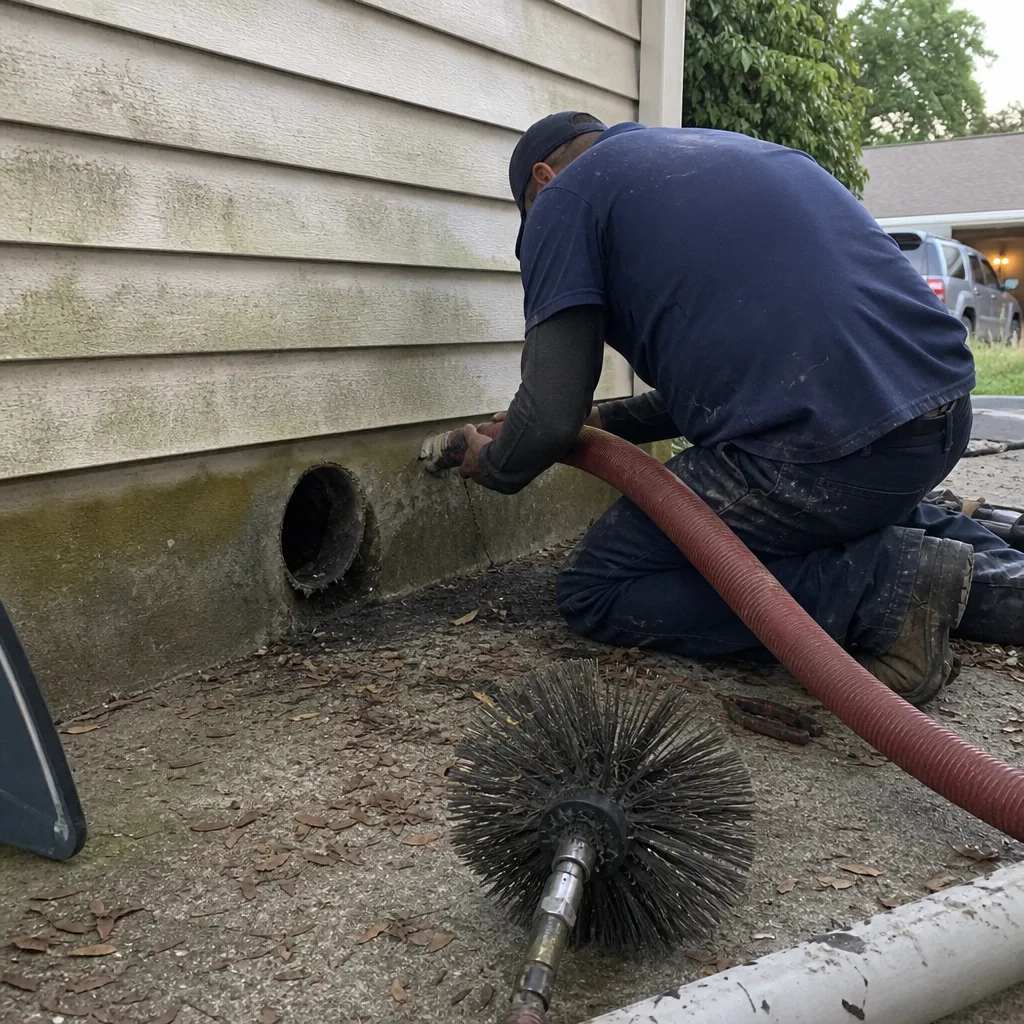 Before
 After
After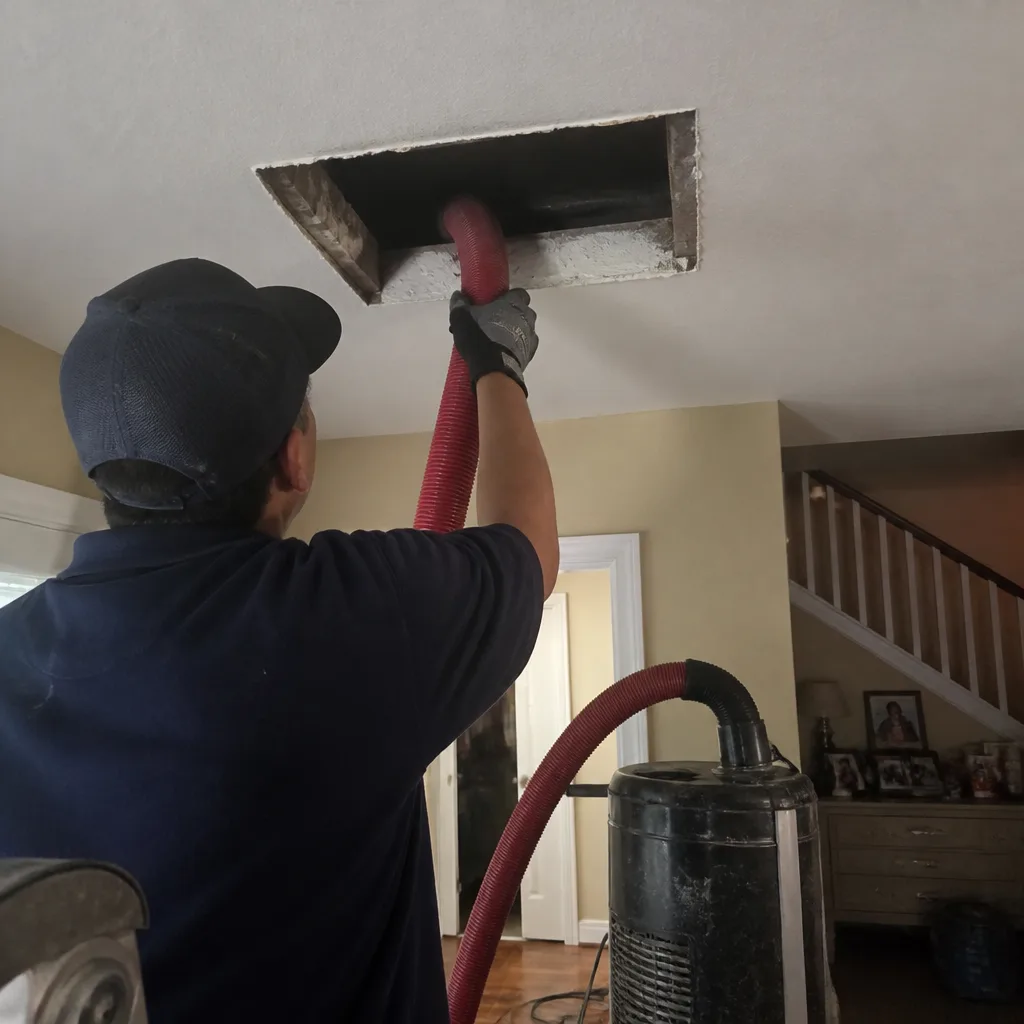 Before
 After
After