
Last updated October 15, 2026
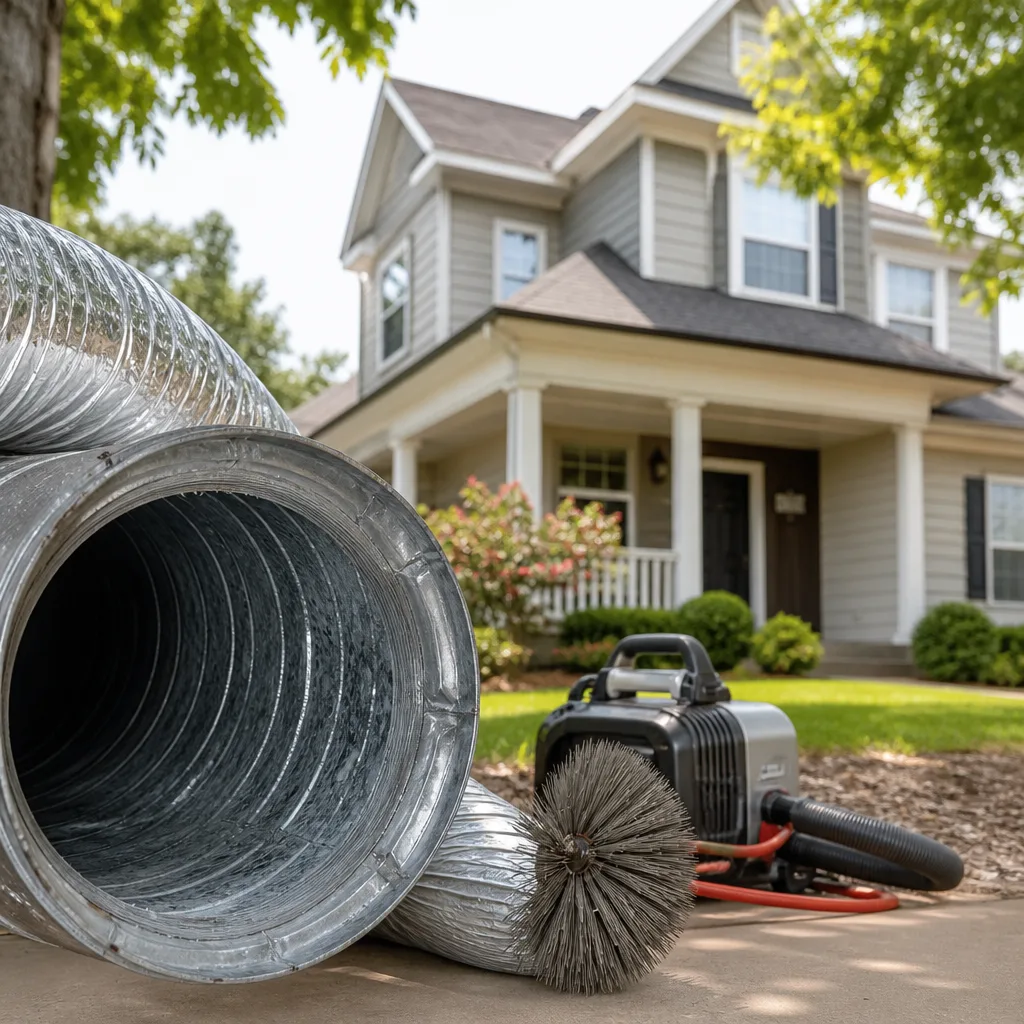 Whole-home duct cleaning
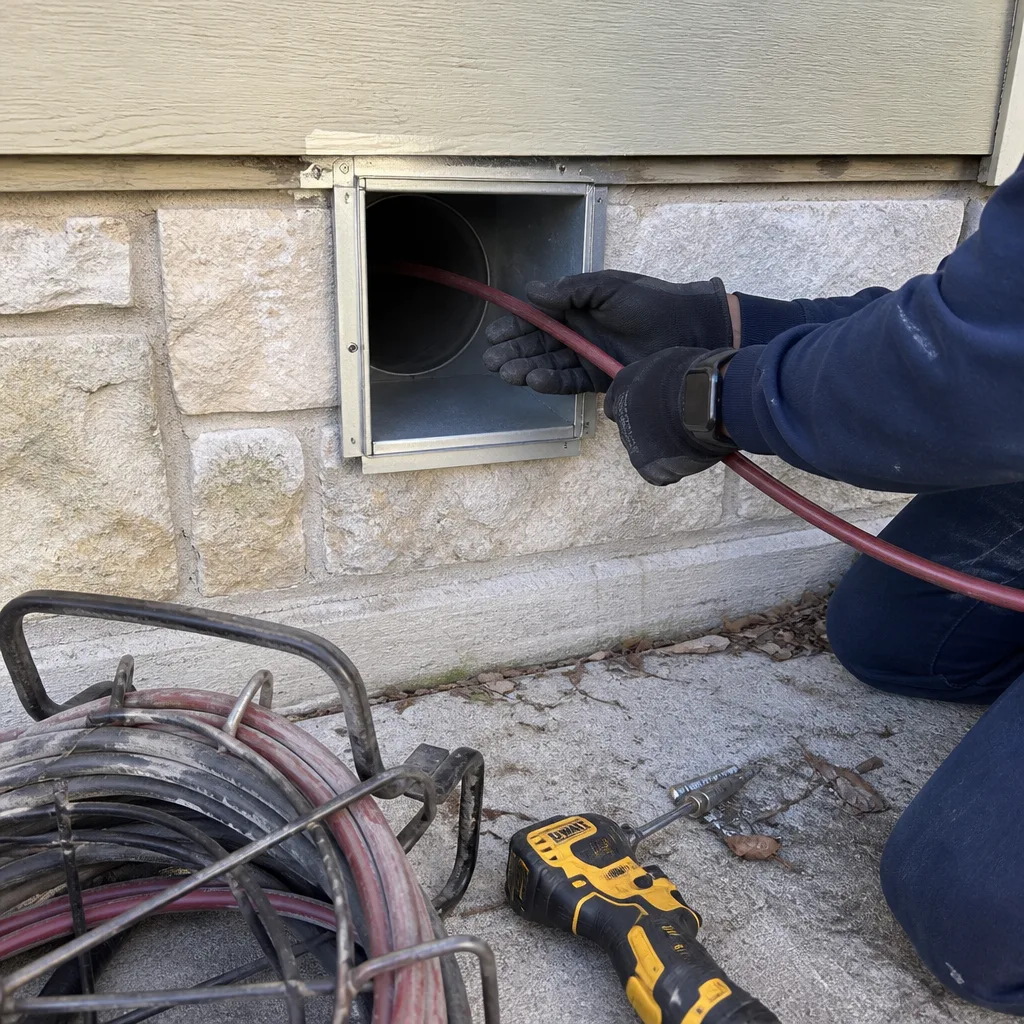
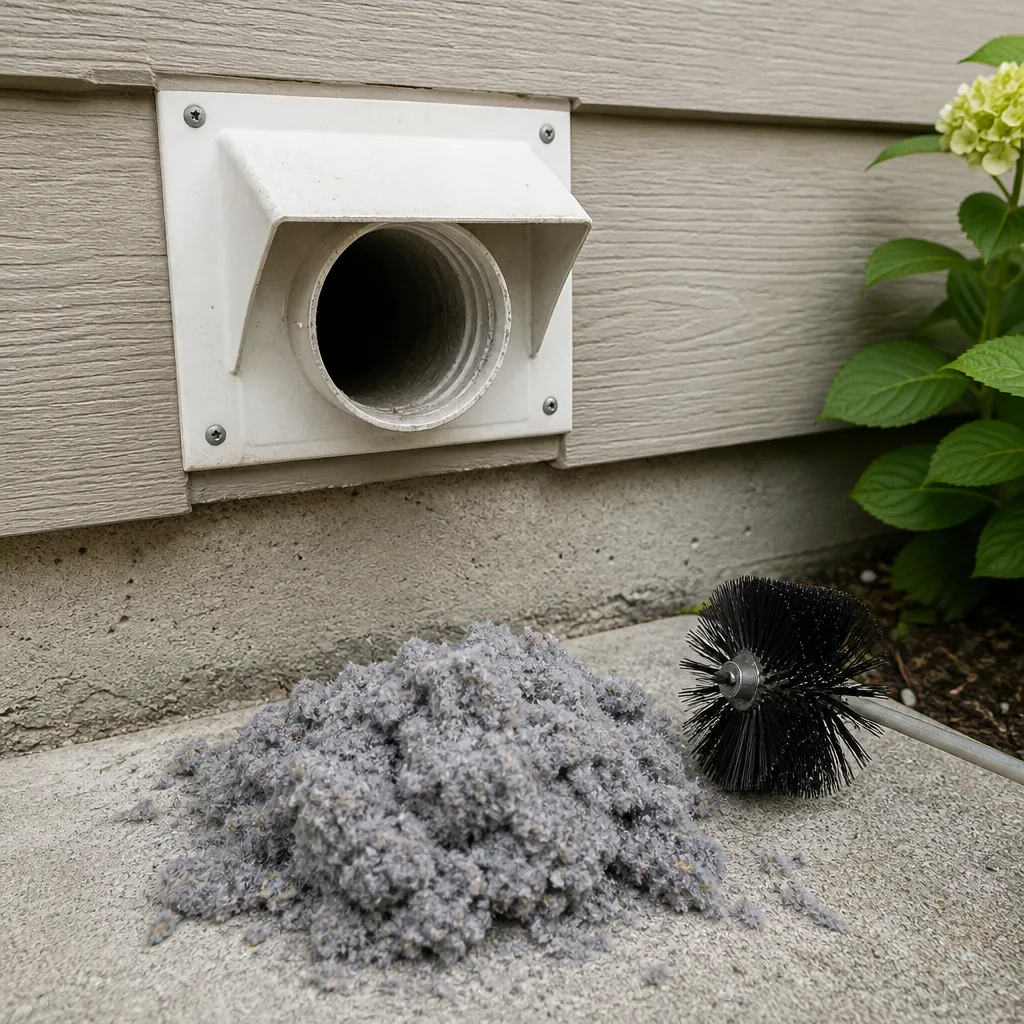 Dryer vent cleaning
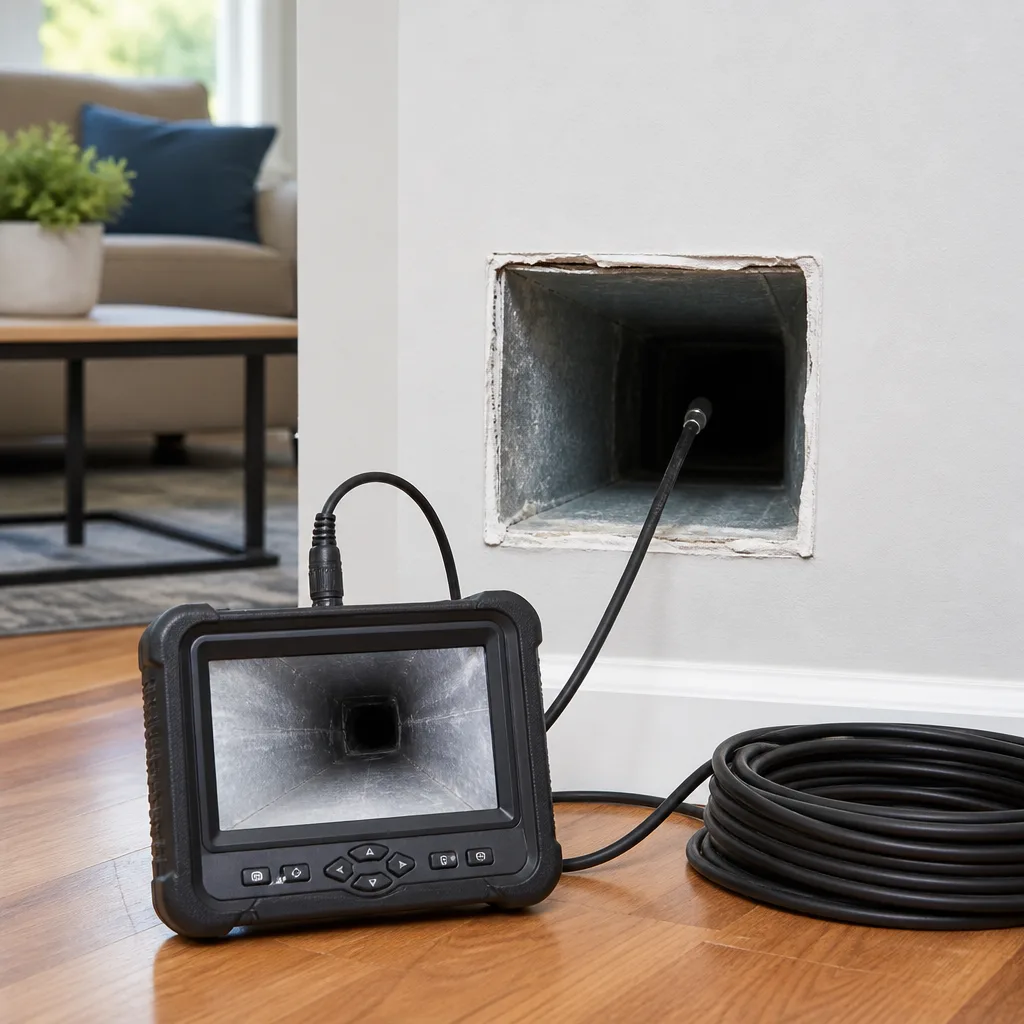 Camera inspection
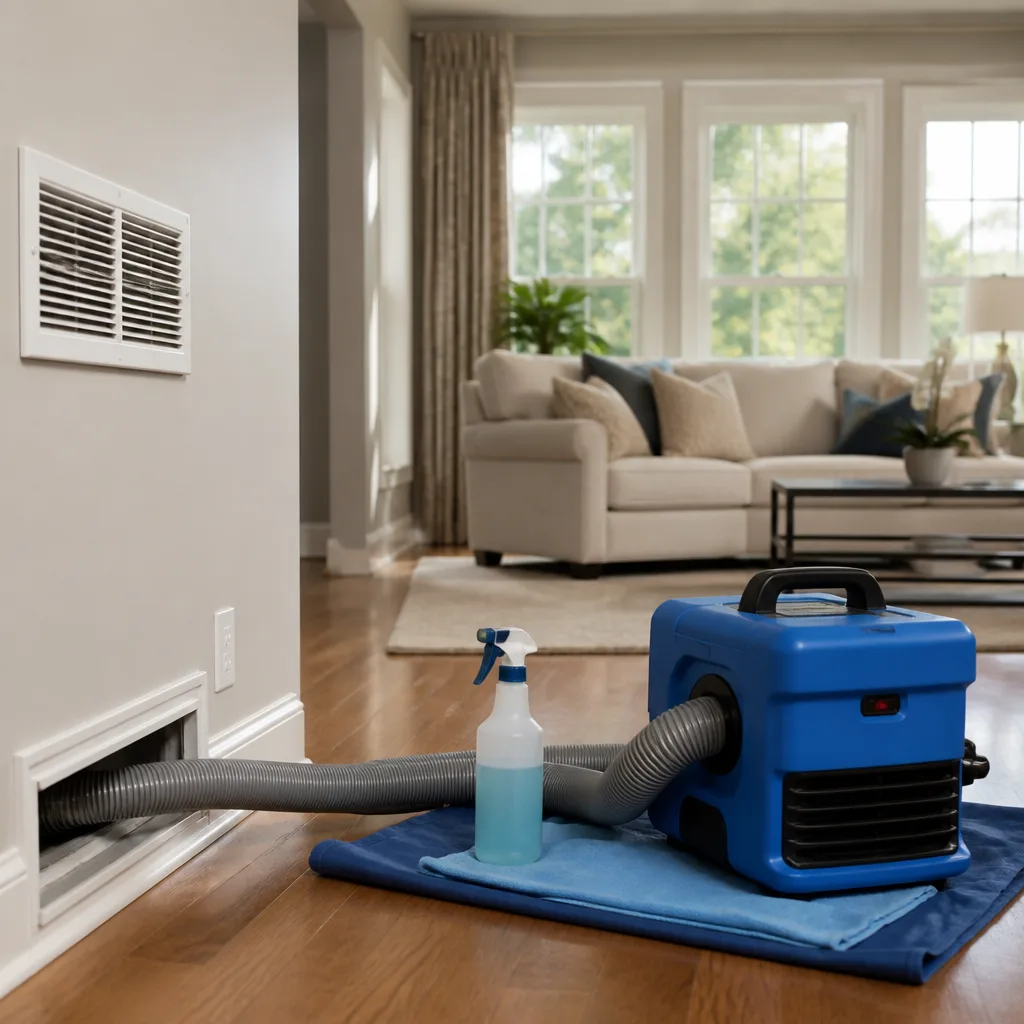 Sanitizing & deodorizing
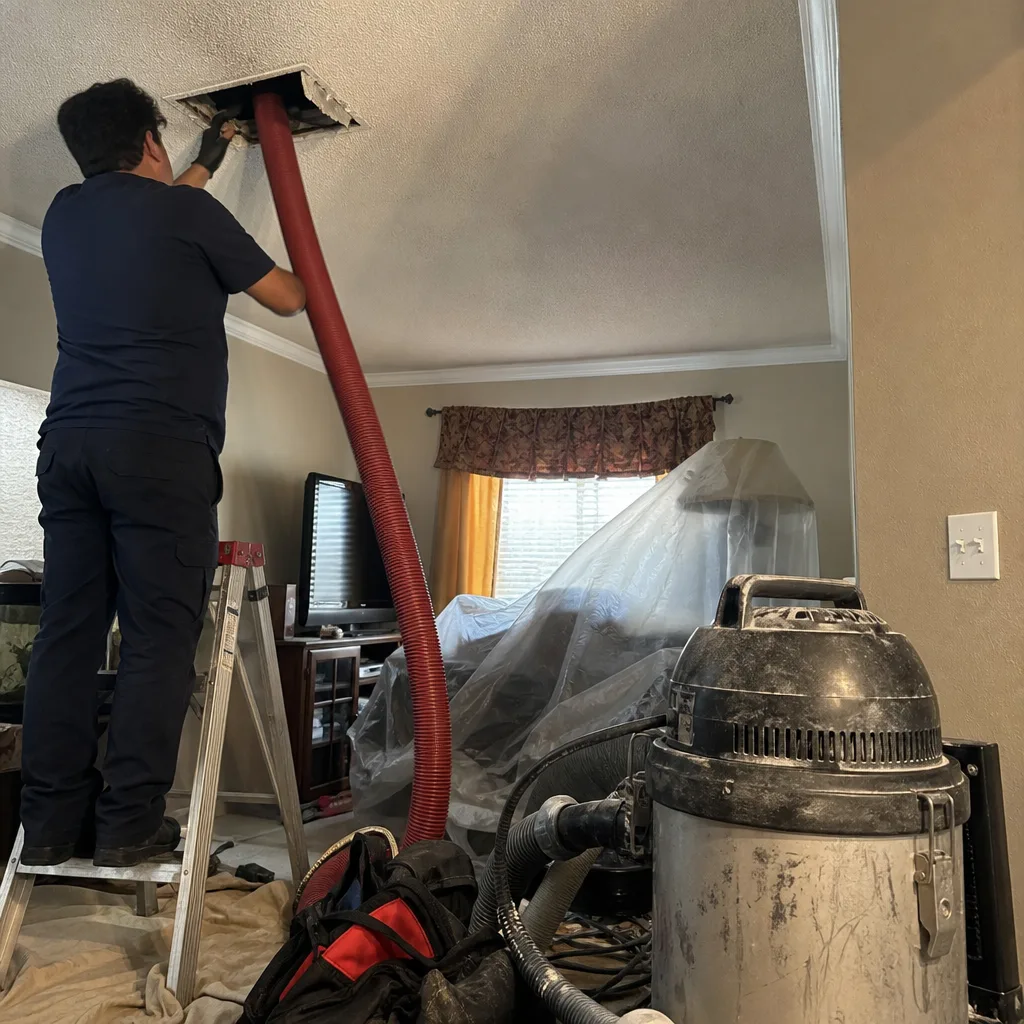
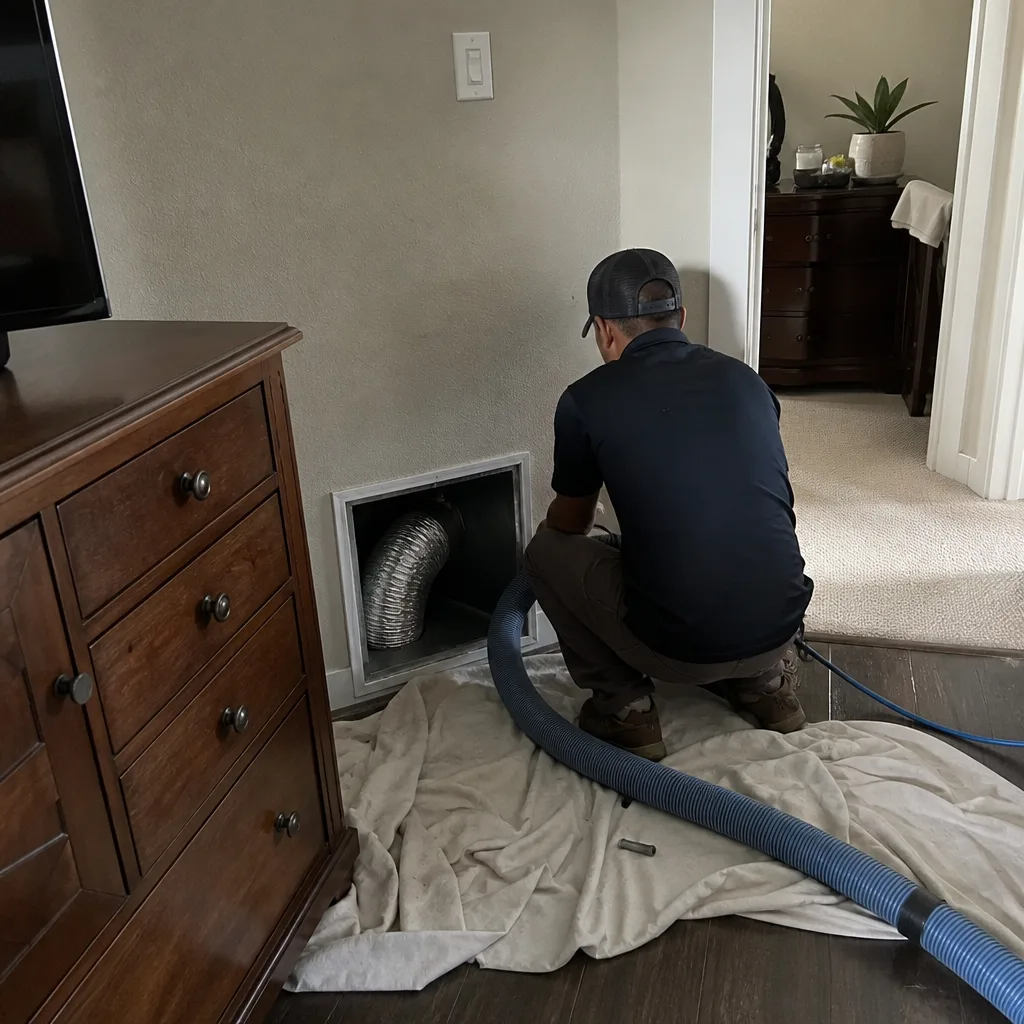
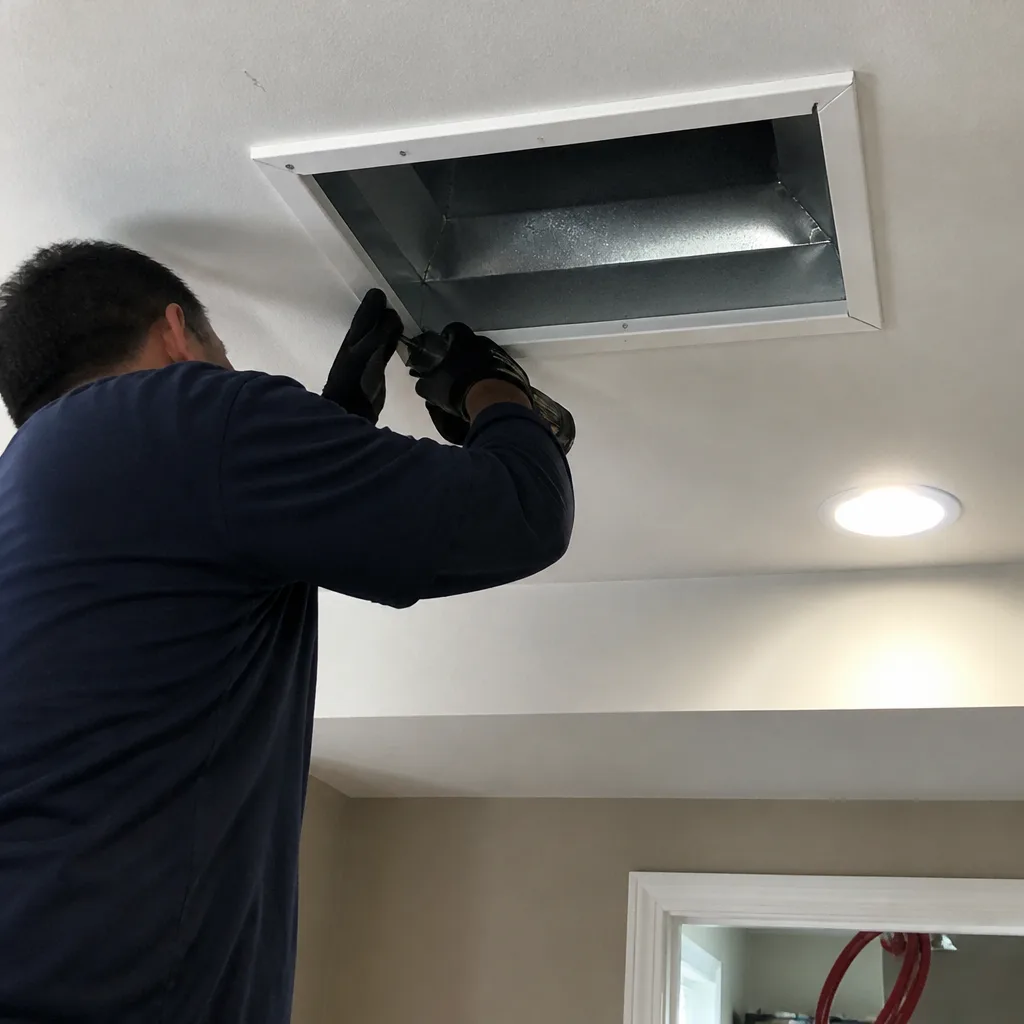
Whole-system duct and dryer vent check with before-and-after photos - you see exactly what came out of your vents
That "$99 whole-house special" is a bait ad - the real number appears once they are in your hallway, or the "clean" is a shop-vac at the register. We photograph the inside of your ducts before and after instead.
Air Duct Cleaning Warning Signs: A Dallas Homeowner’s Reference Guide
Musty air after you turn on the AC is not always a duct problem. But in Dallas in May, when humidity climbs and your system cycles harder than it has in months, that smell has three specific likely causes. Only one of them requires immediate professional intervention, and knowing which is which saves you both money and real risk. Most Dallas homeowners notice warning signs weeks before they act on them. This guide gives each symptom a specific cause, a severity rating from 1 to 5, and a clear decision rule so you know exactly when to call and when to wait. For a deeper dive, see The Complete Guide to Air Duct Cleaning in Dallas.
Styles & brands we work with
Quick Answer
The clearest warning signs that your air ducts need cleaning in Dallas are visible dust buildup around supply registers, a musty or stale odor that intensifies when the HVAC runs, noticeably uneven temperatures between rooms, and allergy symptoms that worsen at home but improve elsewhere. Of these, visible mold growth or a persistent burning smell are the only two that require you to stop running the system and call a professional the same day. Most other signs build gradually over weeks or months, which means you have time to schedule a proper inspection rather than an emergency call. If you’re unsure whether to tackle it yourself, our DIY vs Professional Air Duct Cleaning: The Dallas Homeowner’s Decision Guide can help.
Table of Contents
- Visible Dust at Registers: What It Actually Means
- Musty Odor When the System Runs: Three Causes, Only One Is Urgent
- Uneven Room Temperatures: When Ducts Are the Culprit
- Allergy Symptoms That Follow You Home
- Higher Energy Bills Without a Behavior Change
- How to Photograph and Document Warning Signs Before You Call
- Warning Signs Inside the Duct Cleaning Process Itself
- Common Mistakes to Avoid
- When to Call a Professional
- Frequently Asked Questions
- The Bottom Line
Visible Dust at Registers: What It Actually Means
When you see gray or brown streaks on the wall above a supply register, or a fine dust film on furniture near vents, your duct system is blowing particulates back into the living space. This is the single most common warning sign Dallas homeowners report, and it is also the most misunderstood. Some dust at registers is normal in any forced-air system. The question is whether the dust is new and whether it returns days after you wipe it clean.
In our experience working in older Dallas neighborhoods like Lakewood, Casa View, and Preston Hollow, homes built before 1985 tend to show register dust more quickly than newer construction. The reason is rarely the ducts themselves. It is usually the return-air path: older Dallas homes often have undersized returns, leaky return plenums, or return air pulled through wall cavities instead of dedicated ducts. When return air is pulled through unconditioned spaces, it drags attic insulation fibers, drywall dust, and decades of settled debris into the system, which then distributes it to every room.
Three specific causes of register dust in Dallas homes:
- Leaky return ducts or plenums: In attic systems common across North Dallas, returns are often flex duct that has separated at a connection or been crushed by stored boxes. The system pulls attic air, not house air.
- Filter bypass: A filter that does not seal in its slot lets unfiltered air stream past it. Homes in East Dallas with older filter cabinets see this constantly.
- Deteriorating duct liner: Sheet metal ducts with internal fiberglass liner break down over 20 to 30 years. The liner sheds fibers that look exactly like dust.
Severity rating: 3 out of 5. Register dust alone is not an emergency, but it is a legitimate signal that the system is moving debris. The decision rule: wipe the register and surrounding surface clean, leave the system off for four hours, then turn it on. If visible dust appears within 48 hours, schedule an inspection. If it takes two weeks or more to return, you are seeing normal household dust settling and a cleaning is likely not urgent.
One more Dallas-specific note: during spring construction season, homes near active tear-downs and rebuilds in neighborhoods like Lower Greenville and the M Streets temporarily show far more register dust. If your neighbors are renovating, give the system time to settle after the work finishes before concluding your ducts are the source.
Musty Odor When the System Runs: Three Causes, Only One Is Urgent
A musty or stale smell that appears only when your HVAC runs has three likely causes in Dallas. Two of them are manageable. One is not. Here is how to tell the difference.
Cause One: A Dirty Evaporator Coil (Urgency: 2 of 5)
Dallas humidity is relentless from April through October. Your evaporator coil, which sits in the indoor unit above the furnace or inside the air handler, condenses gallons of moisture out of the air every cooling season. That moisture combines with the microscopic dust that slips past even a good filter and creates a biofilm on the coil fins. The smell is best described as “dirty socks” or “wet basement.” It is unpleasant, it means the coil needs cleaning, and it often accompanies reduced cooling performance. It does not mean your ducts themselves are contaminated in most cases. The coil sits upstream of your supply ducts, so the odor travels through them without necessarily originating in them.
Cause Two: Chronic Duct Condensation in an Attic (Urgency: 3 of 5)
This is the cause we see most often in Dallas attic-ducted homes. Supply ducts running through an unconditioned attic can sweat when cool air moves through them in a hot, humid attic. Over time, that condensation soaks the insulation wrap around the duct, and the result is a persistent musty smell that is strongest when the system first kicks on. The smell is not mold inside the duct in most cases. It is damp insulation outside the duct. Left unaddressed, though, the damp conditions can lead to actual mold growth on the duct surface or interior liner. This is worth scheduling an inspection for, and it is the root reason many Dallas homeowners end up needing Air Duct Repair in Dallas rather than cleaning alone.
Cause Three: Actual Microbial Growth Inside the Duct System (Urgency: 5 of 5)
This is the one that requires you to stop running the system and call today. True microbial growth inside ductwork happens when organic debris, persistent moisture, and darkness combine. In Dallas, the conditions are most common in pier-and-beam older homes where ducts run through a crawl space that floods during spring storms, or in slab-foundation homes where a duct has been breached by shifting soil and groundwater intrusion. If the musty smell is accompanied by visible dark spotting on the inside of supply registers, or if the smell remains when the system is off, treat it as contamination until proven otherwise. Do not run the fan. Shut the system down and call a professional who can inspect rather than guess.
Decision rule: smell only while running and no visible growth? Schedule an inspection this week. Smell when the system is off, or visible spotting at registers? Stop the system now and call.
Uneven Room Temperatures: When Ducts Are the Culprit
Rooms that run five or more degrees warmer than the rest of the house in a Dallas summer are common, but the cause is not always duct-related. Dallas sun loads are brutal on west-facing rooms, and no amount of duct cleaning fixes a room with 40 square feet of single-pane glass facing the July afternoon sun. Here is how to isolate duct problems from other causes.
A simple test that costs you nothing: on a 95-degree day, close your eyes and stand in the center of the problem room. Feel for air movement at the register itself. If the airflow is weak compared to a comfortable room in the same house, you likely have a duct issue: a crushed flex duct, a disconnected joint, a damper that has been shut, or a duct that is substantially restricted by debris. If the airflow feels strong but the room is still hot, the problem is thermal load, not ductwork.
In Dallas, slab-foundation homes from the 1960s through the 1980s have a specific failure pattern we see repeatedly. Duct runs under the slab are concrete-encased or run through transite channels, and when those channels crack or shift with Dallas’s expansive clay soil, the ducts inside get crushed or separated. The result is a room that never cools properly no matter what you do at the thermostat. Air Duct Cleaning in Dallas can remove debris restrictions, but a crushed or separated duct under a slab requires repair, not cleaning. If you have a room that has been warm for years and no amount of filter changes or coil cleanings has helped, that is your strongest indication of a structural duct problem.
Severity rating: 3 of 5. Uneven temperatures warrant a diagnostic visit, not an emergency call, unless the airflow is completely absent and the outdoor temperature is dangerous. Then treat it as a system failure. In our experience, a room that is ten degrees warmer than the others is a genuine sign of restricted airflow, and a diagnostic is the right next step.
Allergy Symptoms That Follow You Home
If you wake up congested in your own bedroom, feel better at the office, and then start sneezing within an hour of coming home, that pattern points to an indoor irritant. Ducts are one possible source, but not the only one, and Dallas has its own seasonal complications worth understanding before you spend money.
Dallas allergy seasons are famously aggressive: mountain cedar blows in from the Hill Country from December through February, oak pollen peaks in March and April, and grass pollen runs through the summer. A forced-air system pulls outdoor air into the house through infiltration, and your filter captures some of those allergens, but not all. When a system runs with a dirty filter, or worse, with a filter that does not seal, allergens bypass filtration entirely and recirculate through the house. The ducts are the delivery mechanism even when the allergen originates outdoors.
What a duct cleaning can and cannot do for allergies:
- It can remove accumulated settled dust, pet dander, and pollen that has built up inside the duct system over years.
- It can improve airflow so your filtration system actually processes the air in your home more completely.
- It cannot offset a bad filter, an open window during cedar season, or a 15-year-old carpet shedding fibers.
- It cannot cure allergies the way a medical intervention might, and no honest duct cleaner will tell you it can.
Our technicians in Dallas often pair a duct cleaning with better filtration recommendations, particularly for homeowners in neighborhoods with mature tree canopies like Lake Highlands and Old East Dallas, where pollen loads are heavy. Products from brands like Honeywell and Aprilaire offer media filtration that far outperforms the standard one-inch fiberglass filter many Dallas homes run. If allergy symptoms at home are your primary concern, ask about filtration upgrades alongside cleaning, and be wary of any company that promises allergy relief from duct cleaning alone.
Severity rating: 2 of 5 for ducts specifically. Allergy symptoms alone are a weak indicator of dirty ducts, but combined with visible register dust or a musty smell, they confirm the system is circulating something it should not be.
Higher Energy Bills Without a Behavior Change
A Dallas summer with a 20 percent higher electric bill than the same month last year, with no change in thermostat settings, is a signal that something in your HVAC system is working harder than before. Restricted airflow is one of the most common causes, and dirty ductwork is one way airflow gets restricted.
Here is the mechanism: your blower moves air through the return, across the coil, and into the supply ducts. If the return side is loaded with years of accumulated dust, pet hair, and construction debris, the blower sees less air and works longer to satisfy the thermostat. If the supply side is restricted, the coil gets colder than designed, can freeze, and the system short-cycles. Both conditions burn more electricity for the same amount of cooling.
But ducts are only one airflow restriction point. A dirty coil, a clogged filter, a crushed return flex duct, or a failing blower capacitor all produce the same symptom. The smart approach in Dallas is a diagnostic visit that checks the entire airflow path, not a duct cleaning ordered sight unseen. That diagnostic is often included as part of a free estimate from a reputable Dallas duct company, and it will tell you whether the ducts themselves are the restriction or whether your money is better spent elsewhere.
What to compare: pull your usage history from Oncor or your retail electric provider’s portal. Look for a sustained increase across three or more consecutive billing cycles, not a single-month spike. A one-month spike is almost always weather. A sustained climb with no behavioral change is a system efficiency issue.
Severity rating: 3 of 5. Higher bills warrant investigation, but they are not an emergency. Schedule a diagnostic before you spend money on any remedy.
How to Photograph and Document Warning Signs Before You Call
You do not need to be a technician to gather useful diagnostic evidence. Two minutes with your phone before you call a duct company gives the professional better information and gives you a record that protects your interests. Here is exactly what to document.
- Photograph each supply register from two angles: one straight-on showing the register face, and one with the register removed showing the inside of the duct boot. Use your flash. The interior shot is the one that matters most.
- Photograph the return grille, including the filter: pull the filter out and photograph it against a white background. A filter that is uniformly gray after 30 days is normal Dallas dust. A filter that is caked, bowed, or visibly clogged after two weeks tells a different story.
- Photograph any visible mold or staining: if you see dark spotting inside a register or on the return grille, photograph it close-up with flash before cleaning it. Do not scrub it away first. The technician needs to see what you saw.
- Photograph the indoor unit area: open the closet or attic access where your furnace and coil live. Photograph the area around the unit, the condensate drain line, and any visible duct connections. Water stains on the platform under the unit are a critical diagnostic clue.
- Note the date, time, and what you noticed: a simple note in your phone: “May 12, musty smell strongest at 7am when AC first kicked on, strongest in hallway near return.” That timeline information narrows the diagnosis faster than any photo.
Why this protects you: a technician who arrives at your Dallas home and claims the system needs extensive repair should be able to point to specific evidence. If you have documented the condition before the visit, you can compare what they tell you against what you already saw. If a second company gives a different diagnosis, your photos and notes are the tiebreaker. This is the single most underused homeowner protection in the air duct trade.
Warning Signs Inside the Duct Cleaning Process Itself
A warning sign is not just something wrong with your house. It is also something wrong with the company you hire. In Dallas, where the duct cleaning trade has plenty of low-price operators running bait-and-switch specials, knowing what a legitimate technician should flag during the job is as important as knowing what to look for before the job.
What a reputable technician will do during a proper duct cleaning:
- Show you the inside of your ducts with a camera or mirror before cleaning begins, so you both know the starting condition.
- Point out any disconnected joints, crushed flex runs, or visible mold that cleaning alone cannot fix.
- Tell you if your filter is the wrong size or type for your system, and recommend a correction.
- Mention if your dryer vent is not part of the duct cleaning scope and recommend a separate Dryer Vent Cleaning in Dallas service.
- Show you the debris removed from your system, not just tell you it is gone.
What it means if the technician mentions nothing: a legitimate cleaning on a Dallas home that has not had its ducts cleaned in five or more years almost always uncovers something worth mentioning: a gap at a plenum connection, sections of flex duct that are undersized, evidence of pests in the return, or a filter that is undersized. If the technician completes the job and reports that everything was fine, either your system was genuinely in good shape (possible, especially in newer homes), or the cleaning was not thorough enough to find anything. Which one is more likely depends on the age of your home and the quality of the company. Ask before you book: “What do you do with findings that cleaning cannot fix?” A company with an answer, and a repair capability, is the one you want.
This is also where equipment matters. Professional-grade machines from trade-trusted brands like Nikro and Rotobrush use negative-pressure extraction, which means the system is placed under vacuum while agitation tools loosen debris, so material is pulled out rather than blown around. A portable shop-vac pointed at a register is not duct cleaning and will not uncover the conditions that matter. If you see a technician arrive with a vacuum you could buy at a box store, that is your clearest warning sign of the day.
Common Mistakes to Avoid
- Reacting to a single month of higher bills: one hot July does not mean your ducts need cleaning. Compare three or more months of usage history before concluding anything about your system. Dallas weather swings are too variable for single-month comparisons.
- Assuming visible dust at registers means dirty ducts: it often means a leaky return pulling attic air, which is a repair issue, not a cleaning issue. Cleaning the ducts without fixing the return leak means the dust comes right back.
- Ignoring a musty smell that comes and goes: a smell that appears only when the system runs is often damp duct insulation in an attic, which will not fix itself. The longer it sits, the more likely it becomes an actual mold problem.
- Hiring on price alone in Dallas: the duct cleaning market here has operators advertising very low flat rates that turn into much larger invoices once they are in your driveway. Get a written price before work begins, and refuse any company that will not provide one.
- Cleaning ducts before fixing the source: if your system has a water intrusion problem from a cracked slab duct or a flooded crawl space, cleaning is temporary. Fix the source first, then clean. Any honest Dallas technician will tell you the same.
- Not checking what the price includes: some Dallas companies quote supply ducts only and treat return ducts, the plenum, or the blower compartment as add-ons. Ask whether the price covers the complete system, including the return side.
- Waiting until a smell becomes a mold problem: the most expensive duct repairs we see in Dallas are the ones where homeowners noticed a smell months earlier and waited. A $400 cleaning is far cheaper than duct replacement after contamination spreads.
When to Call a Professional
Call a professional when you see visible mold growth at any register, when a persistent musty smell does not subside between system cycles, when a room has lost airflow entirely, or when you have documented register dust that returns within 48 hours of cleaning. If you are uncertain, a diagnostic visit is cheaper than guessing wrong. Linden Air Duct Dallas home offers free estimates for Dallas homeowners, and every quote is a written price before any work begins, so you know exactly what the job costs before you commit. Call (361) 309-3153 to schedule.
Frequently Asked Questions
Air Duct Cleaning services in Dallas typically cost between $350 and $650 for a complete system in an average single-family home, depending on the number of duct runs, the level of contamination, and the accessibility of the equipment. At Linden Air Duct Dallas, every job receives a written price before work begins, and that price is the one you pay, with no per-vent add-ons at the end. Call (361) 309-3153 for a specific quote for your home.
Cheap duct cleaning quotes usually cover only a portion of the system, typically the supply ducts alone, and treat return ducts, the blower compartment, and the coil as add-ons once the technician arrives. Some low-price operators also use portable equipment that cannot achieve negative-pressure extraction, which means the job is cosmetic rather than functional. A legitimate whole-system cleaning with professional equipment in Dallas costs what it costs because it takes time to do properly.
Ask for before-and-after photos of your own duct system, not stock images. A reputable Dallas duct cleaner will show you the inside of your ducts before the cleaning begins and show you the debris removed at the end. You should also know what equipment is being used: professional negative-pressure machines from brands like Nikro and Rotobrush pull debris out of the system; a shop-vac does not. If a company refuses to document the work, that is your answer.
Most Dallas homes need duct cleaning every five to seven years, but the honest range is wider than that. Homes with pets that shed heavily, homes near active construction, homes where the system has run for years with poor filtration, and homes that have had water intrusion all need cleaning sooner. A home with good filtration, sealed ducts, and no pets may go a decade without needing it. The condition of the system, not the calendar, is the correct trigger.
Dirty ducts recirculate accumulated dust, pollen, pet dander, and mold spores through your living space every time the system runs, which can absolutely aggravate allergy symptoms. In Dallas, where cedar and oak pollen seasons are intense, a system with a poor filter becomes an indoor delivery mechanism for outdoor allergens. Cleaning the ducts, sealing the returns, and upgrading to a media filter from Honeywell or Aprilaire is the most effective combination for allergy relief through your HVAC system.
After, always after. Renovation work, particularly in Dallas homes where slab foundations and attic systems are involved, generates large amounts of drywall dust, sawdust, and debris that gets pulled into the return ducts and distributed throughout the system. Cleaning before renovation protects nothing. Schedule the cleaning after the work is complete and after the construction dust has settled, ideally within a few weeks of the project finishing.
The Bottom Line
Most Dallas homeowners see warning signs long before they act, and the cost of waiting is almost always higher than the cost of a diagnostic visit. Visible register dust, musty odors, uneven temperatures, allergy symptoms, and unexplained bill increases each point to a specific cause, and this guide gives you the tools to tell which ones are urgent. Document what you see, ask for a written price before any work begins, and hold any company you hire to the standard of showing you evidence rather than telling you a story. If you are seeing warning signs and want a straight answer, call Linden Air Duct Dallas at (361) 309-3153 for a free estimate. You can also explore more guides & resources on our blog. We will tell you what we find, what it costs, and what it does not.
Written by Marcus Veale, Owner at Linden Air Duct Dallas, serving Dallas since 2004.
See the difference
 Before
 After
After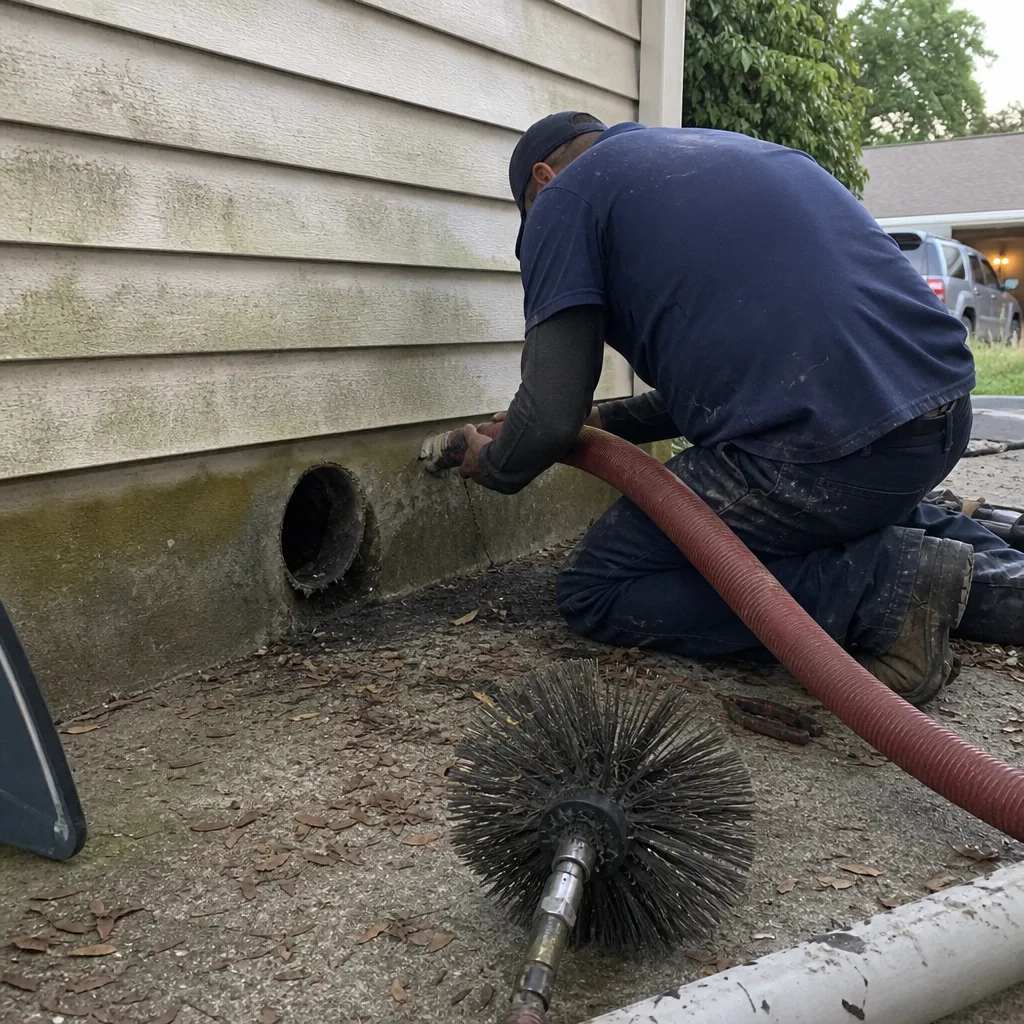 Before
 After
After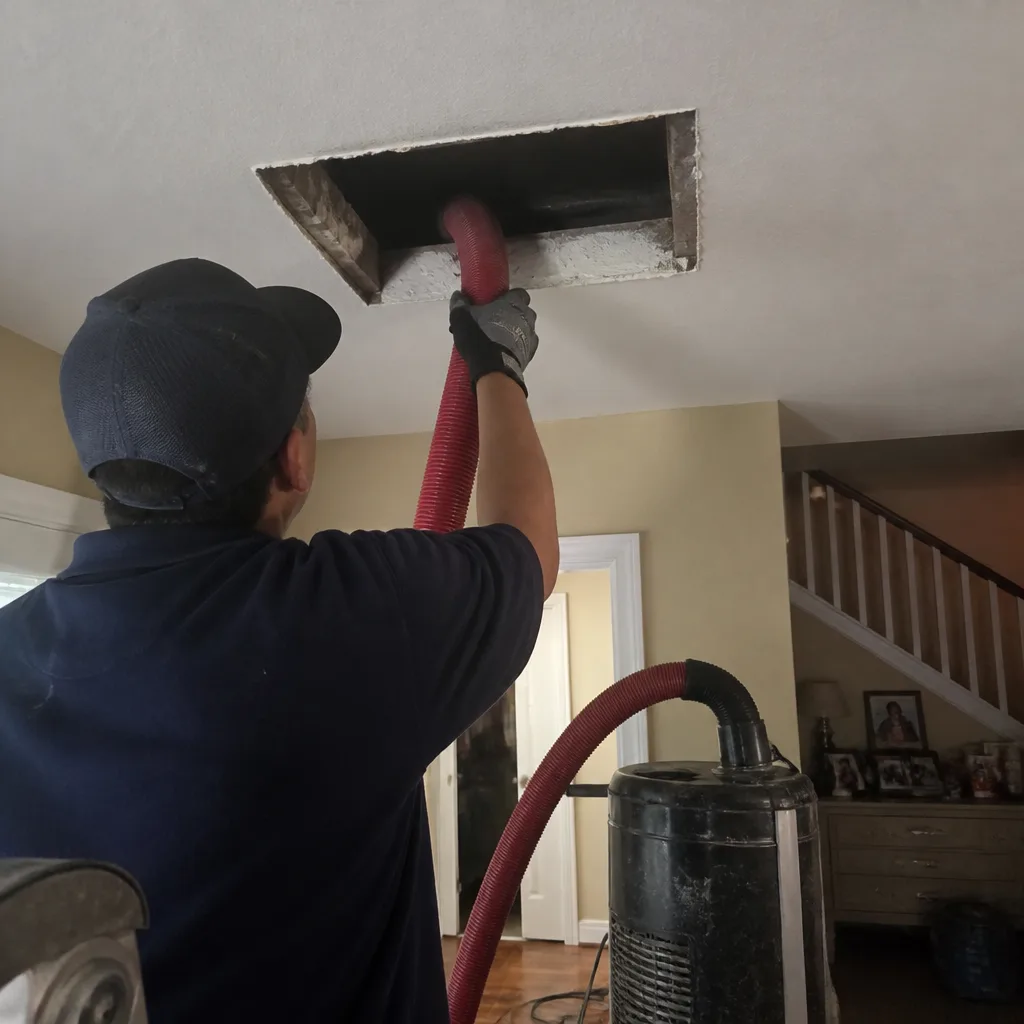 Before
 After
After