

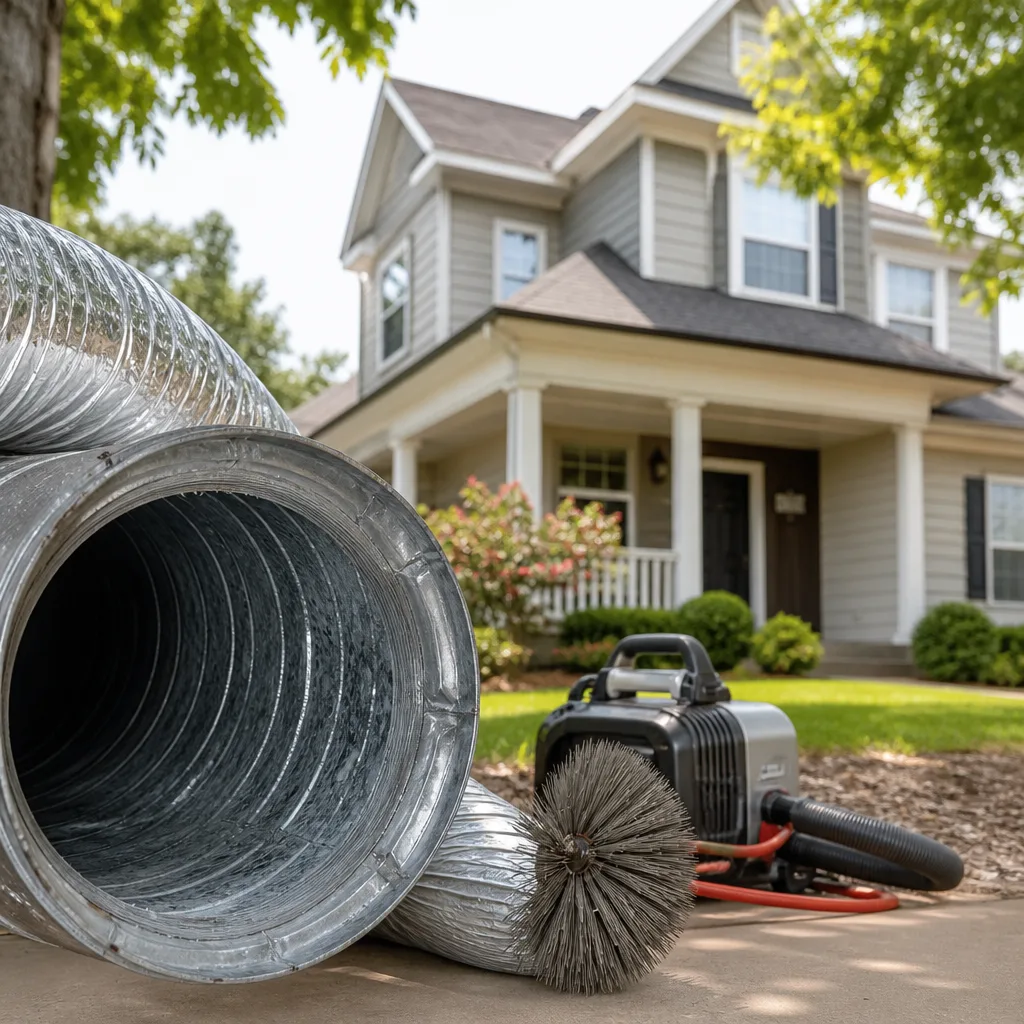
 Whole-home duct cleaning
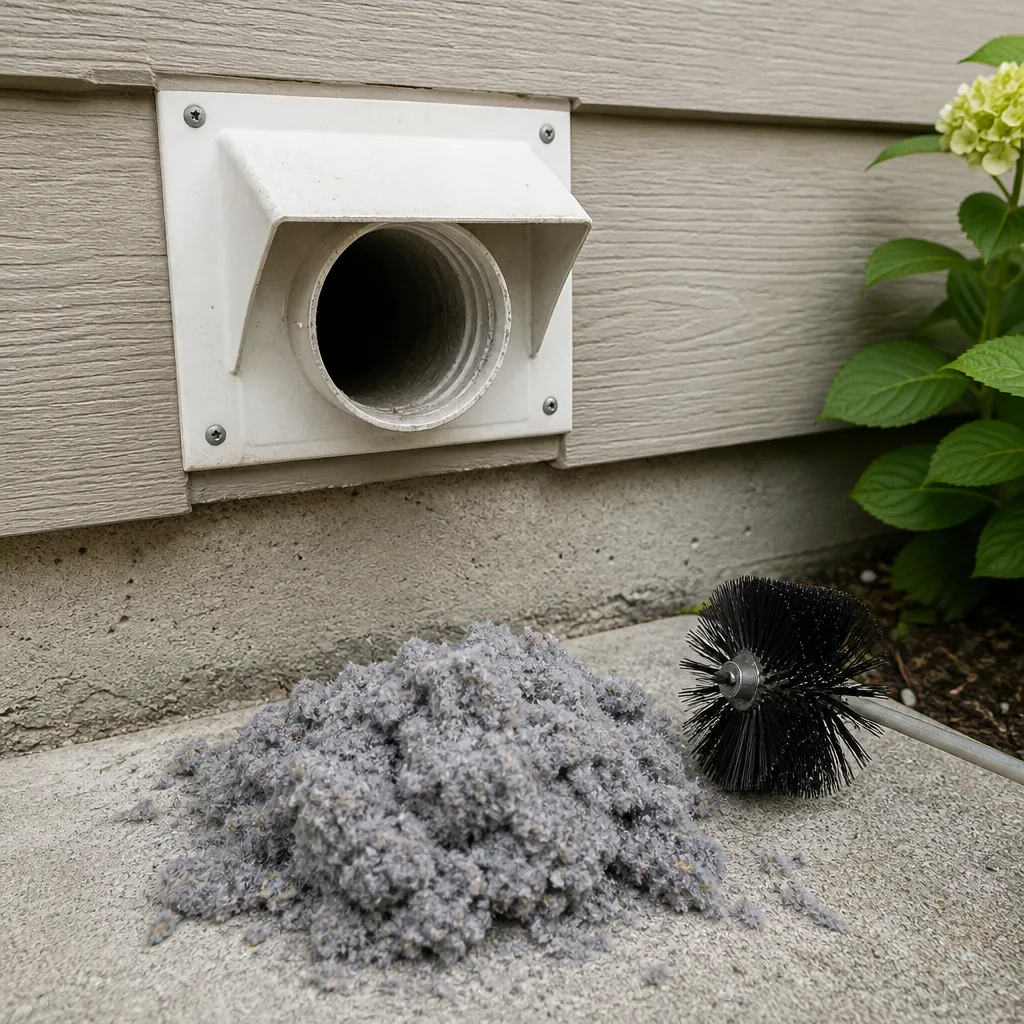 Dryer vent cleaning
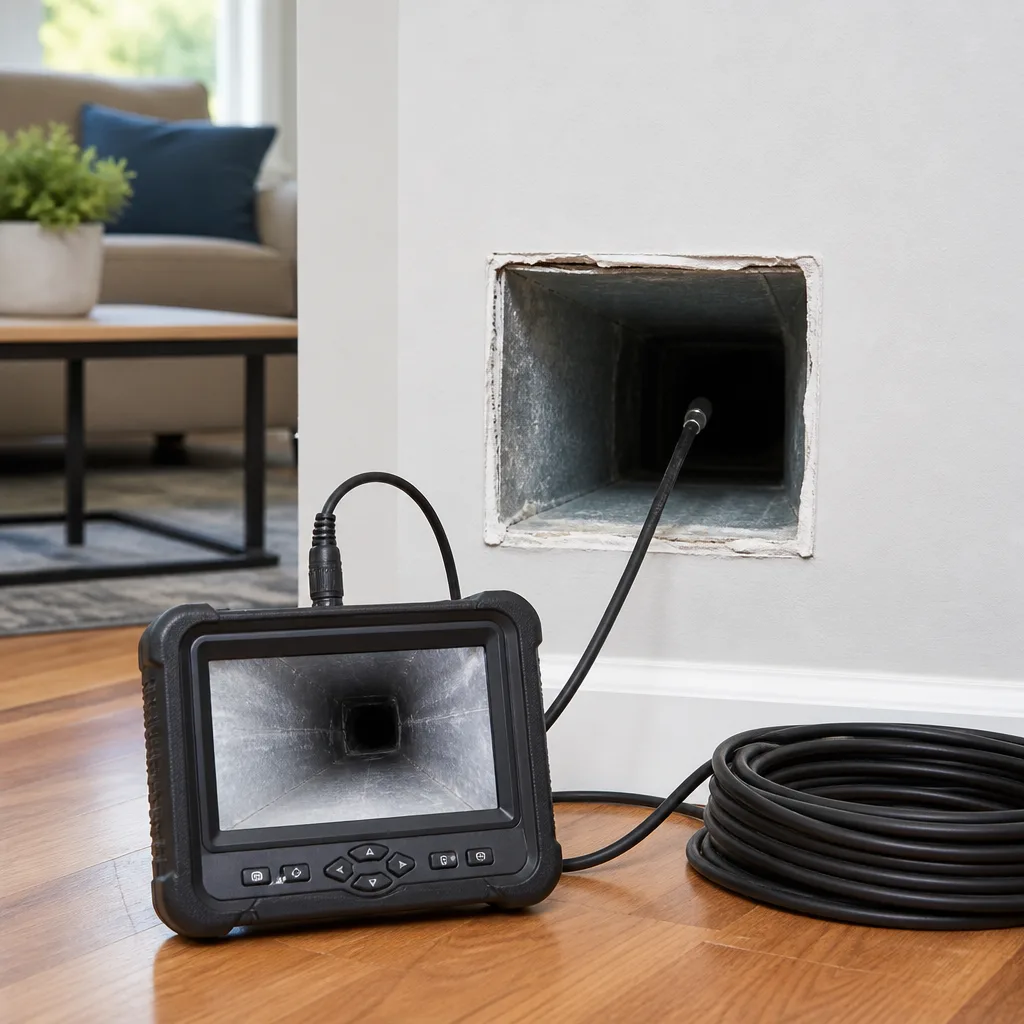 Camera inspection
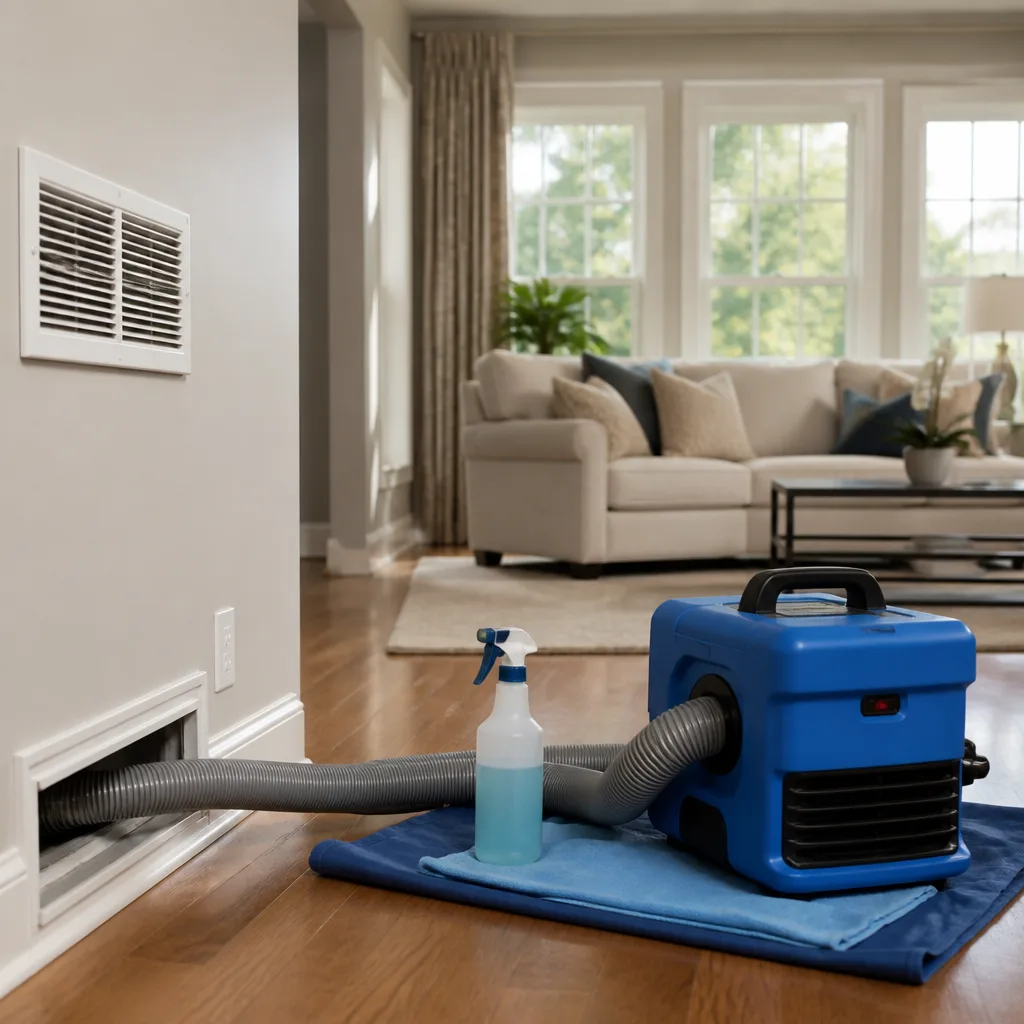 Sanitizing & deodorizing
Whole-system duct and dryer vent check with before-and-after photos - you see exactly what came out of your vents
That "$99 whole-house special" is a bait ad - the real number appears once they are in your hallway, or the "clean" is a shop-vac at the register. We photograph the inside of your ducts before and after instead.
Styles & brands we work with
See the difference
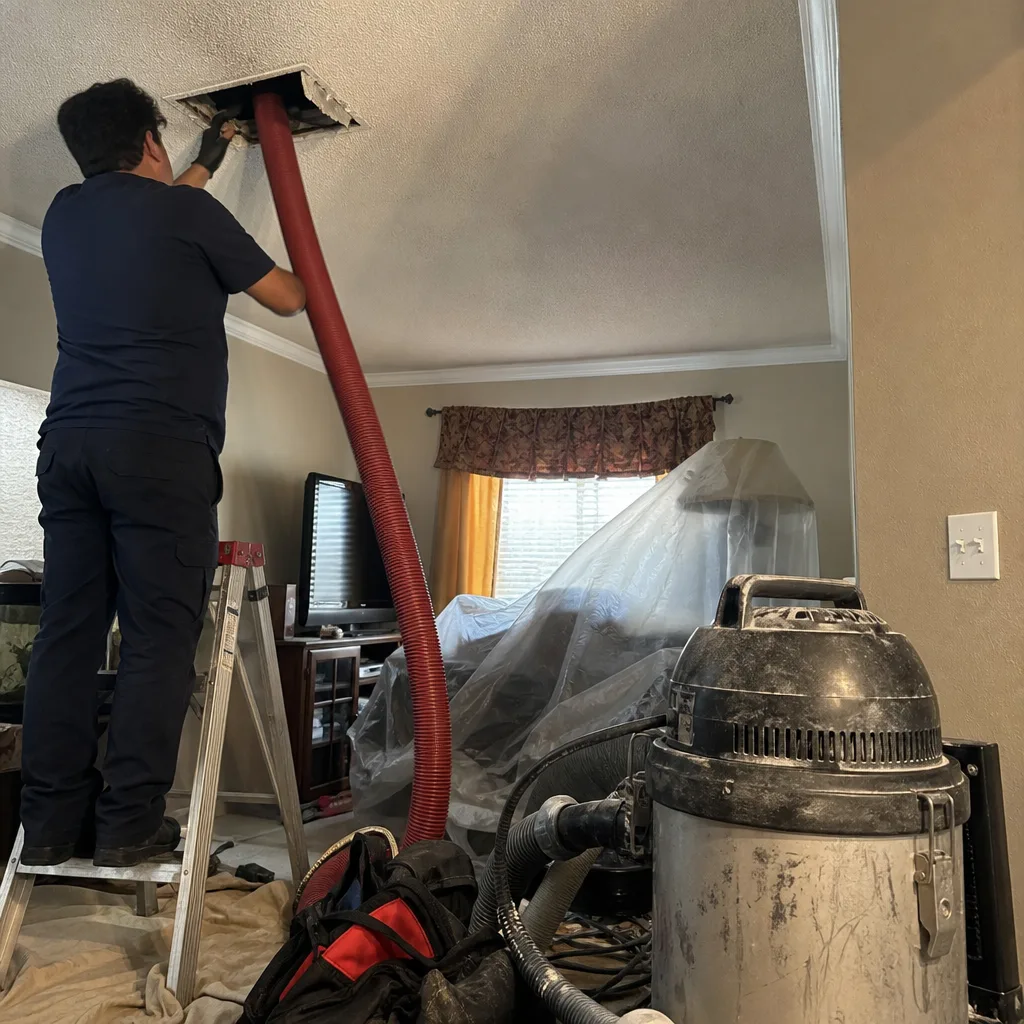 Before
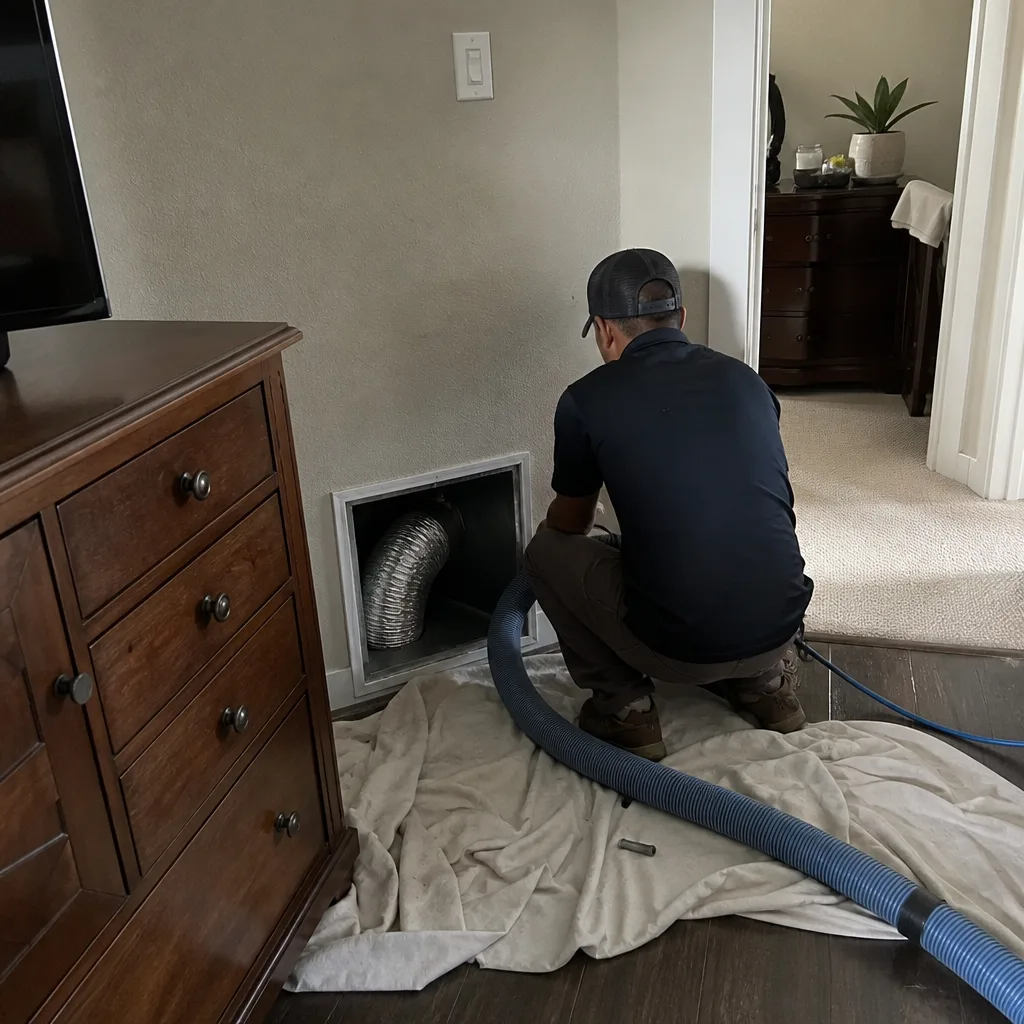 After
After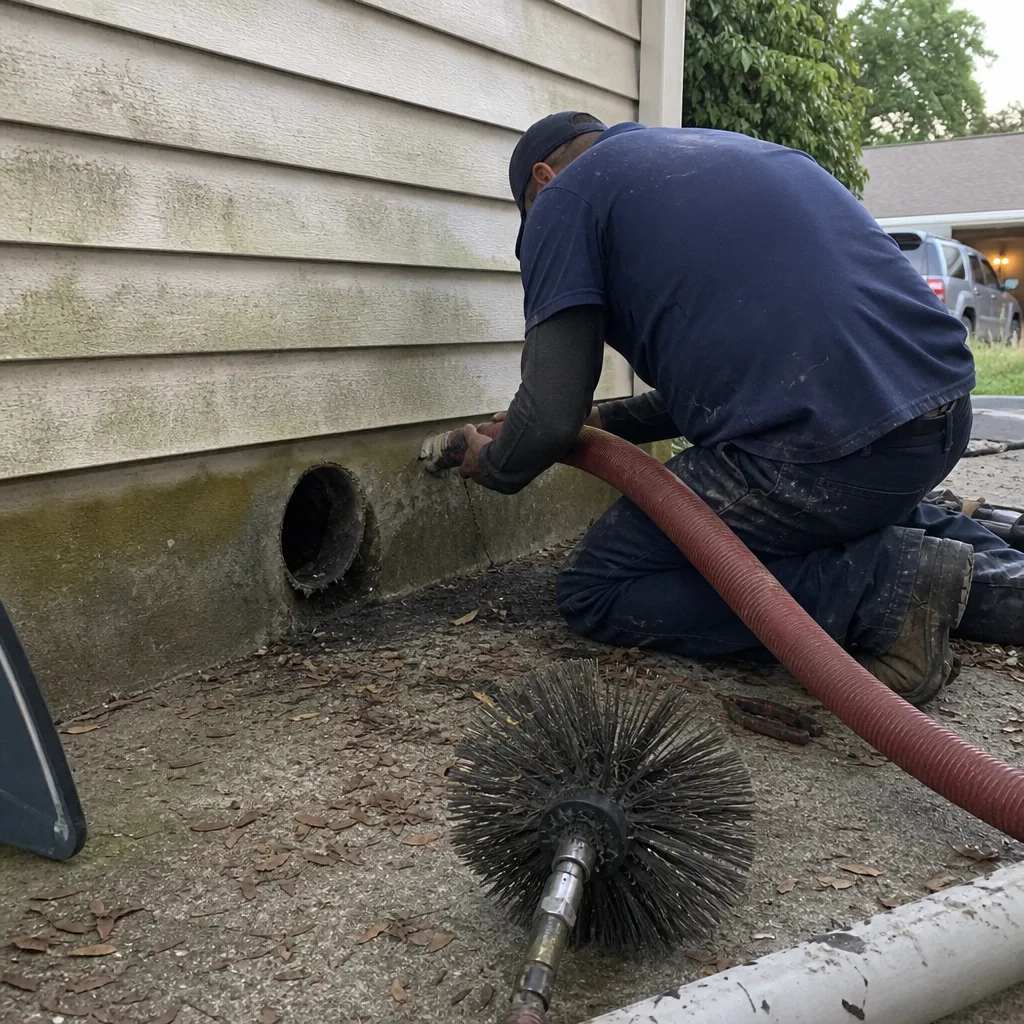 Before
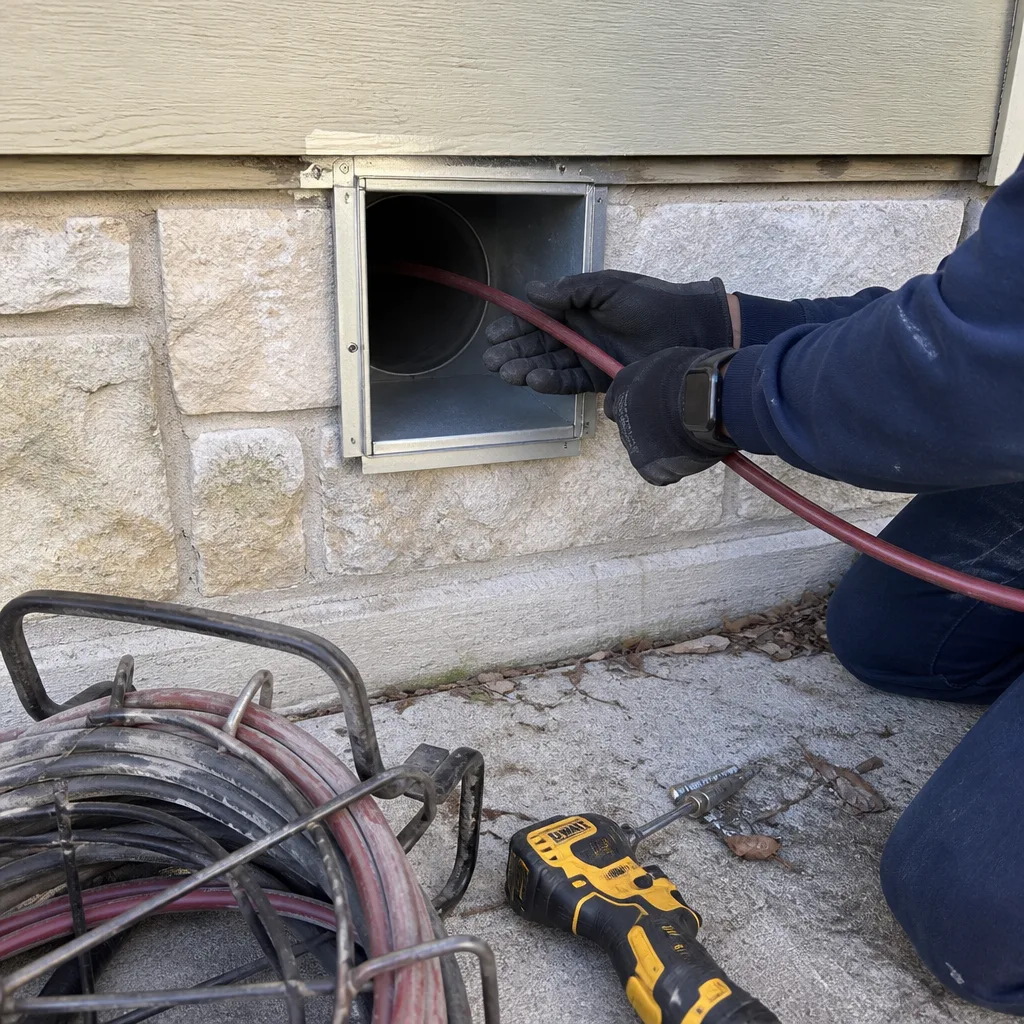 After
After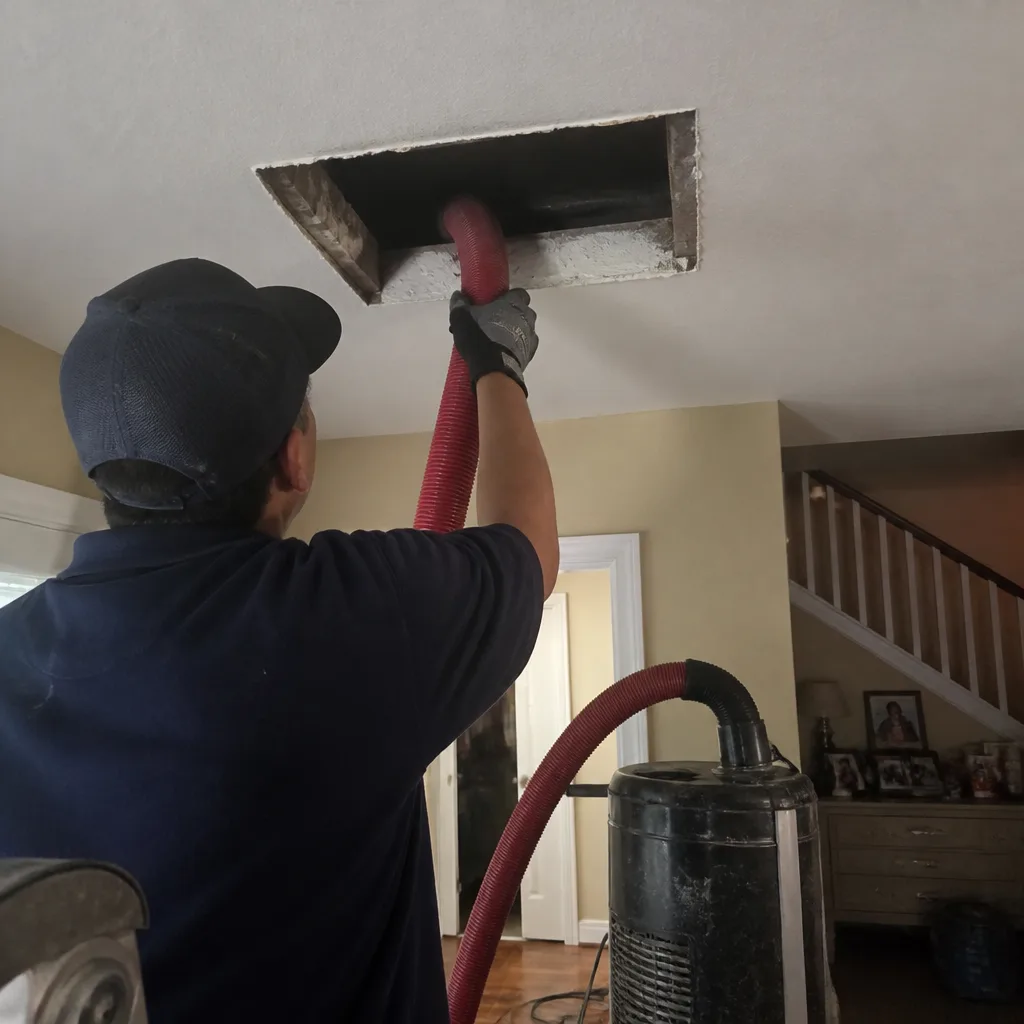 Before
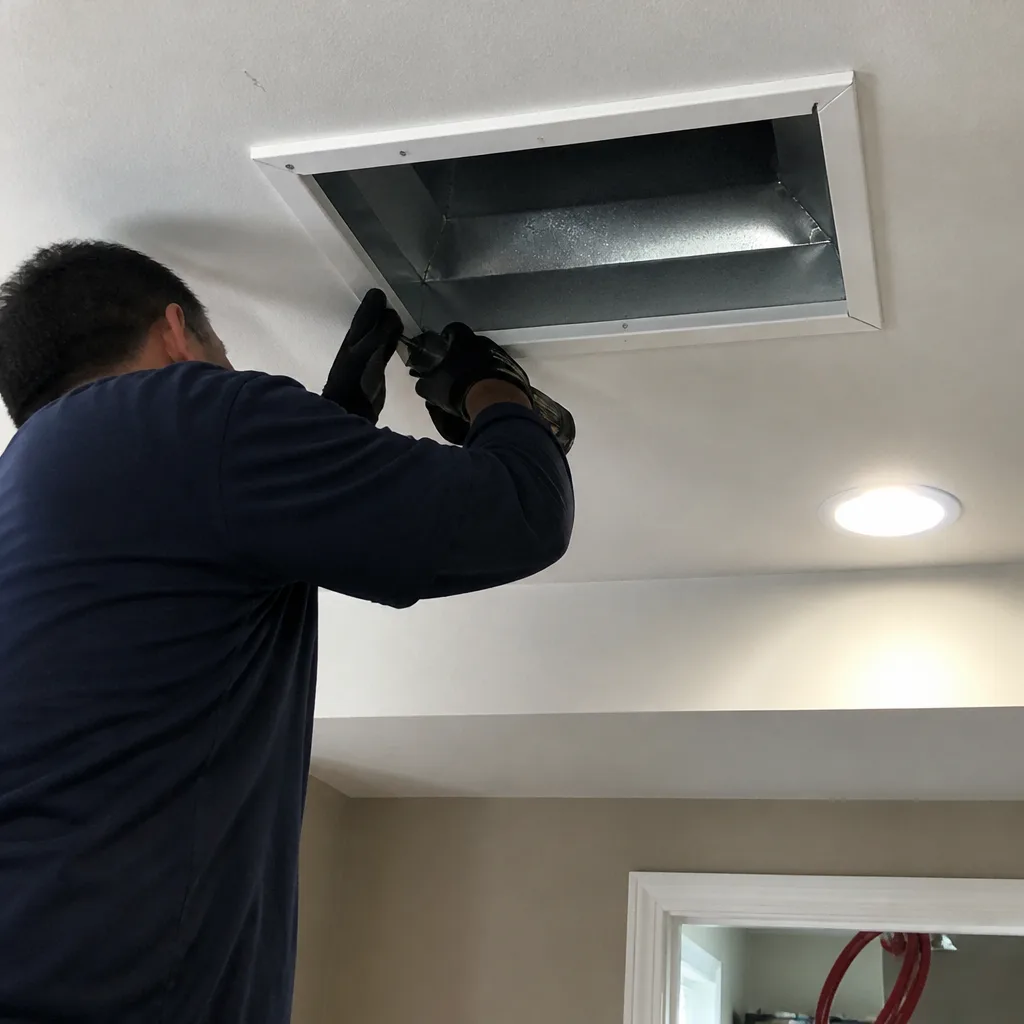 After
AfterSupply Duct Cleaning in Dallas, TX
Supply duct cleaning in Dallas homes typically costs between $350 and $750 depending on home size and system access, with most jobs completed in a single visit. The supply ducts are the branch lines that carry conditioned air from your furnace or air handler out to every register in the house. They’re the positive-pressure side of your system, and they accumulate a specific kind of buildup: dry wall dust, pet hair, and the fine clay soil particles that Dallas construction and our persistent summer droughts kick into the air. At Linden Air Duct Dallas, we clean the supply side as a focused service because those branch lines do the actual work of moving air, and a restriction there shows up directly as hot spots, weak airflow, and dust you can see landing on furniture.
We’re the Dallas specialists for homeowners who want to know exactly who is coming to the door and exactly what the job costs before anyone steps inside. Every supply duct cleaning we do includes a written price before work begins, a tech whose name and photo you receive before arrival, and the 365-Day Done Right Promise: if the work isn’t right, we make it right, in writing, on every single job. Call (361) 309-3153 and you’ll get a live person, not a voicemail loop, any time of day or night. If you’re just getting familiar with how your system works as a whole, start with our Air Duct Cleaning overview before diving into the supply side.
Key Takeaways
- Supply duct cleaning in Dallas runs $350 to $750 for a typical single-family home.
- The service covers the positive-pressure branch lines that deliver conditioned air to every register, not the return side.
- You get a written price before any work starts, every time.
- Your technician is background-checked, photo-verified, and introduced to you by name and photo before arrival.
- The 365-Day Done Right Promise means we fix it if it’s not right, backed in writing.
- Call (361) 309-3153 for a free estimate from a live person, 24/7.
When You Need Supply Duct Cleaning
Supply ducts don’t go bad all at once. They degrade slowly, and because they sit behind walls and above ceilings, the early warning signs are easy to write off as something else. Here’s what we see and hear from Dallas homeowners before they call us, and what each symptom actually points to.
- Dust on flat surfaces within 24 to 48 hours of dusting. In Lakewood and the M Streets, where many homes are pre-1970 and the supply boots are older, we see this constantly. The dust is not coming from outside, it’s being actively delivered through the supply registers every time the blower runs.
- Noticeable temperature differences from room to room. A bedroom in a north-facing addition stays ten degrees warmer than the living room, even though the thermostat reads fine. That’s often a supply branch restricted by buildup or a partially disconnected boot, not a thermostat problem.
- You can see dust streaks or a light gray film at the supply registers. This is the telltale sign on the supply side specifically. White ceilings above a supply register will show a faint halo pattern over time as particles are carried by the airstream and deposited on the surface.
- Airflow from one or more registers feels weak or dead. In two-story homes in Preston Hollow and Highland Park, the upstairs supply runs are longer and have more turns. When those lines build up dust, the pressure drop increases, and the airflow you feel at the register drops right along with it.
- Allergy or breathing issues that improve when you leave the house. The supply side is where we find most pet dander, skin cell dust, and fabric fiber accumulation. If the symptom is linked to being in the home, not just in a particular season, the supply ducts are a frequent culprit.
- You had a remodel or major construction done recently. Dallas home renovations are a top trigger for supply duct contamination. Drywall dust, sawdust, and insulation fibers get pulled into the return, pass through the system, and settle in the supply branches. Once the blower kicks on after the work is done, it redistributes all of it.
One quick note: if you smell household dust burning during the first furnace startup in late fall, that’s usually the heat exchanger burning off summer dust, not a duct issue. But if the smell persists beyond two or three cycles, or you see dust actively moving from a register, that’s a supply-system call, not a furnace call. We set up a full Air Duct Cleaning in Dallas inspection that covers both supply and return when there’s any question about which side is the actual problem.
Our Supply Duct Cleaning Process
We run a negative-pressure extraction that connects directly to the supply plenum, pulling the entire branch system under vacuum while mechanical agitation works the walls of each duct. In plain terms: we create a strong, sealed suction at the point where the supply lines leave the main trunk, then we work each branch from the register end so that everything lifted off the duct walls is pulled directly into the vacuum collection unit, not blown into your home. Here’s how it goes, in order.
- Pre-job walkthrough and system check. Marcus Veale or the lead tech walks the home with you. We map the supply runs, count the registers, check for dampers, and listen for any branch that is not pulling air correctly. We look at the access points to the supply plenum and note the filter condition and blower state. This is how we give you a written price that reflects your actual house, not a phone guess.
- Sealing off the supply side from the living space. We cover the supply registers with magnetic seals while the system is under vacuum. That keeps the negative pressure contained to the ductwork and keeps any dislodged particles from floating back into the room air.
- Negative-pressure hookup at the supply plenum. We connect our extraction unit directly to the supply plenum, usually at the coil cabinet or the main trunk. We use professional-grade equipment from trade-trusted brands like Nikro, and the extraction fan runs continuously through the cleaning cycle. The vacuum never gets turned off until the job is done.
- Mechanical agitation of each supply branch. We feed a powered brush or pneumatic skipper down each branch line from the register boot back toward the trunk, working the duct walls in sections. This is where the bulk of the dry, caked-on dust comes loose. In older homes with rigid metal round pipe, it’s straightforward. In homes with a mix of flex duct and sheet-metal distribution boxes, we work each material at the right speed so we don’t tear a flex liner.
- Register and boot cleaning by hand at each location. Every supply register comes off, gets hand-washed, and goes back on. The boot, which is the metal transition piece inside the wall or floor, gets brushed and vacuumed from the room side. We also check the damper inside the boot, if one is present, and note its position for you.
- Final pressure check and airflow comparison. We put everything back, check that each register is open and seated, and run the system. We compare airflow at the registers to the pre-job readings and touch them by hand to confirm delivery. If any branch is still weak, we investigate before we leave.
The entire process on a Dallas single-family home with 8 to 14 supply registers typically takes 2 to 4 hours depending on access and how heavily the lines are loaded. We don’t rush it, and we don’t upcharge you when a branch takes longer than expected. The written price you approved before we started is the price on the invoice when we finish. That’s our standard, not a special condition.
Supply Duct Cleaning Pricing in Dallas
Supply duct cleaning in Dallas is priced by system size, not by hourly rate. That matters because a quoted hourly rate leaves the door open for a slow job to become an expensive job through no fault of yours. We give a fixed written price based on the square footage of the home, the number of supply registers, and the accessibility of the supply plenum. Here’s how much air duct cleaning costs in Dallas, TX and what you can expect to see in writing before any work begins.
| Home Size | Typical Supply Registers | Supply Duct Cleaning Price Range |
|---|---|---|
| Up to 1,500 sq ft | 6 to 8 | $350 – $450 |
| 1,500 to 2,500 sq ft | 8 to 12 | $450 – $600 |
| 2,500 to 4,000 sq ft | 12 to 18 | $600 – $750 |
| 4,000+ sq ft or dual system | 18+ or two zones | $750 – $1,100 |
What actually moves your price inside those ranges comes down to a few specific things. Homes where the supply plenum is in an accessible attic or utility closet are faster to set up than homes where the plenum is in a crawl space or an enclosed mechanical room. Two-story homes in neighborhoods like Lake Highlands and North Dallas often have a second supply trunk, which means running the extraction process twice. If the supply branches have never been cleaned and the home is 20 or more years old, the buildup is harder to lift and takes longer. And if we find a disconnected supply branch or a torn flex line during the cleaning, we’ll stop and show you, then give you a separate written quote for the air duct repair before we touch anything else. No surprise line items at the end.
Our price for supply duct cleaning always includes the entire supply side: the trunk line, all branch lines, every register, and every boot. We don’t charge extra for register washing or for cleaning the supply plenum itself. And while every home is different, the walkthrough we do before any work starts means the price we write down is the price the job costs, period. Call (361) 309-3153 and we’ll schedule that walkthrough and give you the exact number in writing, free.
What the Price Never Includes at Linden Air Duct Dallas
- No charge for the pre-job walkthrough or the written estimate.
- No fuel surcharge or travel fee within our Dallas service area.
- No add-on charge for cleaning the supply plenum when we’re already in the system.
- No fee for the before-and-after airflow check.
- No charge if we find a problem and you choose not to proceed. We leave, no invoice.
Supply Duct vs. Return Duct: Why They’re Separate Jobs
Most full air duct cleaning companies lump supply and return together into a single “whole system” price. We clean the supply side as its own service because the two sides of your ductwork collect different material and have different failure modes, and a lot of Dallas homes need one side far more than the other. The return side pulls air back toward the furnace and is generally the dirtier of the two, since it carries unfiltered air from the house before it hits the filter. The supply side sits after the filter and after the coil, so the dust there tend be finer, drier, and more embedded in the duct walls.
When you open a supply register and see that light gray or reddish-tan film, that’s fine particulate from the house, plus outdoor dust that seeped past a dirty filter. It gets wet where the coil condenses, then dries and bakes onto the duct walls through every cooling season. In Dallas, where the AC runs from April through October, that bake-on cycle is aggressive. By late summer, the supply branches in a lot of homes have a hard, caked lining that hand-wiping will not pull off, which is why we use mechanical agitation under negative pressure instead of a soft brush.
Cleaning just the supply side also makes financial sense if your return side was already handled recently, or if the return is a short and simple run while the supply branches are long and heavily loaded. We’ll tell you plainly if you don’t need the full system. We’d rather clean what actually needs cleaning and let the Air Duct Cleaning full-system service be the choice when both sides are dirty, not the default upsell.
Dallas-Specific Factors That Make Supply Ducts Load Up Faster
Every city has a signature contaminant profile, and in Dallas it’s construction dust from the region’s relentless building pace, combined with fine clay soil that gets airborne in dry conditions from June through September. Homes in neighborhoods with ongoing teardown and rebuild activity, like Preston Hollow, Bluffview, and parts of East Dallas near White Rock Lake, see a measurable increase in the rate supply ducts load up. The dust from neighboring job sites gets pulled into the home through windows, doors, and the return, and within a few months it has settled into the supply branch lines.
Dallas’s long cooling season compounds the problem. The blower runs more hours per year here than in most of the country, which means more air moving through the supply ducts, which means more particles deposited per square foot of duct surface. Pair that with the hard water we have across the metro, and you get a specific wear pattern on the coil that generates fine mineral and scale particulates that end up in the supply side. We regularly see supply ducts in Dallas homes that have not been cleaned in 15 years carrying a quarter-inch of packed dust in the first six feet from the plenum connection.
If you run a Honeywell or Aprilaire high-efficiency media filter on the return side, the supply side stays considerably cleaner longer. A MERV 11 or MERV 13 filter catches the fine stuff before it ever reaches the supply branches. We’re happy to check your filter setup during any supply duct walkthrough and tell you, without a sales pitch, whether an upgrade would meaningfully reduce how often you need supply cleaning. We work with those filtration products because they work in Dallas conditions, not because we get a margin on them.
How Do I Know If My Supply Ducts Actually Need Cleaning?
There’s no honest company that should sell you supply duct cleaning without looking at the actual condition of your system. Duct cleaning is not a maintenance item like changing a filter. It has a specific mechanical purpose: removing accumulated particulate that measurably restricts airflow or actively circulates dust into the living space. The right way to confirm the need is a video inspection with a borescope camera at the supply plenum and at one or two representative registers. That takes about twenty minutes, and we do it free as part of the pre-job walkthrough.
During the inspection, we look for three things: the thickness and composition of the buildup, whether the buildup is dry and friable or caked and adhered, and whether there’s any evidence of mold, moisture staining, or pest activity in the supply side. If the buildup is minimal and not affecting airflow, we’ll tell you to wait, and we’ll say that in front of you with the camera feed showing what we see. If the buildup is heavy enough to see at the register boot or to scrape with a gloved finger, it’s time.
One caution on scope here. If we find moisture inside the supply side, that’s a bigger conversation than cleaning. A supply duct with active moisture has a source somewhere, usually a coil drain problem, a leaking air handler cabinet, or a breached duct run in a damp crawl space. Cleaning will not fix the source, and any company that offers to clean away mold without addressing the moisture is taking your money to hide a problem. We’ll find the source and give you a written recommendation for what actually needs to happen, even if that recommendation sends you to an HVAC contractor instead of us. Trust is built by telling the truth when the truth costs us money. We’ve been operating that way since 2004 under the Threshold Group standard, and we’ll keep doing it.
FAQs – Supply Duct Cleaning
How much does supply duct cleaning cost in Dallas?
Supply duct cleaning in Dallas costs between $350 and $750 for a typical single-family home, with prices moving based on square footage, register count, and plenum access rather than an hourly rate. Larger homes or dual-zone systems with 18 or more supply registers can run up to $1,100. You’ll get a fixed, written price before any work begins, and that’s the number you’ll pay when the job is done. Call (361) 309-3153 for a free in-person walkthrough quote.
Can you clean only the supply ducts without doing the return side?
Yes, and it’s a common request from Dallas homeowners who’ve already had the return side cleaned recently or whose return side is short and lightly loaded while the supply branches are the actual problem. We scope the supply side as a standalone service and price it as one, with no hidden requirement to bundle. During the walkthrough, we’ll show you the real condition of both sides and let you decide based on what we see together.
How long does supply duct cleaning take?
Most Dallas supply duct cleaning jobs take 2 to 4 hours on a single-family home, depending on the number of branch lines, how heavily they’re loaded, and whether the supply plenum is in an accessible attic or a tight mechanical room. We don’t charge by the hour, so a job that takes longer than expected costs you the same amount as the written estimate. Call (361) 309-3153 and we’ll schedule a walkthrough that gives you a time window and a fixed price.
Will I see less dust after supply duct cleaning?
In most Dallas homes where the supply side was confirmed dirty during inspection, yes, the visible dust on flat surfaces drops noticeably within the first two weeks after cleaning. The dust you were seeing at furniture level was being actively delivered through the supply registers, and removing that source changes the pattern. Homes that also have dirty return sides or a missing filter will see a slower improvement until those are addressed, which is why we show you the camera view before we recommend a scope of work.
Do you need to cut holes in the wall or ceiling to clean supply ducts?
No, in nearly all cases we clean supply ducts through the existing register openings and the access point at the supply plenum, without cutting into drywall or ceiling finishes. Older Dallas homes sometimes have supply boots that are trapped behind trim or in finished floor transitions, and in those cases we’ll discuss the access options before we cut anything, in writing. You’ll see the access plan in the written estimate, and if any access modification is ever necessary, it’s a line item you approve before we start.
Written by Marcus Veale, Owner at Linden Air Duct Dallas, serving Dallas.