
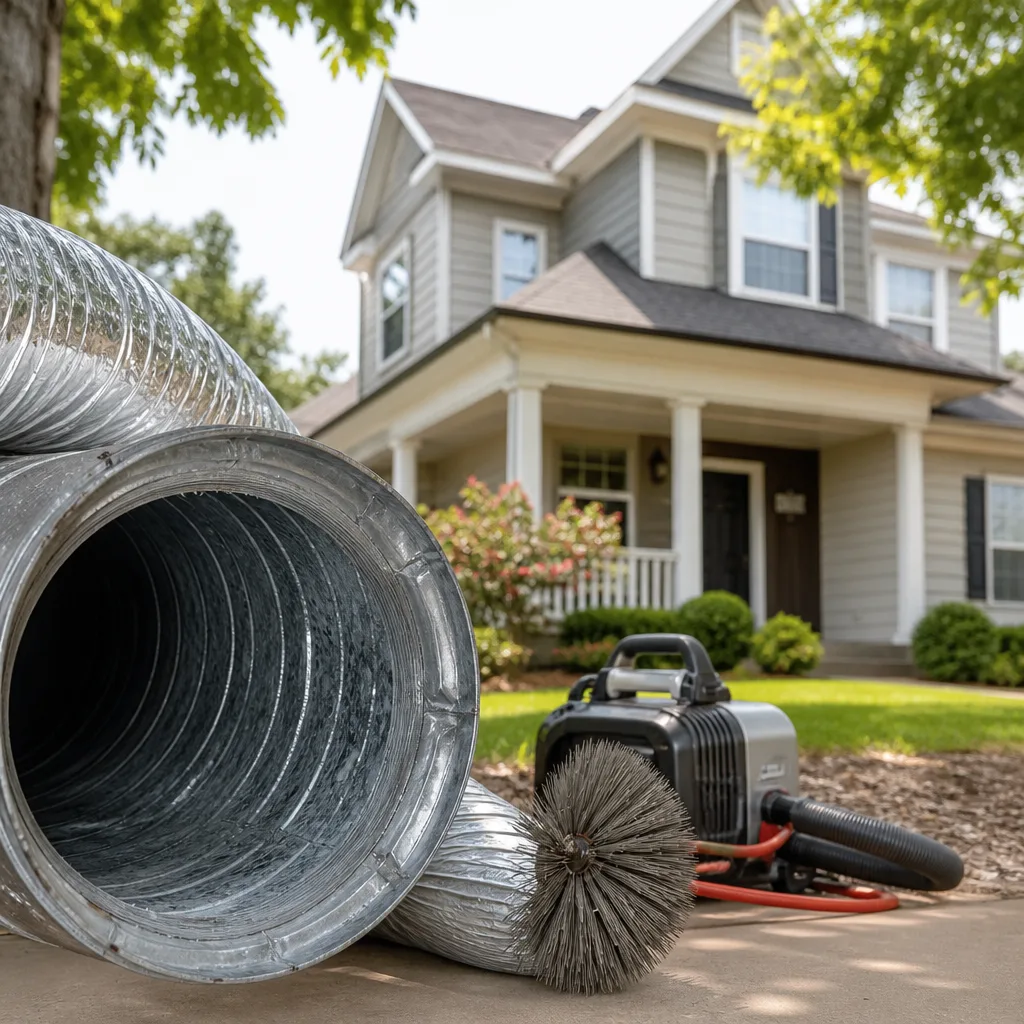
 Whole-home duct cleaning
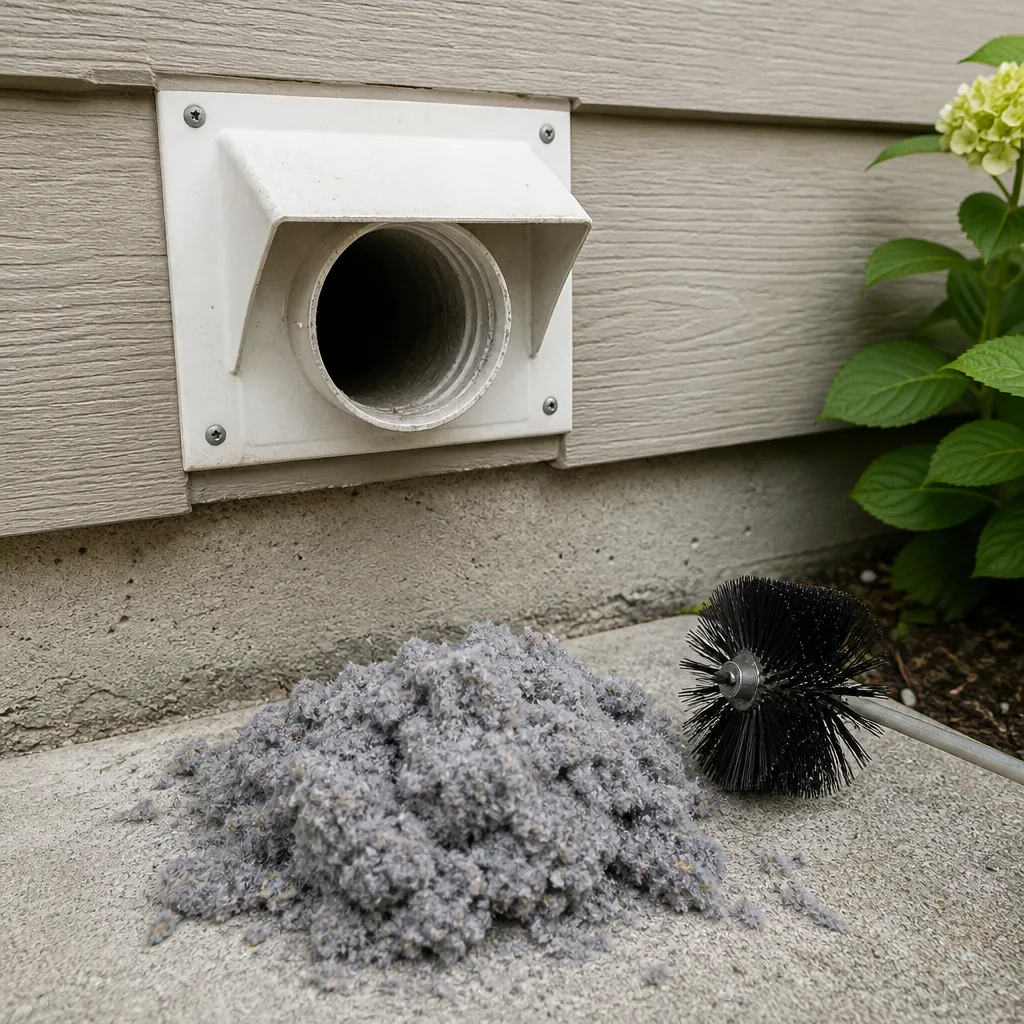 Dryer vent cleaning
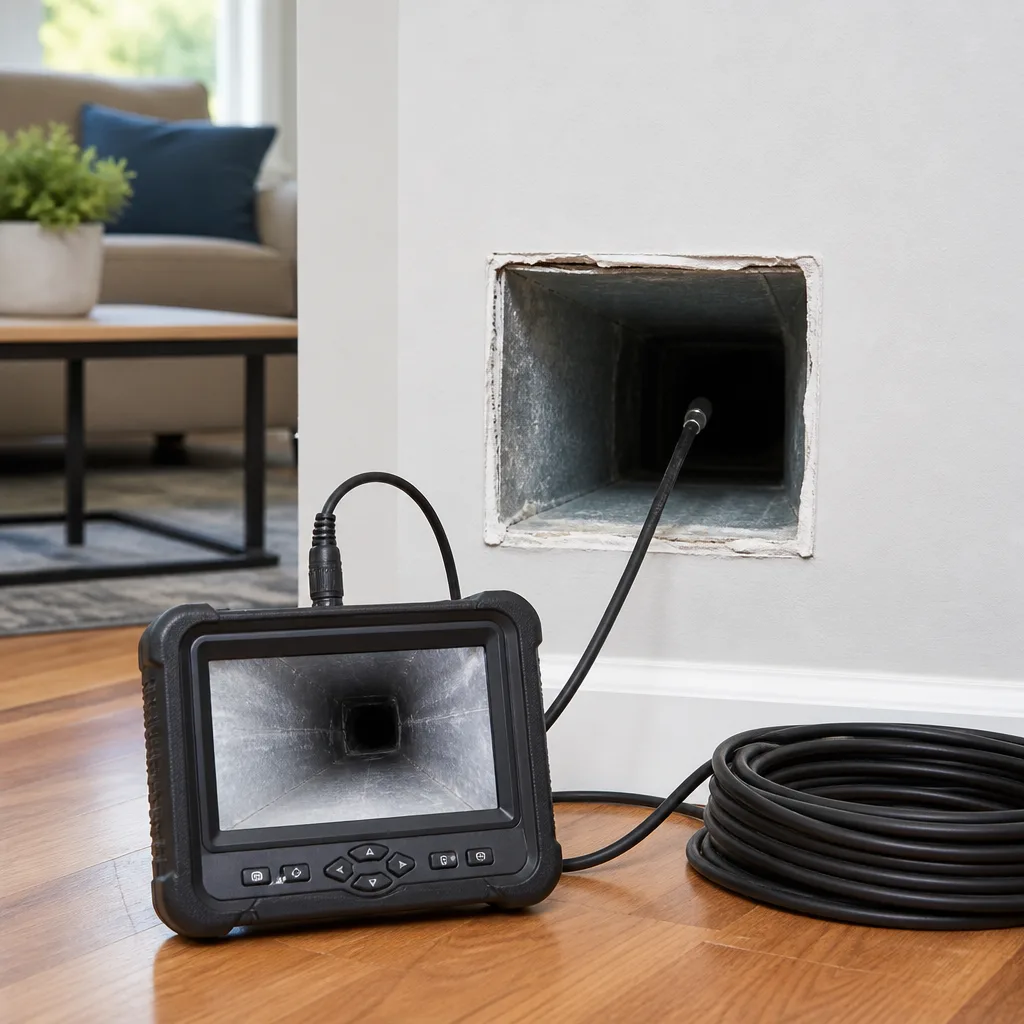 Camera inspection
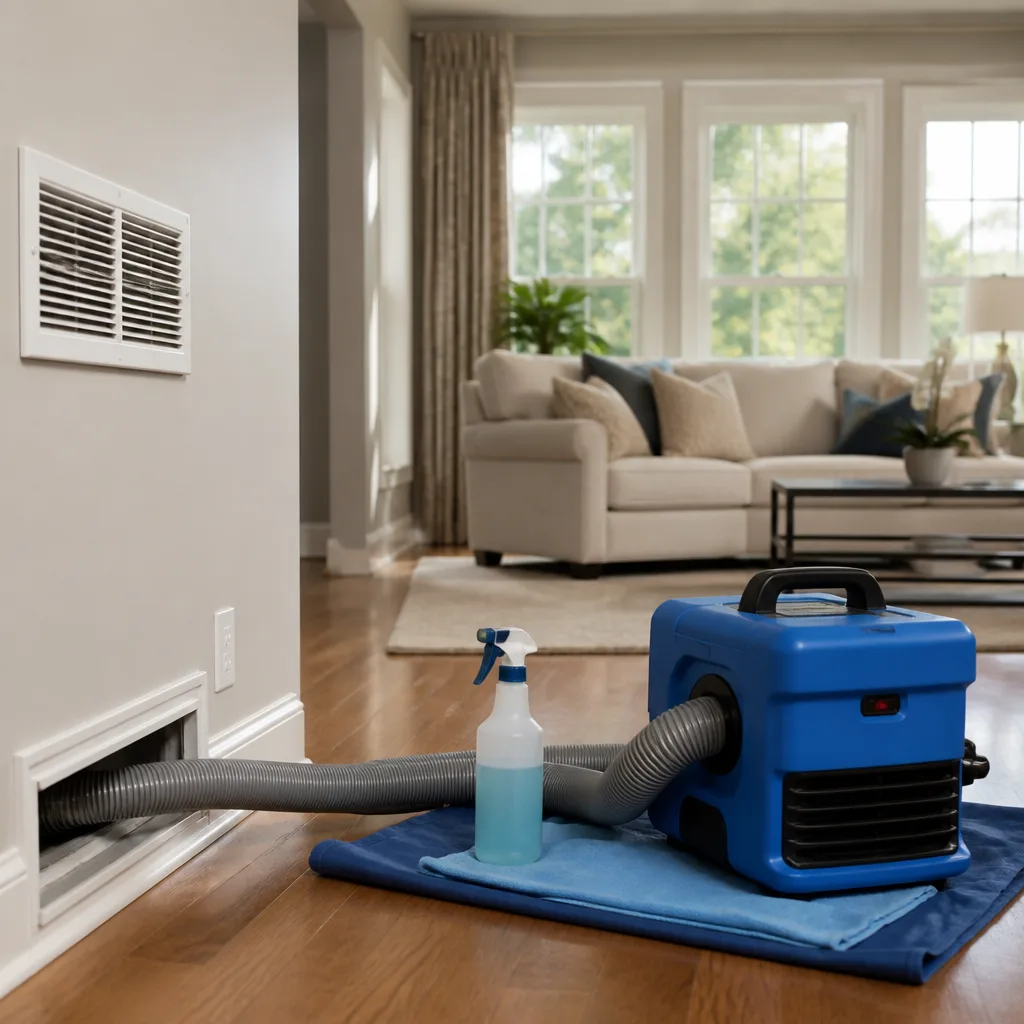 Sanitizing & deodorizing
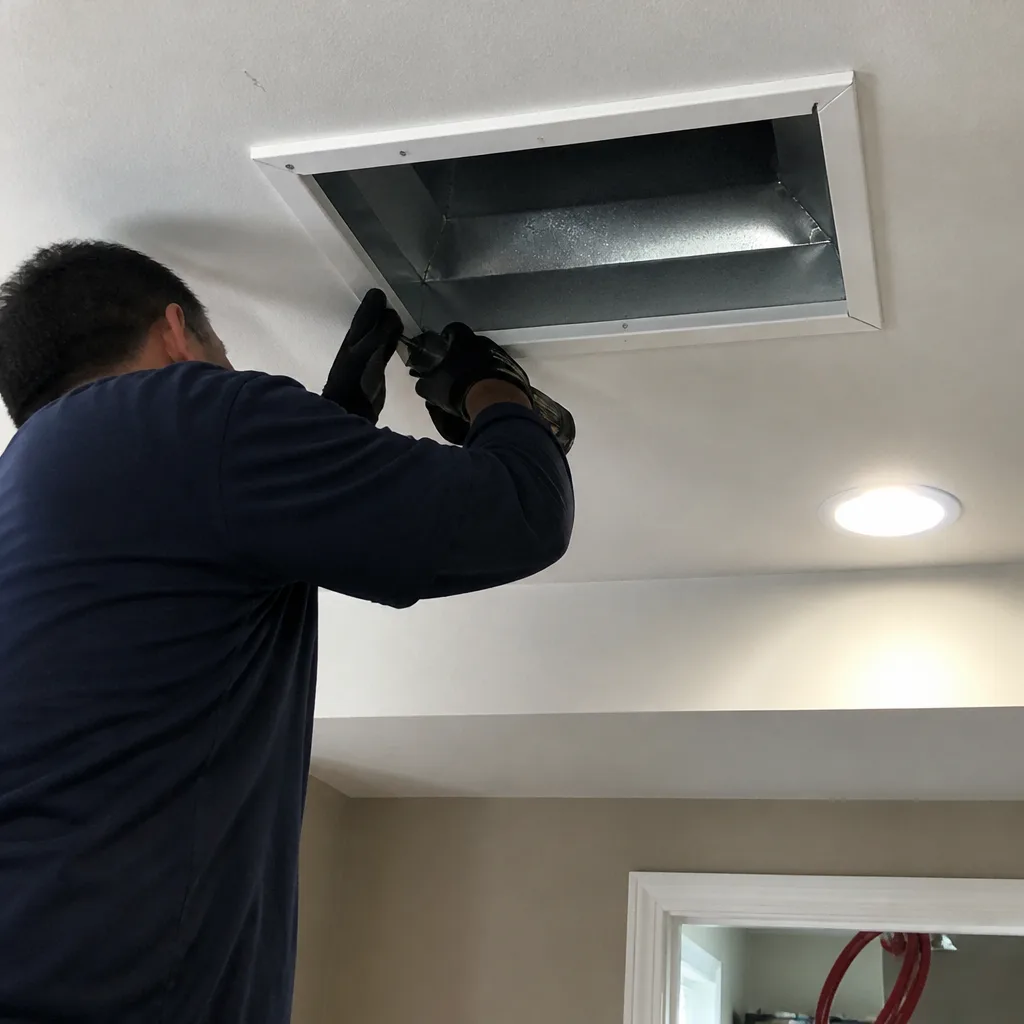
Whole-system duct and dryer vent check with before-and-after photos - you see exactly what came out of your vents
That "$99 whole-house special" is a bait ad - the real number appears once they are in your hallway, or the "clean" is a shop-vac at the register. We photograph the inside of your ducts before and after instead.
Rotobrush Vent Sanitizing: The Dallas Owner’s Guide
If your Rotobrush vent sanitizing system is down, we can get it running again. Linden Air Duct Dallas stocks Rotobrush-compatible sanitizing parts and installs them throughout Dallas for $220 to $520 installed, depending on your unit and what actually failed. Most owners discover the problem the same way: the sanitizer stops misting, the pump hums but nothing comes out, or the nozzle drips instead of sprays.
We are an independent service provider, not affiliated with Rotobrush. That independence works in your favor: we stock the OEM parts, we also stock quality aftermarket equivalents that often cost 30 to 40 percent less, and we’ll tell you honestly which one makes sense for your machine. Marcus Veale has been servicing Rotobrush units in Dallas homes for years, including older ranch-style houses in Lake Highlands where these systems rarely see maintenance until they quit mid-job.
Which Rotobrush Models This Applies To
Rotobrush vent sanitizing components cross several product lines, and the compatibility gotcha is this: the sanitizing pump and nozzle assemblies from the older aiR+ series do not drop into the newer Rotobrush eXXtreme or R6000 systems without an adapter kit. The mounting bosses are offset by 3/8 inch, and the quick-connect fittings changed from barbed to push-to-connect around 2019. If you order the wrong generation, it will not seat flush, and you will fight the leak at every job.
Here is how to identify what you have: look at the pump housing label. aiR+ units carry a serial prefix of AP; eXXtreme units start with EX; R6000 machines use R6. The sanitizing reservoir is the giveaway too. The older units use a 1-gallon translucent tank with a single feed line. The newer systems run a 2-liter cartridge reservoir with a return line. Both use a 12V diaphragm pump, but the cartridge-style pump has an integrated check valve that the older style lacks.
For Rotobrush specifically, the OEM sanitizing pump is solid, but the OEM nozzle assembly is the weak link. The brass insert in the nozzle wears oblong after roughly 400 to 600 hours of run time, and then your mist pattern goes uneven. On the OEM-versus-aftermarket decision: for pumps, we prefer OEM or a same-spec Shurflo equivalent. For nozzles, we actually recommend a better aftermarket stainless-steel tip that outlasts the OEM brass by a wide margin. We stock both on the truck.
Styles & brands we work with
Signs Your Rotobrush Vent Sanitizing Is Failing
- Weak or no mist from the nozzle. This almost always means a clogged nozzle tip or a failing diaphragm in the pump. In Dallas, hard water accelerates mineral buildup inside the tip, and we see this more in older homes with unsoftened water.
- The pump runs but the reservoir level never drops. The check valve inside the pump has failed, or the pickup tube has cracked and is sucking air. If you hear a fast ticking sound from the pump and no fluid moves, it is the check valve.
- Fluid leaking around the nozzle base. The O-ring has flattened from heat cycling. Attics in Dallas regularly hit 130°F in August, and that heat hardens seals faster than anywhere in the northern half of the state.
- Intermittent spray that stops mid-cycle. The pump is overheating. These 12V pumps are rated for continuous duty, but when the internal armature wears, they pull more amps and thermal-shutdown mid-job.
- Reservoir cracking at the mounting ears. The translucent tanks get brittle after 3 to 4 years of attic heat exposure. We replace these preventatively whenever we see spider cracks forming.
See the difference
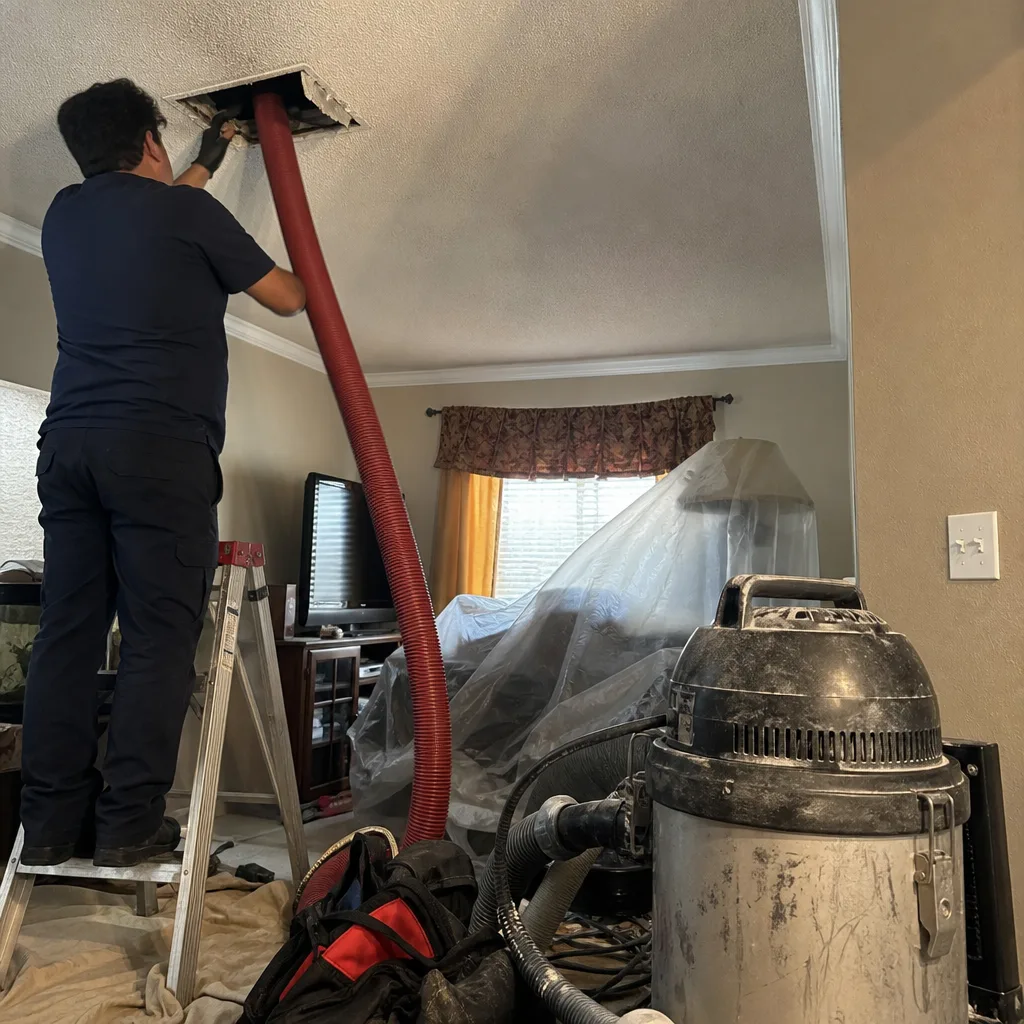 Before
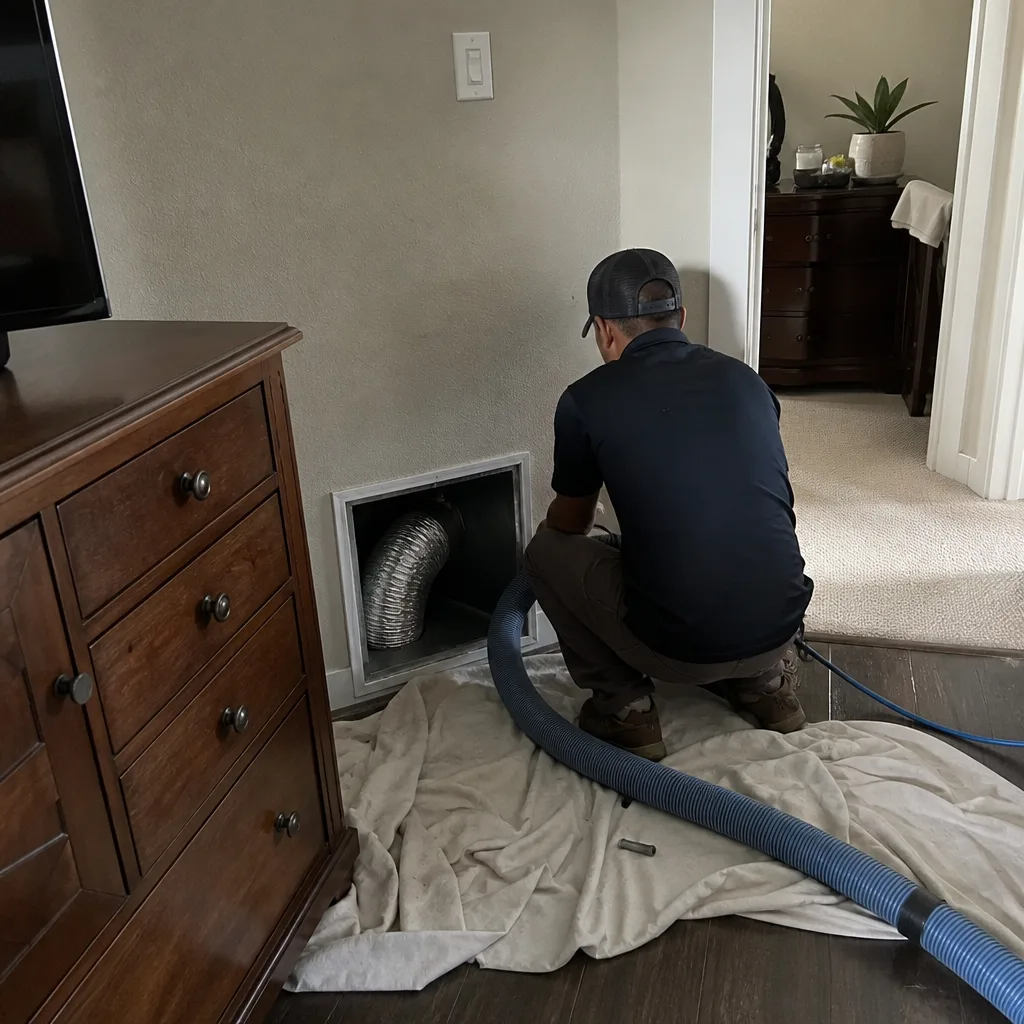 After
After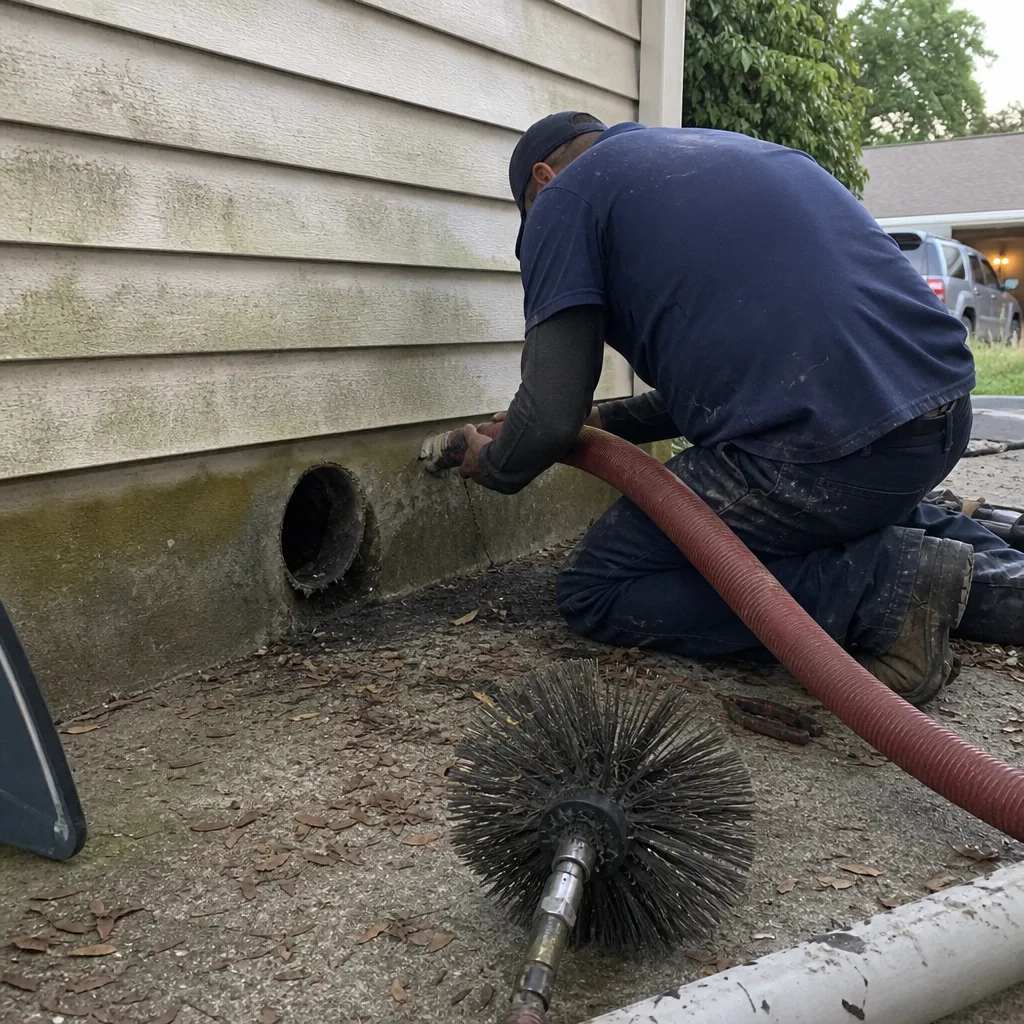 Before
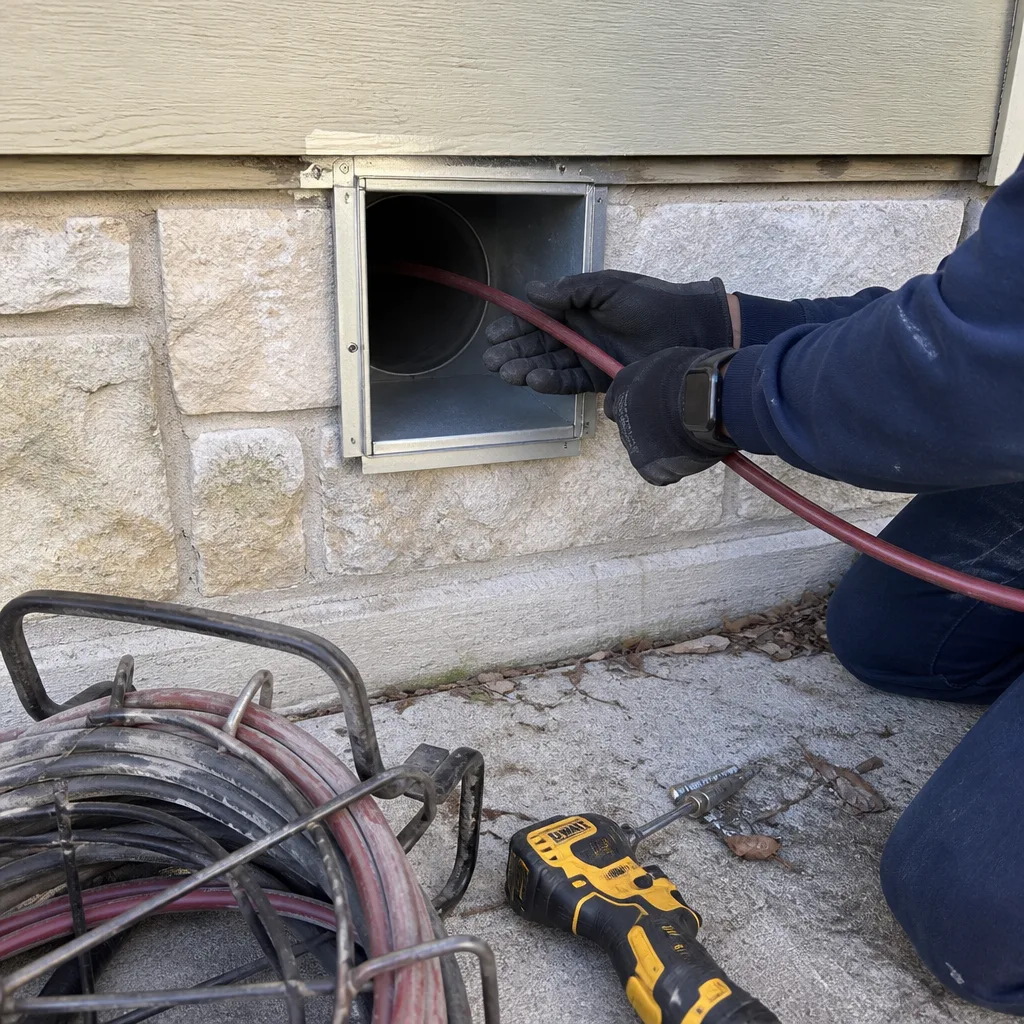 After
After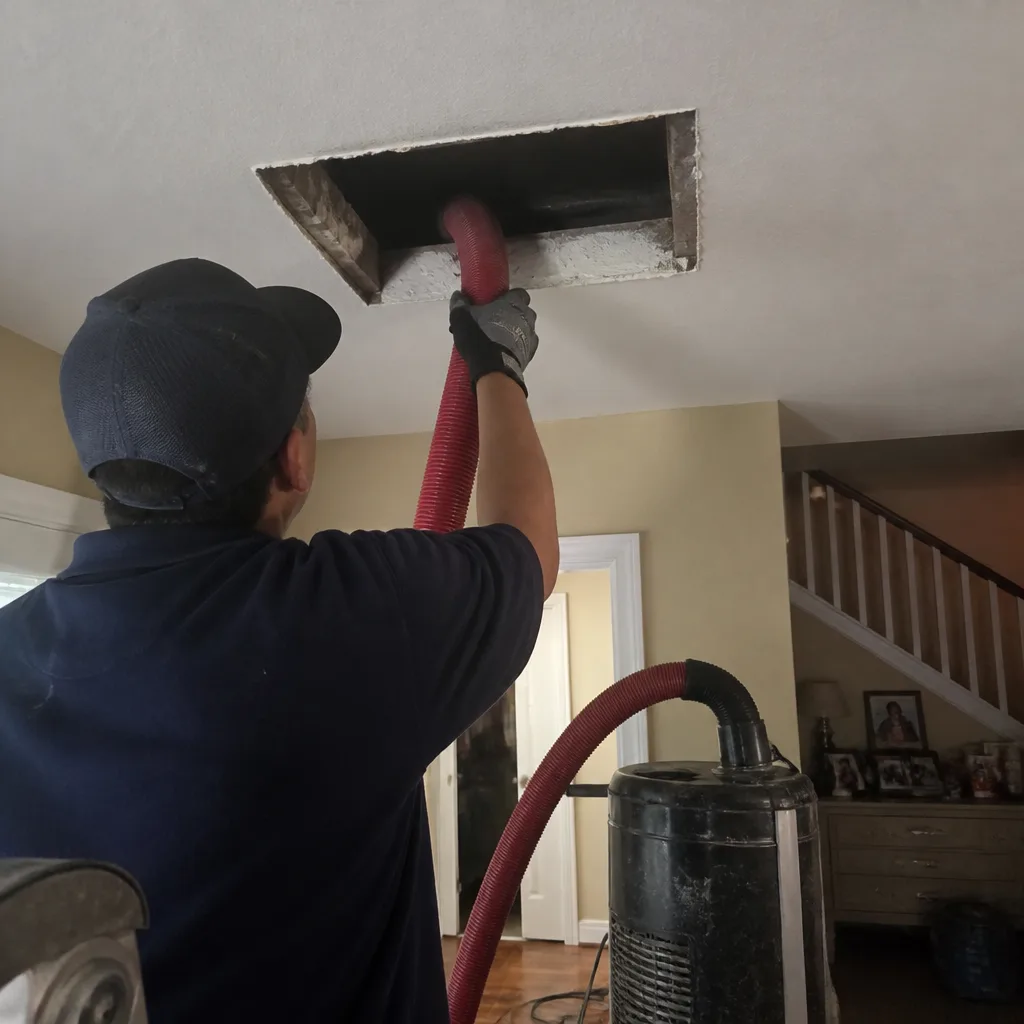 Before
 After
AfterReplacement Cost & What’s Included
For Dallas homeowners, expect to pay $220 to $520 for Rotobrush vent sanitizing repair, installed. That range covers the part, the labor, and the system test after installation. A nozzle-only swap runs at the low end: $220 to $275. A pump replacement lands at $320 to $420 on most units. Pump plus nozzle plus a new reservoir runs $450 to $520.
Every quote is a flat price per repair, put in writing before we start. No per-vent pricing games, no surprise line items added after the van is on the driveway. We test the system end-to-end before we leave, and we hand you a written guarantee on the repair with a free second visit if it fails within the covered period. You will know the total before we touch a wrench.
DIY or Call Us?
There is a safe middle ground here. You can absolutely swap a cracked reservoir tank yourself: two screws, one feed line, done. You can also clean a clogged nozzle tip with vinegar and a pin if you are careful not to ream out the orifice. Those are low-risk, ten-minute jobs.
What you should not do is open up the pump housing or rewire anything. These pumps run on 12V DC, but the unit is typically plugged into line voltage at the transformer, and we have opened machines where a homeowner’s wiring splice created a fire hazard inside a 130-degree attic. That is not a risk you want to take. If the issue is the pump itself, the check valve, or anything electrical, call us at (361) 309-3153. We will bring the right pump for your serial number and have it running the same visit.
FAQs
In Dallas attic heat, a Rotobrush sanitizing pump typically lasts 3 to 5 years before the diaphragm or check valve fails. Heat exposure is the main killer, which is why units in unvented attics wear out noticeably faster than those in conditioned closets.
We do not repair these pump internals. The diaphragm kits exist, but the labor to rebuild one is rarely less than the cost of a new pump, and a rebuilt pump still has a worn motor. Replacement is the honest answer, and it carries a real warranty. Call (361) 309-3153 for an exact quote.
Most Rotobrush vent sanitizing swaps take 45 to 90 minutes on site. A nozzle-only replacement is closer to 30 minutes. Pump and reservoir combos take the full hour-plus because we bench-test the new assembly before mounting it in the machine.
We stock Rotobrush aiR+ and eXXtreme sanitizing pumps, nozzle assemblies, reservoirs, and transfer tubing on our truck. We also keep aftermarket stainless nozzle tips and Shurflo-equivalent pumps for same-visit installs when OEM is not the better call. Plus we stock parts for Lennox, Trane, and Carrier systems when crossover components apply.
Written by Marcus Veale, Owner, Linden Air Duct Dallas at Linden Air Duct Dallas, serving Dallas and nearby areas.